How transcription bots went from silent note-takers to running your meetings
How transcription bots went from silent note-takers to running your meetings
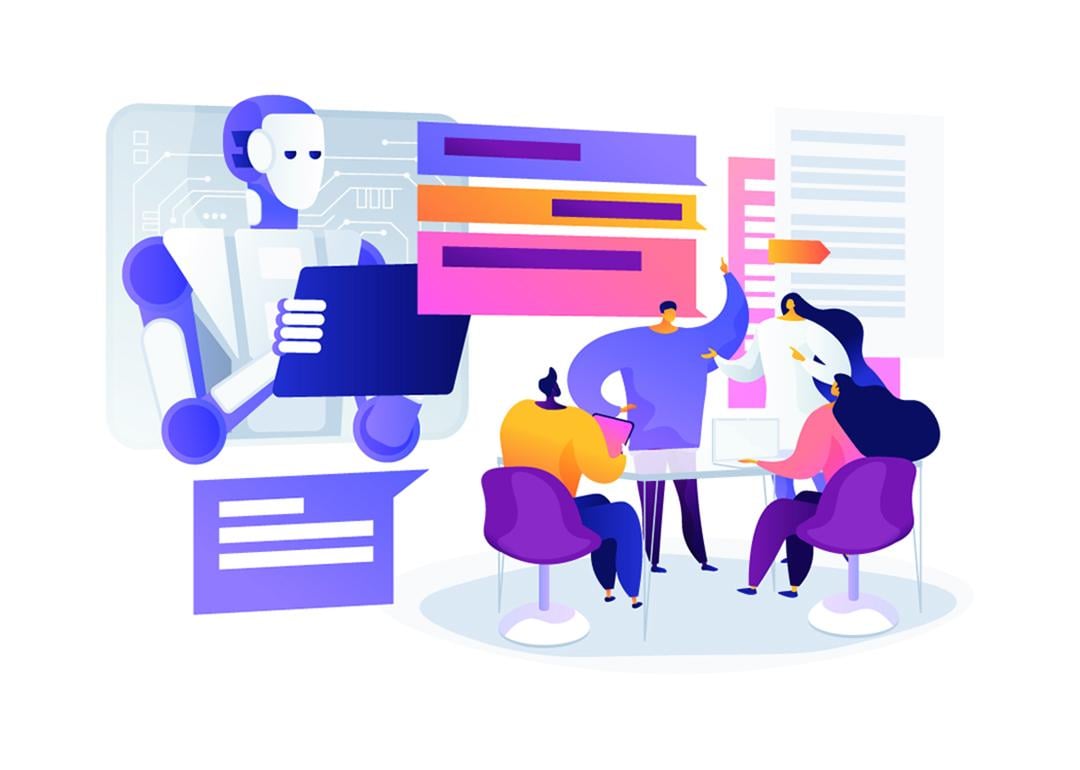
Of all the AI products that have swept the tech world in recent years, there is perhaps none more ever-present than the notetaker. With a punctuality and precision that borders on the insidious, these tools show up to video meetings so reliably that they鈥檙e often there without their human overlords.
And people are getting hooked. When Granola, one of the , went offline due to an AWS outage in October 2025, its users took to social media to express panic at their second brain taking a sick day.
Growing reliance on these products is translating into big projected market growth: The AI transcription industry is expected from $4.5 billion in 2025 to $19.2 billion by 2034, with today offering products in the market 鈥� a crowded landscape that's driving an arms race in features and functionality.
Notetaker companies are developing increasingly complex capabilities, as the battle of the transcription bots intensifies. Startups now compete not only with each other but also with Big Tech players like Google and Microsoft.
, published by AI cloud company , covers the people and technologies shaping the AI industry. This article examines the expanding landscape of notetaker products.
From listeners to agents
, founded in 2016, is one of the more established players among AI notetaking companies and now serves 800,000 users across 鈥渢ens of thousands of teams鈥� using its product.
Krish Ramineni, founder and CEO of Fireflies, explained that the company focused on improving transcription accuracy in the early days, but today aims to be a comprehensive knowledge management platform that makes information shared in meetings available across workflows.
鈥淚t鈥檚 now knowledge orchestration, where we're taking all the knowledge that happens in conversations, and we're putting it in the places where you work,鈥� he said. 鈥淲e have 90-plus integrations. So whether you want to plug it into Notion or Slack or send the data into Salesforce, you have a platform that works across all platforms.鈥�
And beyond making knowledge from meetings more accessible and searchable, Fireflies and other notetaker companies are investing heavily in AI agents.
鈥淚 think the notetakers that are winning these days are doing more than just being those passive listeners. They're actually being action doers. They might sit in the meeting, but then afterwards they're also doing a lot of the follow up actions that you would have needed to do previously,鈥� said Natalie Rutgers, VP of product at Deepgram, a voice AI platform that powers notetaking tools like and .
One such company is Read.ai, founded in 2021, which has been developing specialized agents for verticals like healthcare, construction and sales.
鈥淎 lot of sales folks use Read because they鈥檙e on calls five times a day with prospective customers, and it's a pain to move data from one system to another,鈥� said VP of product Justin Farris. 鈥淲hat Read鈥檚 agent can do is extract the relevant details out of the conversation and automatically push those into, say, Salesforce or HubSpot.鈥�
The cost of transcribing every meeting
As more workers deploy AI notetakers in their meetings, these services are also racking up serious compute costs.
鈥淚t's very expensive to do transcription,鈥� said Ramineni. 鈥淚t's very expensive to run LLMs on hours and hours of meetings every day for every user.鈥�
鈥淒emand for compute is going to be huge as these services expand across organisations, leading to more and more inference calls, which is yet another incentive for cloud providers to keep scaling capacity,鈥� said Michael Stothard, principal at Firstminute Capital, a London-based venture capital firm and backer of Granola.
Read.ai鈥檚 Farris put this into perspective, explaining that for transcription use cases that require low-latency voice-to-text, the inference cost is roughly five to six times higher than similar workloads on text-only models.
鈥淎t some point every meeting on the planet will be captured by an AI system like Read. With roughly a billion knowledge workers in the world averaging a few meetings per week, there will be a lot of increased demand for these foundational capabilities,鈥� he said.
Ramineni said that by investing a lot of time into making its stack of models as efficient as possible, Fireflies has driven down costs and has been profitable since 2023.
鈥淲e really think about our unit economics and how we scale this up. We think a lot about latency, cost and LLM scale, so we use almost five different model providers to get to the output that we need,鈥� he said.
Next up: robot attendees, drive-through orders and meetings without humans
Deepgram鈥檚 Rutgers added that the kinds of speech-to-text models that drive notetaker assistants are also penetrating new industries, further increasing future computing needs for the technology. She gave examples like drive-throughs, with U.S. fast food chain Jack in the Box now using Deepgram鈥檚 models to take orders. In the humanitarian sector, voicebots are being used to triage high-volume emergency calls during disasters.
For notetakers themselves, the future holds competing visions. Some companies will avoid flashy features like video avatars, which Farris called 鈥済immicky for now.鈥� Others, like Ramineni, tease something more radical: a product designed to fully replace humans attending meetings.
The question is, if a meeting happens and there are only notetakers there to hear it, did the meeting really happen at all?
was produced by , the editorial arm of , and reviewed and distributed by 爆料TV.