
Working women lose up to 10 hours of productivity a week to menopause symptoms
Nine in 10 working women say at least one menopause symptom has directly impacted their productivity in the past year. That's according to a new survey of more than 1,000 women navigating perimenopause or menopause 鈥� and for some, the losses are severe: Nearly 1 in 7 lose more than 10 hours a week, the equivalent of a full workday.
And while the majority of women said that having clearly defined menopause-related time off and accommodations would improve productivity and , 2023 survey data from NFP suggests only around offer such benefits.
The Productivity Breakdown
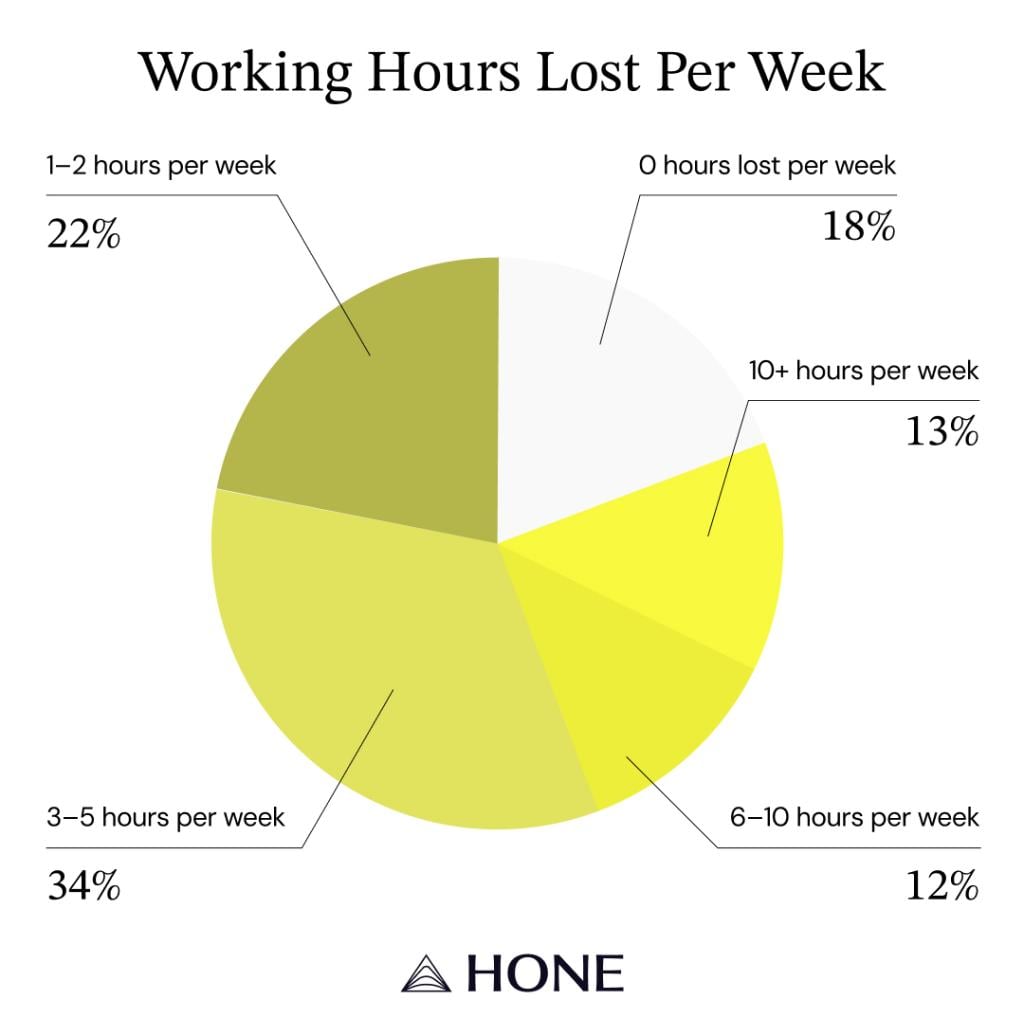
Eighteen percent of the women surveyed say symptoms don't affect their output. For the rest, the impact of is significant:
- Twenty-three percent lose up to 2 hours each week.
- Thirty-four percent lose 3鈥�5 hours each week.
- Twelve percent lose 6鈥�10 hours each week.
- Just over 13% lose more than 10 hours 鈥� for a standard 40-hour schedule, that's an entire workday, every week.
Survey respondent Jessica, 40, notes: 鈥淭here was a stretch of time where my 鈥榖ad days鈥� started to feel like my new normal.鈥� A nurse, she would start a shift already exhausted even after a full night in bed, and find herself struggling to stay as sharp and focused. She felt off mentally and physically.
Symptoms Driving Productivity Losses
While are the best-known , the women surveyed said less visible symptoms were more likely to impact their ability to work. affected 90% of respondents. hit 87%. and , 86%. 鈥� including , depression, and 鈥� affected 85%.
Nearly half of women meet the criteria for , with getting less than , on , which can affect attention, memory, and reaction time. Nationwide, a 2021 report examining data from the U.S. Study of Women's Health Across the Nation found that lost productivity after onset of sleep disruptions is associated with among women aged 42鈥�64.
Fatigue
Eighty-seven percent of women reported persistent fatigue, which slows pace, reduces output, and makes sustained focus more difficult.
, and Difficulty Concentrating
An estimated 44%鈥�62% of women experience menopause-related . Employees experiencing brain fog may have trouble finding the words to express themselves, struggle to remember talking points during a meeting, or have trouble focusing on demanding work tasks.
and carry the strongest adverse effect on work performance of any menopause symptom, according to . Mood changes often go unrecognized by managers and rarely get attributed to menopause.
How Businesses Can Protect Productivity
Nearly 80% of women surveyed say clearly defined menopause-related time off or accommodations would improve their productivity and experience at work. When asked how, 61% said they would be more productive 鈥� 43% significantly so.
鈥淥ffering even small accommodations could make a huge difference,鈥� Jessica notes. 鈥淛ust knowing you're supported 鈥� and not alone in it 鈥� changes how you show up, not only for yourself, but for your patients and your team.鈥�
The accommodations women say would move the needle are mostly low-cost: flexible scheduling, clear policies, remote and hybrid work options, and additional time off.
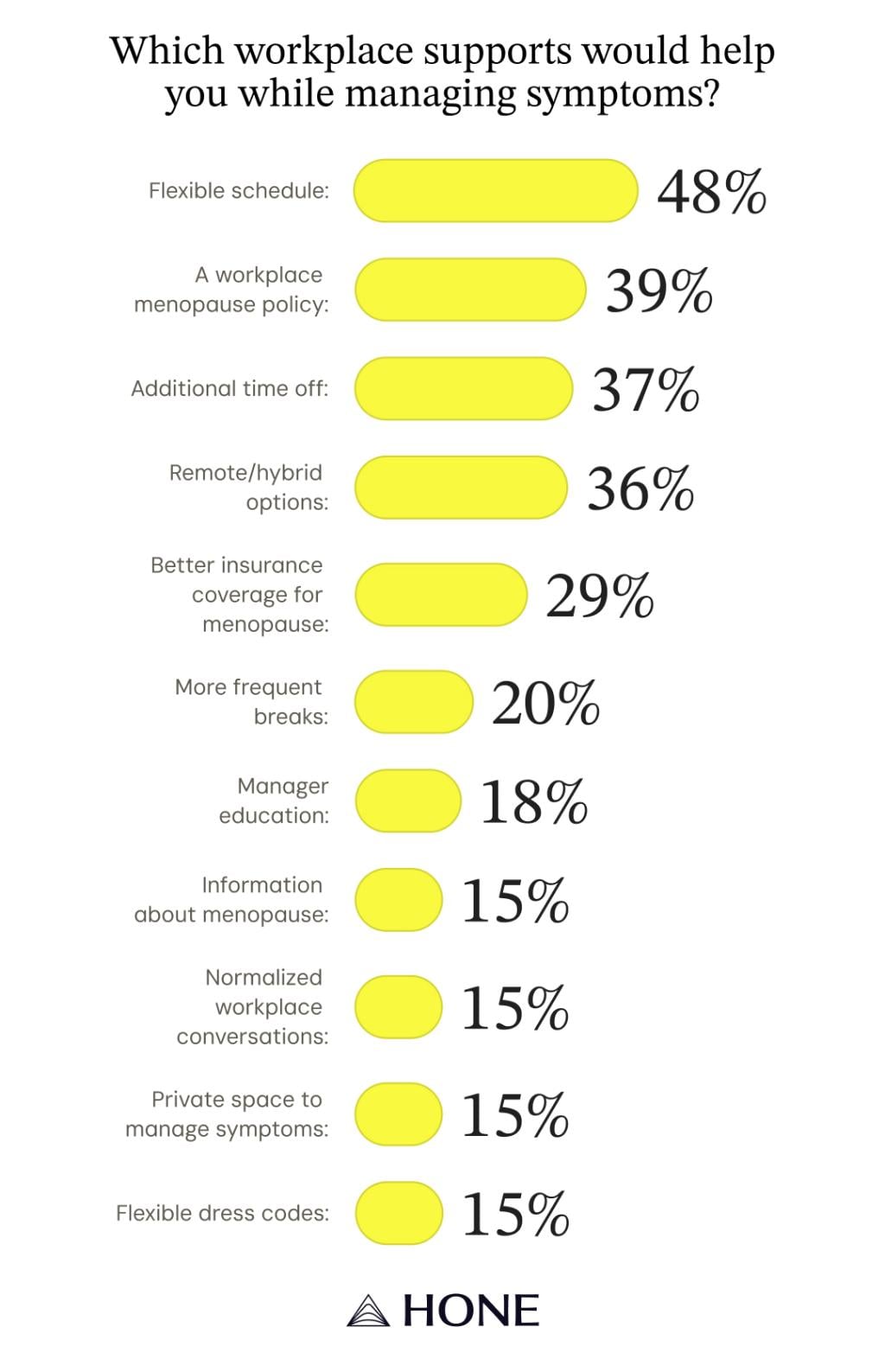
These policies, which are already extended to other health conditions and life-stage transitions, would improve retention, reduce burnout, and protect institutional knowledge, while signaling a culture that takes health and equity seriously.
"We ask a lot of the working women in their 40s and 50s 鈥� leadership, institutional knowledge, complex decision-making. That's exactly when hormonal changes start undermining the cognitive tools those roles depend on," says board-certified OB-GYN Shelly Chvotzkin, D.O. "Employers who recognize that and respond will have a real advantage."
Methodology: Hone Health surveyed 1,028 working women in perimenopause or postmenopause as part of a broader survey of 1,659 women. Respondents were at least 30 years old, were employed full- or part-time, and were drawn from all major U.S. regions. The survey was fielded in 2025.
was produced by and reviewed and distributed by 爆料TV.