Can Philly mass-produce its way out of a housing crisis?
Across the U.S., mayors and city councils have been making bold promises to solve the urban housing crisis. In Philadelphia, Mayor Cherelle Parker is looking to modular building as an essential part of her plan.
Parker’s ambitious $2 billion Housing Opportunities Made Easy (H.O.M.E.) initiative set out to create 30,000 affordable units across Philadelphia through restoration and construction. But her administration faces the same challenges that have hit cities across the country, from to .
Building material costs have more than 41% since the pandemic began. Tariff and supply chain disruptions to the price tag. The construction industry faces a shortage of .
To make H.O.M.E. happen in this environment, and report, the city is looking beyond conventional options.
“It needs to be all of the above: union, non-union, modular, panelized, 3D printed — all of the above,” says Tom Hardiman, executive director of the Modular Building Institute and the Modular Home Builders Association. “If we do that, I think we can, collaboratively, build a lot more housing than we can if we each try to compete with each other.”
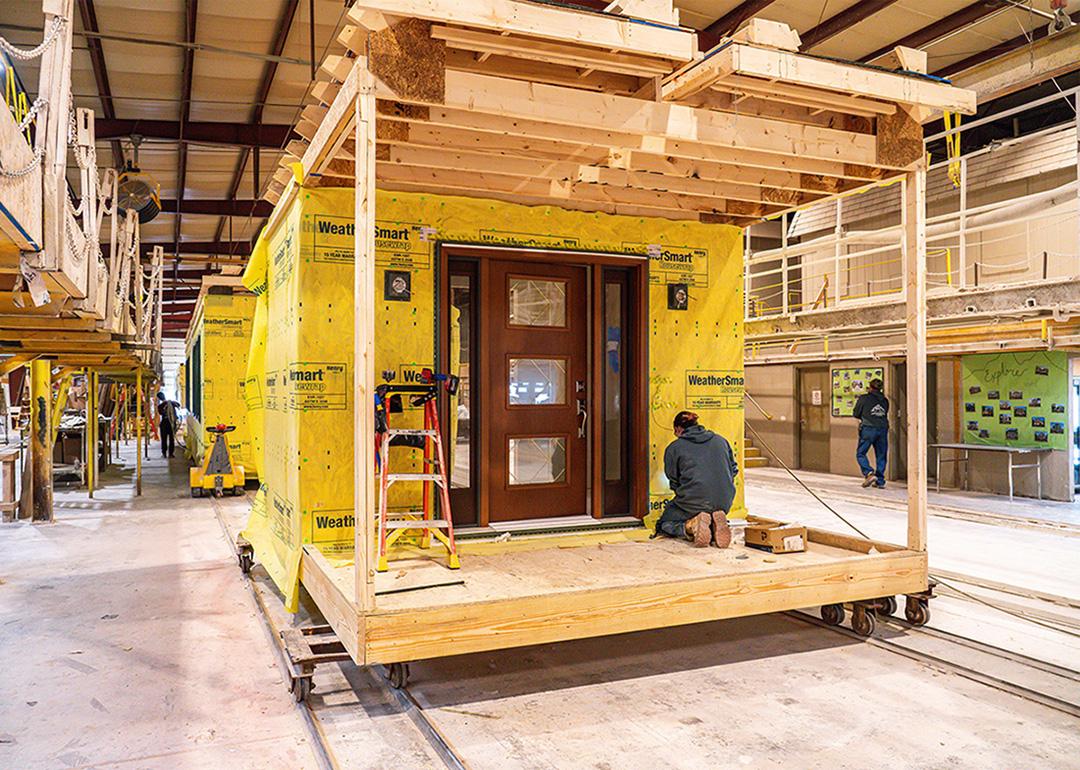
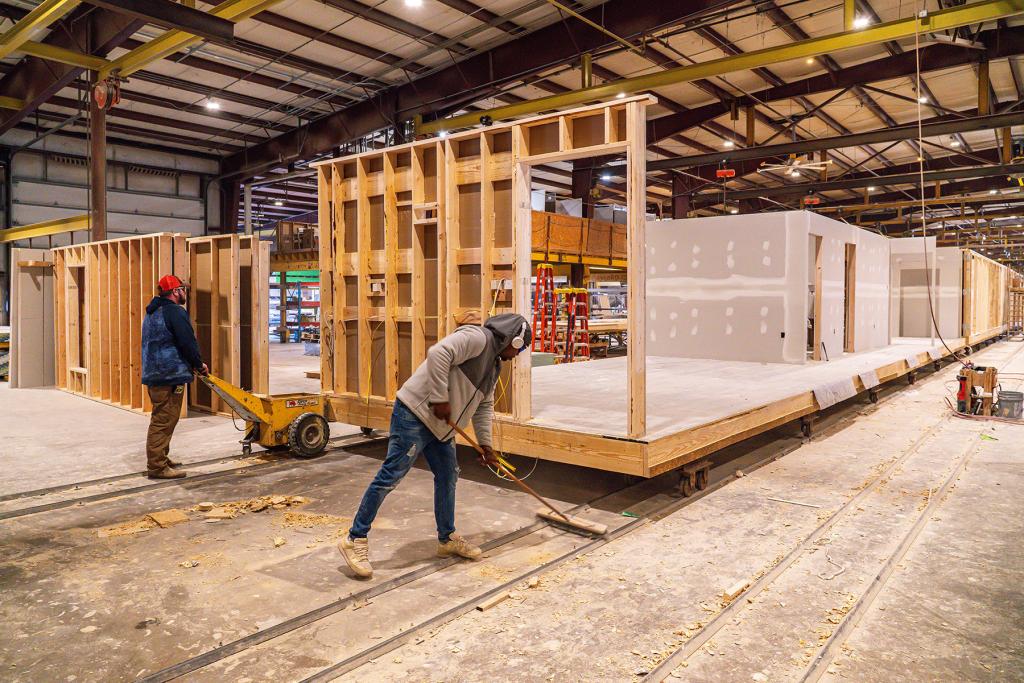
Traditionally, single-family homes are “stick built,” with workers constructing the building on site, piece by piece. With modular construction, homes are built off-site in a factory — either as entire “volumetric” boxes or large “flat-pack” panels — then shipped to their final location for assembly.
Some companies are experimenting with — using large-scale printers to extrude layers of concrete or other materials to form walls and structural elements — and , seeking to automate some of the most labor-intensive steps in the building process.
Each approach promises to shorten timelines, reduce waste, and ease the strain on a shrinking workforce. None is a silver bullet.
Arica Young, director of Housing Access and Affordability at the Lincoln Institute of Land Policy and a Philadelphia native, notes that leveraging these new techniques requires intentional forethought.
“You can’t use the same planning mechanisms for modular or manufactured housing that you do for site-built. They are two completely different systems that have different requirements,” Young says.
A modular home isn’t automatically an affordable one. Elements such as design, inspection approvals, utilities and land acquisition and remediation must be pre-aligned to ensure the process moves forward. “So, if you don’t know that, and you go in to use modular or manufactured,” she says, “you might find it actually costs you more. Because you haven’t been able to optimize the efficiencies there.”
A modular housing factory in North Philly?
Mayor Parker’s , introduced in March, includes $10 million designated for modular building. It is the only technology the city has specifically identified as part of its campaign, in part because it’s a relatively well-established option. Other developers and public housing agencies around the country have successfully constructed using these techniques, passing their cost savings onto tenants.
Building houses in a factory offers the cost efficiencies and waste reduction of buying and producing in bulk. It also removes interruptions created by weather, and in turn decreases costs from a shortened construction timeline.
An Urban Institute analysis found that modular single-family homes could be than traditional, stick-built homes, as of 2023. About 20% of new modular-built homes sold for less than $300,000, as compared with about 14% percent of stick-built homes.
“We can dramatically increase the supply of housing much quicker than conventional construction,” says Hardiman, of the Modular Building Institute. “That plays into the market dynamics: more supply … your costs are going to bend downward.”
Volumetric Building Companies is one Philadelphia-based modular developer that has already built several market-rate apartment buildings, including SOLO on Chestnut at 43rd Street in West Philly — where they estimated saving a year’s worth of construction time — as well as a 324-unit student housing facility near Temple University in North Philly.
In 2023, the company completed construction of , a 47-unit apartment building in Philly’s Frankford neighborhood, developed with the VBC Giving Foundation to provide affordable homes for veterans experiencing homelessness and housing insecurity. Modular construction meant it took 14 months and $6 million to build, which is “only a third of the typical budget for similar projects.”
The modular housing industry is expected to grow 7.8% annually through 2030, according to a by Grandview Research. Volumetric building currently accounts for slightly above 5% of new construction, per Hardiman.
Depending on size, land cost and equipment type, building a modular factory can cost at least $10-$50 million, he said. Philly’s budgeted $10 million “may be used for site preparation and utility and infrastructural improvements for a modular housing factory and/or the development of modular housing on publicly owned land,” Jamila Davis, the communications supervisor for the Department of Planning and Development, told Next City and .
There are already 17 volumetric modular factories located within 200 miles of Philadelphia. That’s roughly the distance for distribution before transportation costs become excessive, according to Young, of the Lincoln Institute of Land Policy.
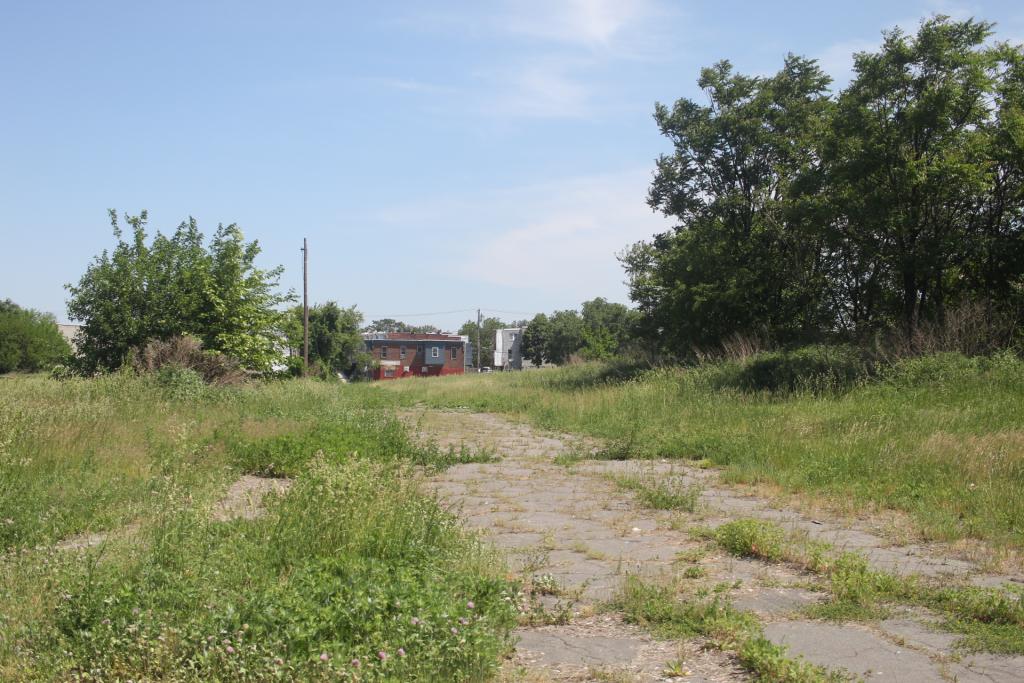
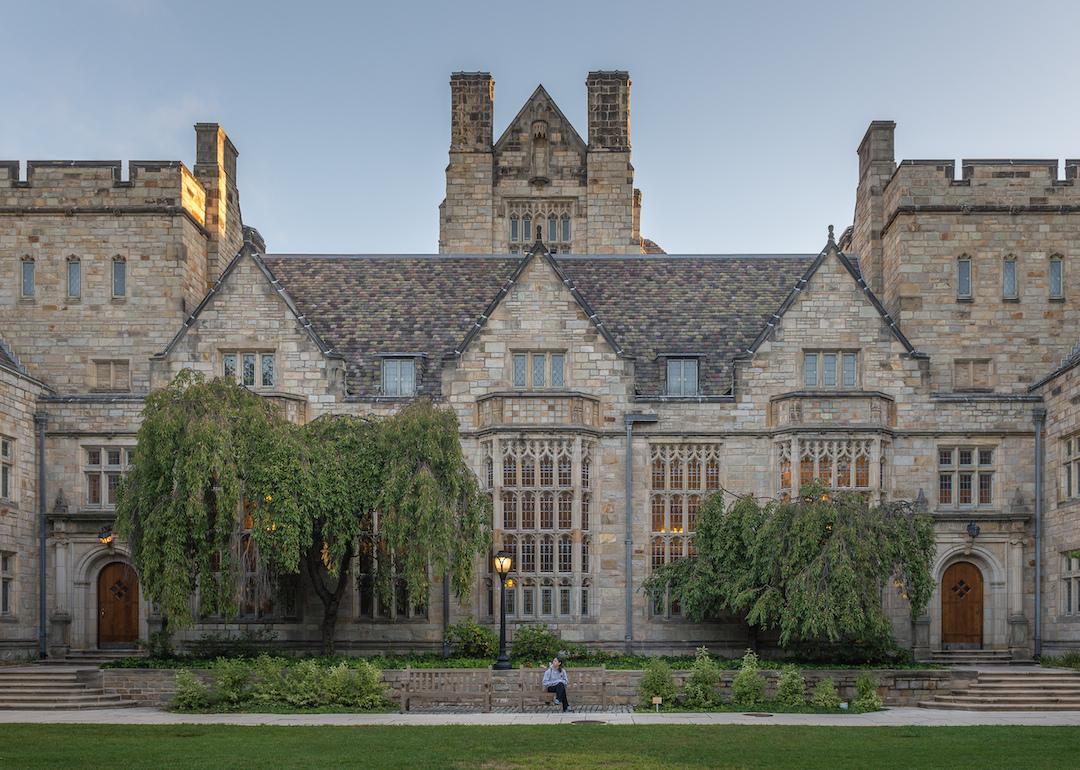
Philly is considering building another one, perhaps right in the middle of the city, at the site pictured above in North Philadelphia's Logan Triangle.
Per Davis, officials are currently reviewing responses to a March to construct such a factory, or multiple ones. The administration is eyeing the 35-acre as a potential factory site. The city previously demolished nearly 1,000 homes there after they were found to be sinking into the ground.
Young expressed concerns about the location, where remediation has been .
“It’s a great location in terms of transportation, but what worries me is the land itself,” she says. “I wonder, does the time it takes to remediate and make that a safe location to put a factory negate your ability to actually produce houses fast enough? … Don’t get me wrong — everywhere you would put it, it’s going to need some kind of remediation. But that site to me seems exceedingly problematic.”
Then there’s the question of speed. Parker’s administration has pledged to build 13,000 new homes before her first term expires at the end of 2027.
Rachel Siegel, a senior officer on the Housing Policy Initiative at the Pew Charitable Trust, believes it could therefore be beneficial to utilize the existing factories, possibly creating a pilot program to determine whether modular is a good solution to Philadelphia’s housing shortage.
“It’s reasonable to start with what exists already,” Siegel says. “If this needs to get started sooner, if there are other factories out there that could be leveraged.”
The promise of construction jobs — of a different kind
Building a modular construction factory locally would check off H.O.M.E. initiative’s box for creating jobs for Philadelphians — jobs that Parker has been adamant will be union positions.
“T³ó±ð&²Բú²õ±è; are gonna do the work,” Parker at a press conference launching the initiative last February, referring to the umbrella group of more than 50 local unions in the construction industry. “They are gonna help us train, as well, the next generation of skilled tradesmen and women in the city of Philadelphia.”
The City’s request for information on factory development and operations includes a request for “recommendations, best practices and innovative ideas for incorporating workforce development goals” into the factory’s operations.
Modular manufacturing jobs can be appealing to younger people entering the workforce, Hardiman says. They don’t need to travel to various job sites, the environmental conditions are predictable, and while they are still factory jobs, the manual labor is substantially less than for a typical contractor due to hybrid automation.
With Pennsylvania’s Department of Labor & Industry estimating a shortage of 300,000 skilled trade workers by 2030, gains based on these factors could prove vital.
“We’re falling further behind on housing shortages,” Hardiman says. “On-site labor is tight now, and it’s only going to get more restrictive in the next five years. There’s more people exiting the construction trades than entering. I think it’s just going to get worse in the next five years unless we do something like modernizing or industrializing the construction.”
was produced by and , and reviewed and distributed by ±¬ÁÏTV.