How an 1876 massacre of Black men in South Carolina turned racial terror into political power

How an 1876 massacre of Black men in South Carolina turned racial terror into political power
As the , its citizens commemorate a democracy more diverse, free and inclusive than it’s ever been. The path to this milestone was imperfect and paved in . Still, few of the revelers will likely pay heed to the anniversary of another historic event: the 150th anniversary of the July 1876 .
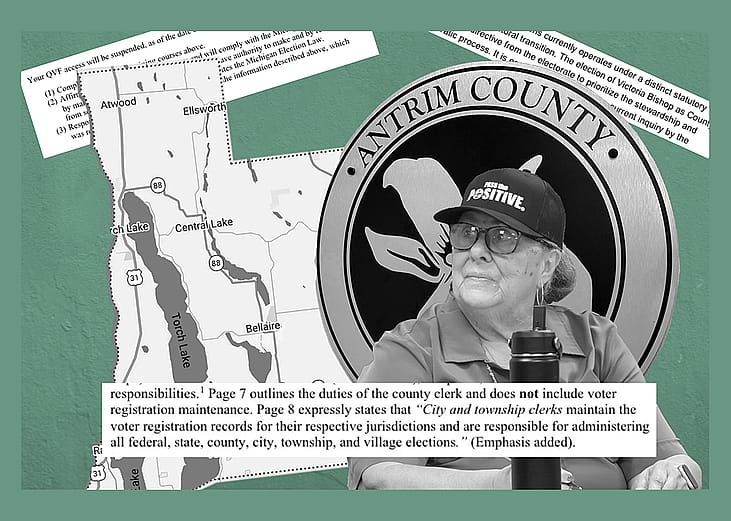
The massacre, which took place in Hamburg, South Carolina, began as a dispute between a local Black militia and two white citizens over whether the latter could cross the group’s centennial Fourth of July parade, Jacob Ware, a professor of domestic terrorism at Georgetown University, recounts for . The militia leader, , was later .
, Adams was met with a white militia — part of the white supremacist — which then pursued the Black militia on their retreat to their weapons arsenal. After a firefight, the Red Shirts captured several Black militiamen, marched them to a nearby site and .
South Carolina’s Republican governor, , described the event as a “butchery of unoffending and unarmed colored men by a brutal and bloodthirsty mob of white men.†Yet after the attack. In fact, several of the Red Shirts ringleaders to the highest offices in the state.
Corey Rogers, an organizer of the , recently called this massacre “the seminal event that began to change the trajectory of African Americans.†The that would define the next 100 years of U.S. history, in other words, was born at Hamburg.
shows that the Hamburg massacre was not just characteristic of a broader violent moment, but also that the echoes of such violence .
From Hamburg, across the South
, the 12 years of the Reconstruction era, during which the Union attempted to construct a racially diverse democracy in the wake of the Civil War, saw over 2,000 Black citizens murdered in “racial terror lynchings.†, more starkly claimed that as many as 53,000 Black Americans had been murdered in the 30 years following the Civil War.
By intimidating Black voters and galvanizing white Democrats who sought to undo the results of the Civil War, this violence and the tangible promises of Black emancipation.
What happened in Hamburg provides a particularly egregious example of such racial terrorism catapulting political triumph. After that tragedy, several of the Red Shirts ringleaders went on to successful political careers, with — one of whom, Benjamin Tillman, also served as South Carolina governor.
As Jenny Heckel, then a Clemson University graduate student, , it was “not in spite of the white Carolinians’ participation in the murder of six black men, but because of it, they won election to political offices.â€
In South Carolina’s 1876 gubernatorial race, the Democratic candidate, Confederate veteran Wade Hampton III, emerged triumphant and reinstated white supremacy as the . His name by former Confederate major general Matthew Butler, who had before the Hamburg attack and who himself went on to serve in the U.S. Senate.
In 1895, South Carolina held a , spearheaded by the aforementioned Hamburg massacre ringleader Tillman, and adopted a new constitution that effectively ended the Black vote in the state.
An enduring threat
In the 1890s, renowned abolitionist and orator said white vigilantes offered for the lynchings of Black Americans: stamping out alleged race riots, protecting the white vote share and protecting white women from alleged sexual crimes by Black men.
The first two were front and center in the Hamburg massacre. a decade ago, “white Carolinians blamed the black militia for starting the riot, and Southern white newspapers created images of riotous blacks to contest black descriptions.â€
Since the massacre, racial violence has had a long echo in the United States. And in many cases, the same justifications elucidated by Douglass remain.
Both the Tulsa race massacre and the 1955 murder of Emmett Till, for instance, were of sexual harassment or assault made against young Black men.
The violence persists today. In June 2015, just 150 miles (241 kilometers) from Hamburg, a white supremacist gunman entered the historically Black in Charleston, South Carolina, and opened fire, .

In May 2022, a white supremacist at the Tops Friendly Market in Buffalo, New York.
Both gunmen made multiple references to the same conspiracy theories Douglass identified, with the Charleston going as far as to as “a defensive measure†the “historical lies, exaggerations and myths†of the historical record of slavery and its aftermath.
Still, there are key differences between the attacks at Charleston and Buffalo and their Reconstruction predecessors. The that tainted the Reconstruction and post-Reconstruction era clashes with traditional definitions of terrorism, which typically targets a power structure that such violence seeks to upend.
Instead, attacks like the one in Hamburg, which sought to proactively protect the rights and power of white Americans — and which were often endorsed by state and local governments — have more in common with genocide and ethnic cleansing. Not only did the scale of the indicate a campaign to mass-murder an ethnic subgroup for political purposes, but Tillman, perhaps the most infamous of the Hamburg murderers, the attack’s goals.
“We are not sorry for it,†he would proudly recall before the U.S. Senate in 1900. “We of the south have never recognized the right of the negro to govern white men.â€
‘A painful duty’
Attempting to commemorate all such anniversaries is an impossible task, simply because of the sheer volume. For example, September marks the 150th anniversary of the . In that massacre, Black South Carolinians were systematically hunted throughout their community over an alleged attack on a white elderly woman, which was later proved false. The death toll may have eclipsed 100.
have plagued U.S. history.
To tell the story of America’s founding without referencing these profound scars is akin to deceit, if not complicity. put it this way in 1895: “It becomes a painful duty   to reproduce a record which shows that a large portion of the American people avow anarchy, condone murder and defy the contempt of civilization.â€
Or, as a said of Hamburg commemorations, “We want to keep it burning so people won’t forget what transpired.â€
was produced by and reviewed and distributed by ±ŹÁÏTV.