Rats, insects and mold: How bad food leaves prisoners hungry and sick
Rats, insects and mold: How bad food leaves prisoners hungry and sick
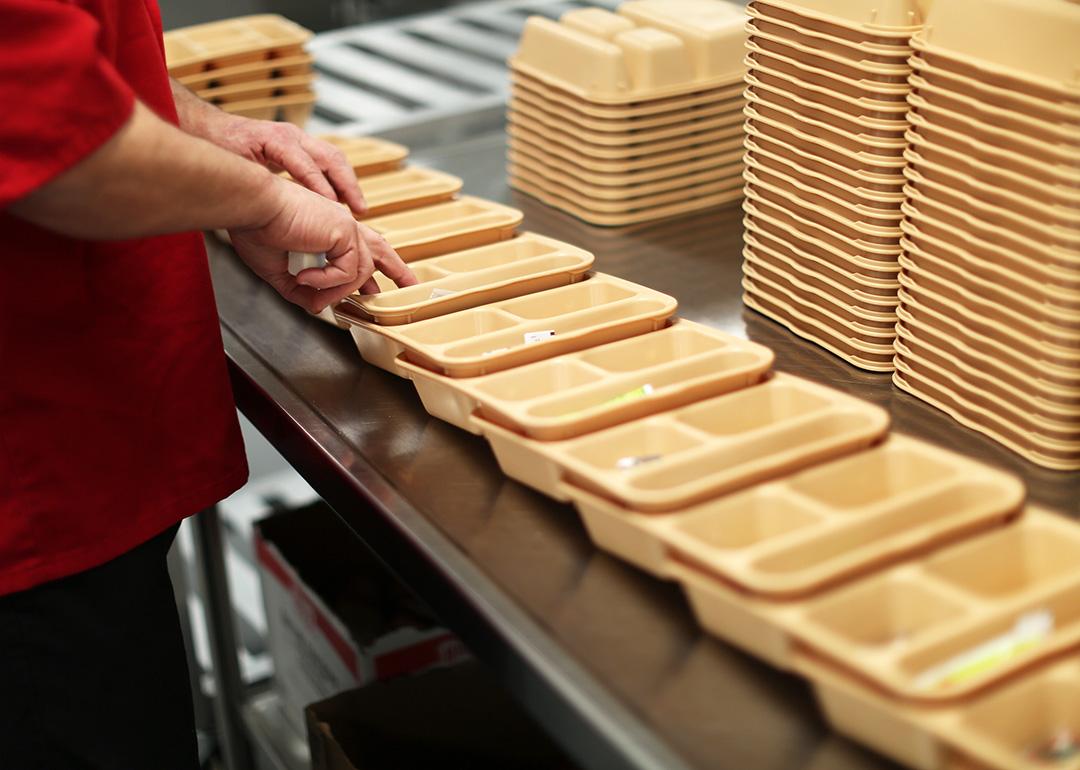
The food on the trays doesn鈥檛 even look like food. In photos smuggled out of Georgia鈥檚 prisons, what passes for a meal is either grossly inadequate for a grown man, unrecognizable sludge, or both.
鈥淭here's no possible way you could survive off what they feed you,鈥� said Bailey, who is currently incarcerated in Georgia and asked to withhold his full name for fear of retaliation from staff. He and other people behind bars in the state recount seeing rats in the kitchen and insects in the food, and being served meals on trays caked with mold. 鈥淭he level of malnourished people back here would have you torn between sick and disgusted.鈥�
The Georgia state prison system is awash in stabbings, beatings and death, with 鈥渘ear-constant, life-threatening violence functioning as the norm,鈥� the Department of Justice . Locks don鈥檛 work. Staffing is 鈥済rossly inadequate.鈥� But one underlying cause of the extreme danger, say advocates, prisoners and their families, is the food.
鈥淏eing hungry all the time, and being fed slop 鈥� you鈥檝e gotta believe people get frustrated, especially over years and years of this. That frustration leads to violence,鈥� said Bernard Christian of the grassroots advocacy group Georgia Prisoners Speak.
The problem is getting worse, according to by the group. They found that funding for food in the state鈥檚 corrections budget is roughly flat year over year, even as prison populations rise and inflation means the same budget buys less food. Per person, Georgia spent about $1.69 a day in 2024, and has proposed to spend $1.60 a day in their 2027 budget 鈥� less than 60 cents per meal. By contrast, the Food and Drug Administration鈥檚 鈥溾�� estimates that feeding an adult man 鈥渁 nutritious, practical, cost-effective diet鈥� costs about $10 per day.
Travis, currently serving time in a Georgia state prison, says that people are so hungry that they steal food from the kitchen, leaving those on the chow line with even smaller portions. 鈥淵ou can feel the tension in the air when stuff like this happens,鈥� said Travis, who also asked us to use his nickname because he fears retaliation by Georgia corrections officials. Travis said he was recently diagnosed with gum disease, which his health care providers attributed to malnutrition.
Georgia spends about 14 times more on medical care than on food for the people in its prisons, a $432 million bill that Georgia Prisoners Speak describes as 鈥渨hat the State pays to treat the disease that underfeeding produces.鈥� Certainly, one cause of sky-high medical costs is the rampant violence 鈥� hospitalizations from stabbings and beatings are costly 鈥� but poor diets can also result in high rates of chronic illness. Nationwide, people in prison have , but maladies like high blood pressure and diabetes can be caused 鈥� and worsened 鈥� by poor diet.
The Georgia corrections department鈥檚 food system is state-run, but for-profit prison food contractors comprise a . The biggest player, by far, is Aramark, which feeds hundreds of thousands of prisoners in seventeen states, according to . The company also services stadiums, universities and hospitals, but their correctional contracts alone were worth $1.78 billion in revenue in 2024, according to a market analysis. The report found that Aramark鈥檚 contracts are plagued with similar problems in many of the places the company operates: unappetizing meals, inadequate portion sizes, spoiled and contaminated food. Several states have canceled contracts with Aramark because of accusations of 鈥溾�� and , leading to outbreaks of foodborne illness. Even in those circumstances, the researchers found, states are paying Aramark between $3 and $7 per person per day 鈥� six to 14 times more than Georgia is spending to feed the people in its prisons.
To date, the largest prison system to have privatized its food services is the Florida Department of Corrections, which incarcerates more than 80,000 people. But it may soon lose that title.
Late on the night of May 1, hours after government offices had closed for the weekend, the federal Bureau of Prisons posted a request for information on the federal contracting site . The request read, 鈥渟eeking information from qualified vendors capable of providing enterprise-wide food service operations across all Bureau of Prisons-managed institutions nationwide.鈥� Federal prisons hold more than 140,000 people in more than 122 facilities, from Honolulu to rural New Hampshire and everywhere in between. There has never been a prison food contract that big. 鈥淣othing even close,鈥� said Daniel Rosen, of the Carceral Nutrition Project, a nonprofit that co-authored the recent report with The Center for Science in the Public Interest and aims to increase the quality of food in U.S. prisons and jails. 鈥淚t would be a massive effort for any of these companies.鈥�
To supplement meager meals, prisoners in Georgia and in other prison systems rely on the commissary, where money received from loved ones, or earned a few pennies at a time in prison jobs, can buy ramen, chips, and other overpriced, ultraprocessed food. And if the Bureau of Prisons follows through, those purchases will also add to some corporate bottom line: federal prison officials are looking into .
was produced by and reviewed and distributed by 爆料TV.