Forget the hype house. 7 reasons why creators are working from coworking spaces
Forget the hype house. 7 reasons why creators are working from coworking spaces
Successful YouTubers are the new TV and movie stars鈥攁nd they鈥檙e ditching Hollywood鈥檚 studio model.
At YouTube鈥檚 Brandcast upfront in May, creators like 鈥淐all Her Daddy鈥� host Alex Cooper and Trevor Noah skipped network meetings to pitch their upcoming shows directly to advertisers and media buyers. As the platform pivots to allow brands to buy inventory in individual series, instead of cutting checks later on based on likes and follows, creators can now also secure pre-production funding and run with it鈥攑artly why 鈥淪ubway Takes鈥� host Kareem Rahma ditched CNN after seven years in 鈥渄isastrous鈥� production limbo to independently launch his new interview show, 鈥淜eep the Meter Running,鈥� on YouTube.
The transition is a no-brainer: YouTube took 12.5% of all TV and streaming viewership in January 2026鈥攐utpacing Netflix, Amazon, and Disney+鈥攁nd allowed creators to self-start . In late 2025,YouTube revealed it had paid out over $100 billion to creators, artists and media companies since 2021, and the number of YouTube channels making more than $100,000 from TV screens jumped 45 percent year-on-year. The platform is also taking aim at awards legitimacy to match its reach, expanding its Primetime Emmy FYC slate from three to seven creators in 2026鈥攊ncluding "Subway Takes" and "Celebrity Substitute." Creators with nation-sized followings can afford to build their own vast production campuses鈥� North Carolina studio encompasses the second-largest sound stage in the U.S.鈥攂ut where are these vast swathes of aspiring stars recording their shows?
The surprising answer: coworking spaces.
Below, explains seven reasons why a premium coworking membership sets budding YouTubers鈥攁nd anyone making content at your company鈥攐n the path to success.
1. Space for Creativity To Thrive in Community
Even solo creators need help鈥攕hows and series with TV production DNA are labor-intensive and need a producer, an editor, and a fixer. Julian Shapiro-Barnum scaled from posting COVID-19 pandemic-era YouTube videos of himself interviewing children solo to a full production company for Celebrity Substitute, which now has . Creator-showrunners also need to tap a steady stream of guests and collaborators to produce fresh, relevant content while growing their respective followings.
Collab houses tried to solve for community and scale with flashy mansions, but as drama unfolded and breakout stars left鈥攁nd teams and creators still opted to live and work offsite鈥攖he content-house era was a flash in the pan. A 2023 reported how the TikTok-famous Hype House peaked at 21 members, lost its top talent within months of its 2020 launch (when only four members lived there full-time), and was sold in August 2024.
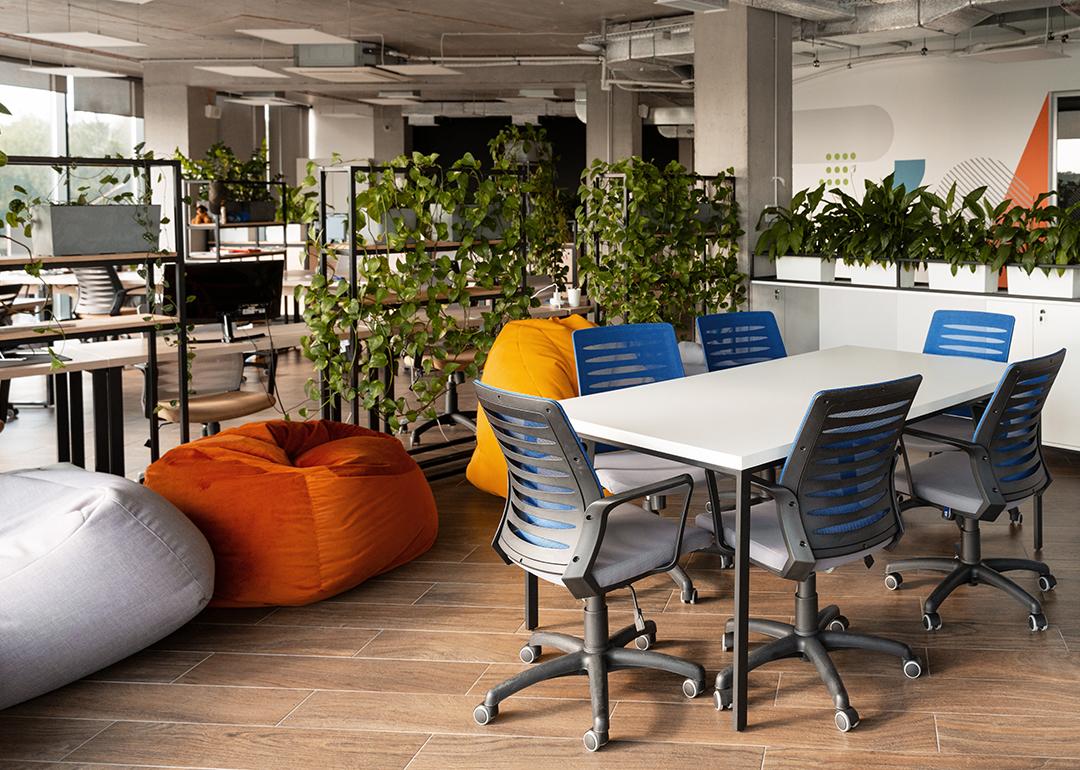
Enter the premium shared office: a place where content teams can meet, ideate, and execute without friction at team desks, in conference rooms, within dedicated shooting spaces. Creative studio Bonfire Labs delivers 鈥渟calable as hell鈥� creative services for clients Google, Adobe, Amazon, GAP, Fitbit, and Hims & Hers. Because every project varies in scope and scale, the studio needs to tap diverse locations from a business office base in a coworking space. 鈥淭his enables us to maintain a smaller footprint while providing an upscale, bespoke base for team members, plus access to centrally located, beautiful conference rooms for meetings with brands and prospects,鈥� head of business development, Zach Rubin.
2. Connections to Collaborators and Collaborators Without the Strings
Historically, support for producing content required trade-offs. Traditional studios demanded the final word on show format and inclusions, and paid salaries in lieu of shares in ad and partnership revenue. Content houses offered free rent but required exclusivity, brand-deal cuts, and creative control: Fenty Beauty's brand house required creators to make on-message content; Jake Paul structured his so only he could monetize the collective output.
The coworking model offers organic community and necessary infrastructure鈥攏o contractual strings attached. Music publicists sit three desks from documentary editors, entertainment lawyers, and financiers. Podcast producers cross paths with brand strategists at member events. Creators own their IP, brand deals, and post what they want. As Julian Shapiro-Barnum, creator of 鈥淩ecess Therapy鈥� and 鈥淐elebrity Substitute,鈥�: "We're not waiting on anybody to open any door for us or unlock any budget, we're going to brands with an idea, getting it funded ourselves."
3. Design-Forward Locations That Double As Sets
The backdrop behind a creator is visual branding. A bare wall reads 鈥渂edroom producer,鈥� especially on a 65-inch screen; a biophilic, layered space with camera-ready colors and furnishings signals the show is hitting its stride.
A 60-second brand partnership or podcast video shot in a beautifully decorated private office delivers the look and feel of a dedicated soundstage. Design-forward coworking offers additional spaces like cozy lounges, shared kitchens, and outdoor space that can be broadcast-ready with a few tweaks鈥攁nd on a flexible schedule that creators own.
When 鈥淗ouse Bunny鈥� actor Anna Faris and her producing partner Sim Sarna looked for an inviting home for their relationship advice podcast, 鈥淯nqualified,鈥� they didn't sign a studio lease鈥攖hey found a Hollywood coworking space with a living-room-style space. 鈥淧odcasting is an intimate experience, and audio is intimate because we're in your ears," Sarna .
4. Silence Is Golden, and Coworking Spaces Offer Soundproofing Essential to Quality Production
鈥淚'm about to drive over to Henry's house and knock out the leaf blower鈥擨'm going to get him!鈥� 鈥淪martless鈥� cohost Jason Bateman as a gardener fires up his tools over guest Henry Winkler. For podcasters, voice-over artists, producers, and sound mixers, online podcast recording tools like Zencastr are a boon for engaging busy guests wherever they are, but it鈥檚 still tricky to find spots with acoustic silence鈥攏ot the relative quiet of a bedroom or home office, but an absence of all sound to ensure vocal tracks sit cleanly in a mix.
For creators without a dedicated studio, soundproofed private offices and telephone booths in a coworking space offer small footprints, soft surfaces, and professional-grade acoustic infrastructure as part of a membership. For international guests, it's typically easier to find and drop into a nearby coworking space than a studio. Karine Sarkissian, founding partner at VC firm Tamar Capital and design lead at the enterprise program Le Studio, rents a private coworking space office in San Francisco where she records her podcast, 鈥淯nder The Hood,鈥� with visiting and remote guests in phone booths and conference rooms. 鈥淲e come in two or three days a week and often start work at 6 a.m. to overlap with London and Beirut time zones. It's really fun, and the conversations are truly inspiring!鈥�
5. Just Hit 鈥楻ecord.鈥� Coworking Spaces Offer the Right Tools and Technologies.
While 鈥淪martLess鈥� is one pod that sticks to its off-screen philosophy, providing video for audio shows is a lucrative business. YouTube has monthly podcast viewers. A year into Spotify's Partner Program, which helps creators to monetize video engagement, monthly video podcast consumption has nearly doubled. ( to podcast publishers and podcasters worldwide in the first quarter of 2025 through ads and revenue generated through the Spotify Partner Program.) Podcast software platform Podyx reports that brand spend on full packages鈥攅diting, show notes, clipping, and short-form video鈥攊s growing strongly, but tacking video onto an audio setup is costly. With so many shows and hosts vying for attention, plug-and-play setups are essential for shipping well-produced content quickly and consistently.
Premium shared office developments offer what would cost a fortune to assemble independently: dedicated high-speed internet, video conferencing rooms, AV infrastructure, lavish indoor-outdoor spaces, and even purpose-built content studios. When The Spear, the in the U.S., opens in downtown San Francisco later this year, tenants will have access to luxe coworking space and Spear Studios鈥攁 private media recording space for podcasts, music, and live TV.
6. Dedicated Events Teams Make Reserving Spaces, Booking Talent, and Managing AV Gear Easy
Buying or hiring cameras and mics is already pricey, and there are plenty of hidden costs baked into independent productions. Booking guests. Confirming rooms. Green-room logistics. Setting up AV and mic checks. Now that A-listers are YouTube regulars鈥擧arry Styles on 鈥淩oyal Court,鈥� Charli XCX on 鈥淔eeding Starving Celebrities鈥濃�攃reators are under pressure to deliver professional, late show-style guest hospitality.
Traditional studios employ staff for this鈥攁nd so do premium coworking spaces. Dedicated concierge-style community managers, events teams, and operations staff at shared offices offer turnkey hosting at a level approaching a small production company's back office included with membership. They even offer the flexibility to shoot commercials or launch products on a day pass. When Alex Gibney鈥檚 Jigsaw Pictures sought a location for 鈥淕eneration Hustle,鈥� a 10-part series that looks at the lengths young people will go to for fame, fortune, and power, a coworking space in San Francisco鈥檚 VC hub Jackson Square delivered the perfect setting.
7. The Financials Are a No-Brainer
For a working creator, the economics say it all. average $100 to $150 per hour and can be as costly as $500 per hour at flagship facilities. Filming spaces can run $60 to $180 per hour nationally鈥攁dding up to $30,000 to $80,000 annually for weekly content鈥攚hile renting a premium film studio in LA can kick up to $3,000 a day. A content-house mansion can easily and demands exclusivity.
Comparatively, a premium coworking membership鈥攚ith soundproofed offices, phone booths, design-forward lounges, conference rooms, AV gear, and staff鈥攖ypically per month. No revenue share or tithing on brand deals. The address is yours. The IP is yours. As YouTube CEO at Brandcast, creators today "want to be entrepreneurs, own their work, and have a direct relationship with an audience." Today鈥檚 coworking spaces are answering the call.
was developed by and reviewed and distributed by 爆料TV.