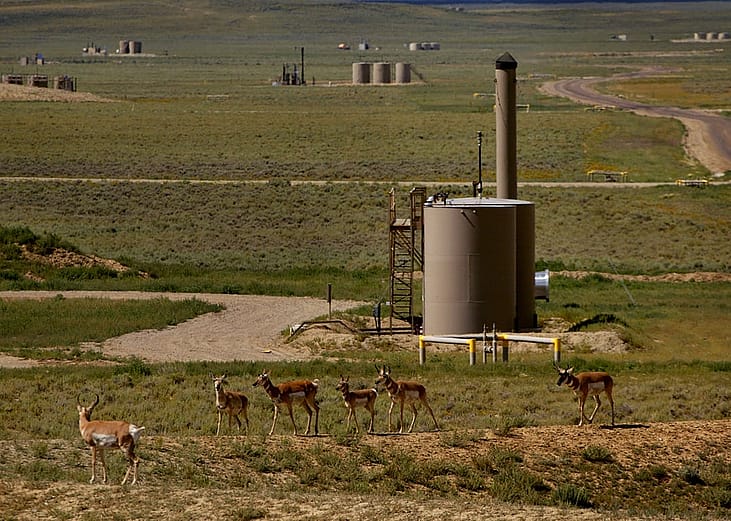
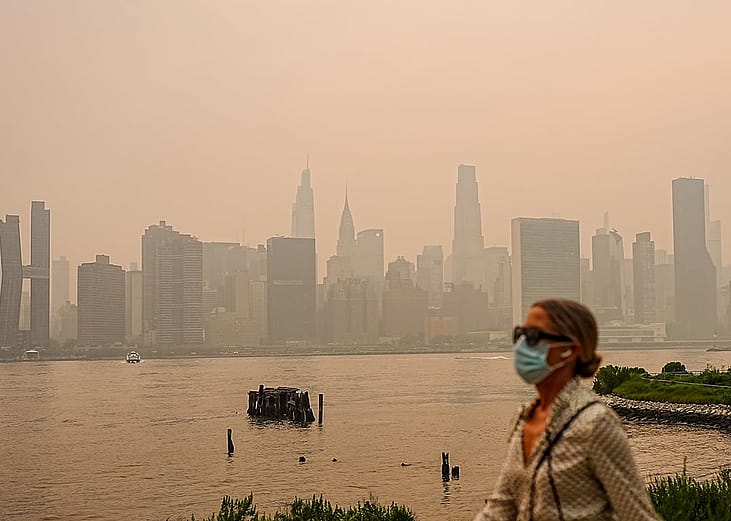
Greenhouse gases—including carbon—are emitted through the burning of fossil fuels, and trap heat in the atmosphere.ÌýThe combination and abundance of these gases in the atmosphere make the planet warmer and can lead to rapid climate change. Gases can remain in the Earth's atmosphere for thousands of years, so countries across the world have taken steps to reconsider their environmental impact in terms of carbon and other greenhouse emissions.
±¬ÁÏTV compiled to determine which countries produce the highest carbon emissions. The according to their ecological footprint per capita, or the amount of natural land or sea that would be required to support one person in each country for one year.ÌýAn "ecological footprint" was calculated for each country, which expresses the amount of "biologically productive area" that would be required to absorb a population's carbon dioxide emissions for a year.ÌýBiocapacity was also factored into the rankings, expressingÌýeach country's total land and sea available to provide resources.
All values are defined in global hectares, which is a measurement unit for ecological footprint and biocapacity. Global hectares are necessary to measure ecological footprints, because .
Read on to find out which countries need to take more action to reduce their environmental impact.
RELATED:
You may also like: 50 of the greatest archaeological discoveries of all time
1 / 50
#50. Italy
Total ecological footprint: 256.8 million global hectares (4.3 per capita)
Total biocapacity: 56.1 million global hectares (0.9 per capita)
Population: 59.8 million
In Italy, carbon emissionsÌýfrom liquid fuelsÌýhave dropped from 76% to 46% Since 1974. Emissions per capita within the country grew rapidly between 1950 and 1974. Coal usage now of Italy’s total fossil fuel carbon emissions.
2 / 50
#49. Greece
Total ecological footprint: 47.2 million global hectares (4.3 per capita)
Total biocapacity: 17.6 million global hectares (1.6 per capita)
Population: 11.0 million
Between 1995 andÌý2008, Greece reduced its carbon emissions thanks toÌýhigh economic growth, favorable weather, and greenhouse gas mitigation policies. However, studies have shown that in general, the is low.
3 / 50
#48. Libyan Arab Jamahiriya
Total ecological footprint: 27.1 million global hectares (4.3 per capita)
Total biocapacity: 4.3 million global hectares (0.7 per capita)
Population: 6.3 million
Libyan Arab Jamahiriya is where a third of Africa’s known oil reserves are located. This has contributed greatly to the country’s carbon emissions. Domestic oil refineries in the country in Libyan Arab Jamahiriya than any other North African country.
4 / 50
#47. Malaysia
Total ecological footprint: 132.2 million global hectares (4.4 per capita)
Total biocapacity: 71.4 million global hectares (2.4 per capita)
Population: 29.9 million
Malaysia is on pace to by 2020, according to the country’s prime minister, who also noted that emissions were down 33% in 2015 compared to 2005.
5 / 50
#46. Poland
Total ecological footprint: 171.6 million global hectares (4.4 per capita)
Total biocapacity: 80.2 million global hectares (2.1 per capita)
Population: 38.6 million
Poland has the fifth-highest greenhouse gas emissions in the European Union, and it is estimated that pollution from fossil fuel combustion . Poland has a long history of mining and burning coal, and the country has vetoed legislation that would impose more regulations on the practice.
You may also like: These local governments are suing Big Oil
6 / 50
#45. Bhutan
Total ecological footprint: 3.5 million global hectares (4.6 per capita)
Total biocapacity: 3.9 million global hectares (5.1 per capita)
Population: 765,000
Bhutan has abundantÌýcarbon sinks, like itsÌýforests, that absorb more sources of carbon dioxide annually than sources of pollution. The country is Ìýby 2030.
7 / 50
#44. Slovenia
Total ecological footprint: 9.7 million global hectares (4.7 per capita)
Total biocapacity: 4.7 million global hectares (2.3 per capita)
Population: 2.1 million
Beginning in 2030, Slovenia will no longer allow first-time registration for cars with an internal combustion engine running on petroleum or diesel, inÌý. Slovenia is instead focused on increasing the number of electric and hybrid vehicles.
8 / 50
#43. Israel
Total ecological footprint: 37.2 million global hectares (4.7 per capita)
Total biocapacity: 2.1 million global hectares (0.3 per capita)
Population: 7.9 million
In 2016, Israeli government officials and increase energy efficiency. Government officials predicted the plan would saveÌýthe countryÌýmore than $8 billion by 2030, when theyÌýplans to have reduced carbon emissions by 26%.
9 / 50
#42. Belarus
Total ecological footprint: 44.6 million global hectares (4.7 per capita)
Total biocapacity: 32.6 million global hectares (3.4 per capita)
Population: 9.5 million
By 2020, Belarus aims to reduce greenhouse gas emissions by 600 million tons. The country has ,Ìýand taken efforts to re-swamp degraded peat bogs.
10 / 50
#41. France
Total ecological footprint: 301.4 million global hectares (4.7 per capita)
Total biocapacity: 174.9 million global hectares (2.7 per capita)
Population: 64.2 million
Though France to reduce greenhouse gas emissions, the government plans to revise its target at the end of this year. While FranceÌýled efforts towards the landmark Paris Agreement on climate change, its carbon emissions have risen 3.6% since 2015.
You may also like: Concrete is one of the biggest contributors to carbon emissions: New technologies could change that
11 / 50
#40. Ireland
Total ecological footprint: 22.0 million global hectares (4.7 per capita)
Total biocapacity: 16.1 million global hectares (3.4 per capita)
Population: 4.7 million
Ireland’s strong economic growth will , according to projections. The country has increased its fossil fuel consumption, partly due to low fuel prices. Ireland has also expanded its agricultural sector, which has led to increased emissions.
12 / 50
#39. Japan
Total ecological footprint: 601.5 million global hectares (4.7 per capita)
Total biocapacity: 76.7 million global hectares (0.6 per capita)
Population: 126.8 million
Greenhouse gas emissions in Japan —a six-year low. Japan set a goal to cut its carbon emissions by 26% from 2013 to 2030. EmissionsÌýrose after the nuclear disaster at Fukushima in 2011.
13 / 50
#38. United Kingdom
Total ecological footprint: 308.7 million global hectares (4.8 per capita)
Total biocapacity: 77.5 million global hectares (1.2 per capita)
Population: 64.3 million
The United Kingdom experienced a , which drove the country’s carbon emissions down by 2.6%. In 2016, emissions fell 5.8%, thanks to a 52% decline in coal use.
14 / 50
#37. Bahamas
Total ecological footprint: 1.8 million global hectares (4.8 per capita)
Total biocapacity: 3.6 million global hectares (9.3 per capita)
Population: 383,000
Given its geography, the Bahamas is especially vulnerable to climate change. The governmentÌý, and has worked with other countries to implement a regional framework.
16 / 50
#35. Malta
Total ecological footprint: 2.0 million global hectares (4.9 per capita)
Total biocapacity: 259,193 global hectares (0.6 per capita)
Population: 418,000
In 2017, Malta recorded the from energy use in the European Union. The year before, emissions from power plant sources dropped by 34.8%, due to the use of an inter-connectorÌýused to reduce pollution.
17 / 50
#34. Germany
Total ecological footprint: 407.1 million global hectares (5.0 per capita)
Total biocapacity: 144.4 million global hectares (1.8 per capita)
Population: 80.6 million
³Ò±ð°ù³¾²¹²Ô²â’s , and the country produces more electricity than it needs. In 2016, 70% of Europe’s biggest polluters were German lignite power plants, fueled by coal.
18 / 50
#33. Belize
Total ecological footprint: 1.8 million global hectares (5.2 per capita)
Total biocapacity: 1.4 million global hectares (4.0 per capita)
Population: 352,000
Belize faces , and many citizens are too poor to move or use resources to reduce their own carbon footprint. Organizations have recommended that the country take an action-based approach to mitigate climate change by factoring in adequate financial and technological support.
19 / 50
#32. Brunei Darussalam
Total ecological footprint: 2.3 million global hectares (5.5 per capita)
Total biocapacity: 1.2 million global hectares (2.8 per capita)
Population: 417,000
Heat-related deaths among the elderly in Brunei Darussalam Ìýper 100,000 people by 2080, according to a projected scenario. It was also suggested that vector-borne diseases will increase, and the mean annual temperature will rise by more than three degrees Celsius.
Ìý
20 / 50
#31. Turkmenistan
Total ecological footprint: 29.5 million global hectares (5.6 per capita)
Total biocapacity: 13.8 million global hectares (2.6 per capita)
Population: 5.3 million
Turkmenistan or renewable energy by the end of 2014. However, the country's general goal is for greenhouse gas emissions to be lower than the growth rate of the country's GDP between 2015 and 2030. Turkmenistan also has a national strategy on climate change, which focuses on adaptive measures.
You may also like: Risky reservoirs: States where aging dams pose the greatest threat
21 / 50
#30. Russian Federation
Total ecological footprint: 798.6 million global hectares (5.6 per capita)
Total biocapacity: 986.3 million global hectares (6.9 per capita)
Population: 143.4 million
The Russian government has delayed the adoption of climateÌýpolicies, and the Russian Federation is the the Paris Agreement. Researchers have estimated that Russia’s currently implemented policies will lead to an increase of emissions from 4% to 11% above 2015 levels.
22 / 50
#29. Czech Republic
Total ecological footprint: 59.0 million global hectares (5.6 per capita)
Total biocapacity: 28.0 million global hectares (2.7 per capita)
Population: 10.5 million
The Czech Republic is responsible for approximately . The country’s per capita annual emissions is 35% higher than the European Union average, and seven times higher than India.
23 / 50
#28. Latvia
Total ecological footprint: 11.2 million global hectares (5.6 per capita)
Total biocapacity: 15.9 million global hectares (8.0 per capita)
Population: 2.0 million
Environmental responsibilityÌýis becoming a higher priority in Latvia.ÌýThe country'sÌýÌýcreatesÌýa basis for more sustainable development.
24 / 50
#27. Micronesia, Federated States of
Total ecological footprint: 591,468 global hectares (5.7 per capita)
Total biocapacity: 398,484 global hectares (3.8 per capita)
Population: 104,000
The Federated States of Micronesia have committed to Ìýby 2025. The country reduced its emissionsÌýfrom 2013 to 2014.
25 / 50
#26. Lithuania
Total ecological footprint: 16.9 million global hectares (5.8 per capita)
Total biocapacity: 14.6 million global hectares (5.0 per capita)
Population: 2.9 million
Lithuania is emitting increasingly more greenhouse gases. In 2015, the country's energy sector was . The largest sources of pollutants were transportation, agriculture, manufacturing, and waste.
You may also like: Climate change is lengthening growing seasons: How it's impacting every state
26 / 50
#25. Kazakhstan
Total ecological footprint: 101.0 million global hectares (5.8 per capita)
Total biocapacity: 59.9 million global hectares (3.4 per capita)
Population: 17.4 million
Kazakhstan has had difficulty meeting its emission goals, as it simultaneouslyÌýplans to expand its oil and coal sectors. The country has set a goal to by 2030, including emissions from land use and forestry.
27 / 50
#24. Korea, Republic of
Total ecological footprint: 291.2 million global hectares (5.8 per capita)
Total biocapacity: 34.3 million global hectares (0.7 per capita)
Population: 50.1 million
South Korea aims to expand its share of renewable electricity in 2030 to 20%. However, ÌýmayÌýremain dependent on coal. Under the current policy, South Korea’s greenhouse gas emissions will more than double from 1990s levels by 2030.
28 / 50
#23. Kiribati
Total ecological footprint: 645,516 global hectares (5.8 per capita)
Total biocapacity: 142,258 global hectares (1.3 per capita)
Population: 110,000
Kiribati is , and the country is concentrated on adapting to rather than mitigating climate change. In 2005, Kiribati’s carbon emissions were lower than nearly every other country.
29 / 50
#22. Singapore
Total ecological footprint: 32.3 million global hectares (5.9 per capita)
Total biocapacity: 322,964 global hectares (0.1 per capita)
Population: 5.5 million
Singapore plans to implement a carbon tax next year toÌýencourage growth in renewable energy. While the country has been focused on energy-efficient programs, it also faces an Ìýfrom its industrialÌýsectors. The rise in demand will inevitably lead to higher emissions.
30 / 50
#21. Austria
Total ecological footprint: 50.0 million global hectares (5.9 per capita)
Total biocapacity: 25.7 million global hectares (3.0 per capita)
Population: 8.5 million
Austria was one of four countries in 2016 to its 2030 climate targets. Austrian agricultural affairs expertÌýAndrä Rupprechter said, "We would have expected more in the way of ambition."
You may also like: Clean electricity is most prevalent in these 20 US states
31 / 50
#20. Netherlands
Total ecological footprint: 99.9 million global hectares (5.9 per capita)
Total biocapacity: 14.6 million global hectares (0.9 per capita)
Population: 16.9 million
In June, seven Dutch political parties released a climate policy proposal considered to be one of the in the world. If the proposal—which has bipartisan support—becomes law, it will be the world’s eighth national climate law.
Ìý
32 / 50
#19. Cook Islands
Total ecological footprint: 123,442 global hectares (6.0 per capita)
Total biocapacity: 24,785 global hectares (1.2 per capita)
Population: 21,000
Climate change has proved incredibly harmful to Cook Islands’ ecosystems, infrastructure, and economy. Half of the country'sÌýislands had switched from by 2015.
33 / 50
#18. Saudi Arabia
Total ecological footprint: 185.4 million global hectares (6.0 per capita)
Total biocapacity: 12.8 million global hectares (0.4 per capita)
Population: 30.9 million
Saudi Arabia is the , so most of the country’s carbon emissions come from consumption of petroleum products. Per capita carbon emissions in the country have grown tenfold since 1950, and are significantly above the global average.
34 / 50
#17. Norway
Total ecological footprint: 31.1 million global hectares (6.0 per capita)
Total biocapacity: 38.2 million global hectares (7.4 per capita)
Population: 5.1 million
The Norwegian Parliament passed a law last year that instituted for 2030 and 2050 as part of Norway’s effort to achieve carbon neutrality. However, current projections reveal that existing policies will only cut emissions by 6% by 2030.
35 / 50
#16. Finland
Total ecological footprint: 33.4 million global hectares (6.1 per capita)
Total biocapacity: 70.5 million global hectares (12.9 per capita)
Population: 5.5 million
Total carbon emissions from Finland in 2016 , with emissions produced from transport and electricity accounting for the sharpest rise. Emissions from the trading sector also exceeded the EU's allocated amountÌýby more than one million tonsÌýin 2016.
You may also like: 10 states that will likely face the most financial losses from climate change
36 / 50
#15. Oman
Total ecological footprint: 26.8 million global hectares (6.3 per capita)
Total biocapacity: 6.5 million global hectares (1.5 per capita)
Population: 4.2 million
Oil and natural gas make up a substantial percentage of Oman’s GDP, and are the ÌýinÌýthe country. Oman’s carbon emissions increase as it uses more fossil fuels.
Ìý
37 / 50
#14. Sweden
Total ecological footprint: 64.0 million global hectares (6.6 per capita)
Total biocapacity: 94.5 million global hectares (9.7 per capita)
Population: 9.7 million
Sweden passed legislation last year committing to becoming five years earlier thanÌýinitially planned. The new climate laws areÌýpart of Sweden’s new policy framework, which outlines goalsÌýfor an eventual dedicatedÌýcouncil.
38 / 50
#13. Trinidad and Tobago
Total ecological footprint: 9.1 million global hectares (6.7 per capita)
Total biocapacity: 2.1 million global hectares (1.6 per capita)
Population: 1.4 million
Despite its small population, Trinidad and Tobago produces an , an amount the United Nations describes as “quite substantial.â€� Landfill gas emitted from wasteÌýamounts to 350,000 tons of carbon emissions per year.
39 / 50
#12. Belgium
Total ecological footprint: 75.3 million global hectares (6.7 per capita)
Total biocapacity: 10.5 million global hectares (0.9 per capita)
Population: 11.2 million
In 2014, Belgium had the , some of which can be blamed on the country’s multitude of old, poorly insulated buildings. Properly insulated buildings would significantly reduce energy bills and cut carbon emissions.
40 / 50
#11. Australia
Total ecological footprint: 162.7 million global hectares (6.9 per capita)
Total biocapacity: 313.0 million global hectares (13.3 per capita)
Population: 23.6 million
The latest Australian government projection showed that carbon emissions are still . Climate issues in Australia have been exacerbated,Ìýas the country continues to downplay renewable energy.
Ìý
You may also like: Carmakers are making more hybrid vehicles than ever. Here's who is dominating the market.
41 / 50
#10. Estonia
Total ecological footprint: 9.2 million global hectares (7.0 per capita)
Total biocapacity: 12.8 million global hectares (9.7 per capita)
Population: 1.3 million
If Estonia reduces its dependence on oil shale, the country will move toward a greener economy and reduce its air pollution.Ìý of the country's energyÌýsupply.
42 / 50
#9. Denmark
Total ecological footprint: 40.2 million global hectares (7.1 per capita)
Total biocapacity: 25.0 million global hectares (4.4 per capita)
Population: 5.6 million
A 2017 study showed that the average Danish household has the in the European Union. However, Denmark was recently ranked top among countries that are best prepared to confront the challenges of climate change.
43 / 50
#8. Kuwait
Total ecological footprint: 28.7 million global hectares (7.6 per capita)
Total biocapacity: 2.3 million global hectares (0.6 per capita)
Population: 3.8 million
The gas prices in Kuwait are among some of the highest in the world.ÌýSince the country doesn’t offer public transportation, road travel is the sole means of transportation. The average Kuwaiti per person than the country provides.
44 / 50
#7. Canada
Total ecological footprint: 286.5 million global hectares (8.0 per capita)
Total biocapacity: 542.7 million global hectares (15.2 per capita)
Population: 35.6 million
According to projections, Canada is on track to miss its Paris Agreement target to reduce emissions 30%Ìýby 2030. Research has suggested that by 2030, carbon emissions in Canada will above 1990 levels.
45 / 50
#6. United States of America
Total ecological footprint: 2672.5 million global hectares (8.4 per capita)
Total biocapacity: 1144.8 million global hectares (3.6 per capita)
Population: 319.4 million
Though President Donald Trump has promised to boost coal production,ÌýÌýin 2017 while fossil fuel-based electricity experienced its steepest decline since 2008. The administration has increased tariffs on imported solar cells and modules, which will most likely hinder the adoption of solar energy in the United States.
You may also like: The land trust helping India's 'slum-dwelling' women design climate-resilient homes
46 / 50
#5. Bahrain
Total ecological footprint: 11.9 million global hectares (8.7 per capita)
Total biocapacity: 728,229 global hectares (0.5 per capita)
Population: 1.4 million
Bahrain’s current “climate debtâ€� as of 2016 is $3,352 per capita, and has increased steadily since 2000. The country’s carbon emissions from fossil fuelsÌýhas since 1990, and 35% since 2006.
47 / 50
#4. Mongolia
Total ecological footprint: 27.6 million global hectares (9.5 per capita)
Total biocapacity: 43.5 million global hectares (15.0 per capita)
Population: 2.9 million
In 2012, the land-use and forestry sectors accounted for 44% of carbon emissions from Mongolia. The carbon footprint of the country’s economy is about , and its emissions per capita are among the highest in the world.
48 / 50
#3. United Arab Emirates
Total ecological footprint: 88.6 million global hectares (9.8 per capita)
Total biocapacity: 5.1 million global hectares (0.6 per capita)
Population: 9.1 million
The United Arab Emirates deregulated energy prices at the start of 2018. While this is expected to limit the growth of carbon emissions, it is not enough to prevent overall increase. According to 2030 projections, the UAE's greenhouse gas emissionsÌý from 2010 levels.
49 / 50
#2. Luxembourg
Total ecological footprint: 6.8 million global hectares (12.3 per capita)
Total biocapacity: 765,740 global hectares (1.4 per capita)
Population: 557,000
Luxembourg has the second-largest ecological footprint per person in the world by . Despite being a tiny country, Luxembourg has the highest car ownership rate and highest energy consumption per capita in Europe.
50 / 50
#1. Qatar
Total ecological footprint: 34.0 million global hectares (15.7 per capita)
Total biocapacity: 2.6 million global hectares (1.2 per capita)
Population: 2.2 million
Qatar is among the top consumers in the world of productive land and water, andÌýhas the largest ecological footprint per person in the world. A 2014 report found that if everyone on the planet had the ecological footprint of an average Qatari citizen, .
Ìý
You may also like: Meet the communities trying to take over their local electric utility