Scott Olson // Getty Images
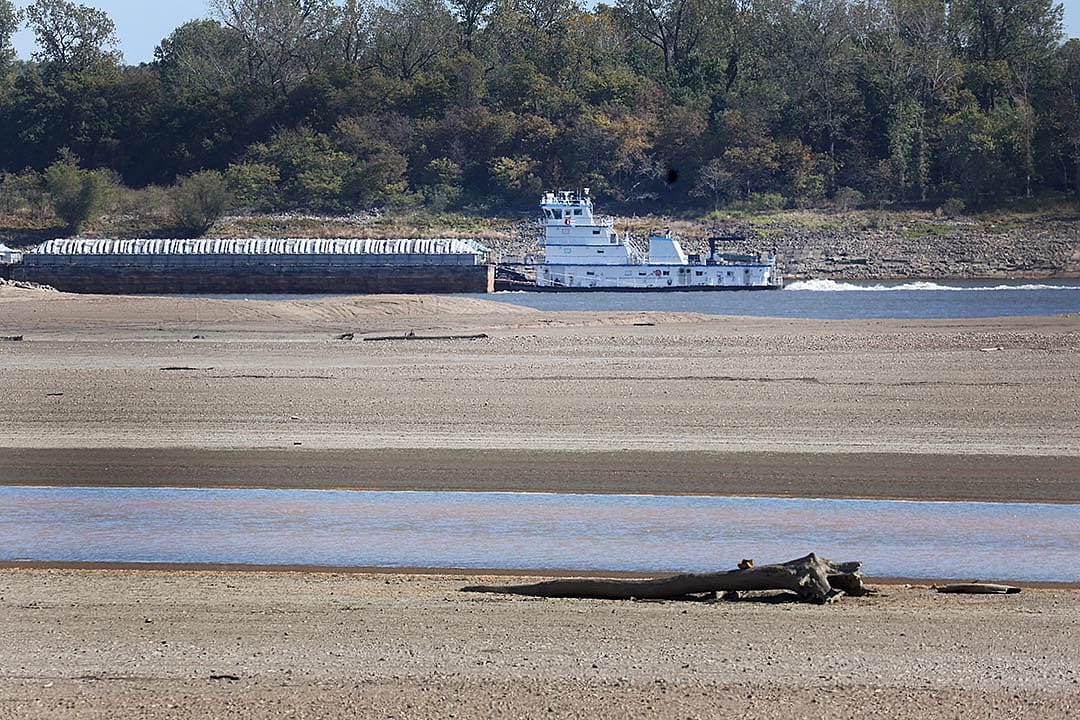
1 / 1Lower water levels slow down barges on the Mississippi River
An ongoing from the fall of 2022 until February provides an excellent example of this. The Mississippi River basin, which covers states, is a linchpin of America's agricultural supply chain. It produces , and most of the country's livestock. Vessels navigating its of channels carry .听
Transportation barriers created by low water, seen above, hampered the ability of crop-producing states in the to send commodities like corn and soybeans, primarily used for cattle feed, to livestock producers in the South. Thus emerged a as shipping and commodity prices , with economists .听
suggests that the drought probably contributed to last year 鈥� and because droughts have a lingering impact on production even after they end, it may be fueling today.听听
But although it seems clear that the drought contributed to higher prices, products, just how much remains to be gauged. One reason for that is a analyzing the relationship between this particular weather event and the consumer market. Another is it's often difficult to tease out which of several possible factors, including , influence specific examples of sticker shock.听听
While droughts definitely prompt decreases in agricultural production, Metin 脟ak谋r, an economist at the University of Minnesota, says whether that is felt by consumers depends on myriad factors. "This would mean higher raw ingredient costs for foods sold in groceries, and part of those higher costs will be passed onto consumers via higher prices. However, will consumer prices actually increase? The answer depends on many other supply and demand factors that might be happening at the same time as the impact of the drought," said 脟ak谋r.听
In a forthcoming analysis previewed by Grist, 脟ak谋r examined the relationship between an enduring drought in California, which produces , and costs of produce purchased at large grocery retailers nationwide. While the event raised consumer vegetable prices to a statistically significant degree, they didn't increase as much as 脟ak谋r expected.听
This capricious consumer cost effect is due largely to the . Public safety nets like have played a large part in mitigating the impacts of adverse weather and bolstering the food supply chain against and other shocks. By ensuring farmers and producers don't bear the brunt of those losses, these programs reduce the costs passed on to consumers. Advanced agricultural technology, modern infrastructure, substantial storage, and efficient transport links also help ensure retail price stability.听
A 2024 of the role climate change played on the U.S. wheat market from 1950 to 2018 found that although the impact of weather shocks on price variability has increased with the frequency of extreme weather, adaptive mechanisms, like a well-developed production and distribution infrastructure with sufficient storage capacity, have minimized the impact on consumers. Still, the paper warns that such systems may collapse when faced with "unprecedented levels of weather variability."听
Last year was the , creating an onslaught of challenges for and producers nationwide. And this year is primed to be even more , with the transition from 鈥� an atmospheric phenomenon that warms ocean temperatures 鈥� to , its counterpart that cools them. This cyclical change in global weather patterns is another and source of supply chain pressures that economists and scientists are keeping an eye on.听
They will be particularly focused on the Midwest and stretches of the Corn Belt, two regions prone to drought as an El Ni帽o cycle gives way to a La Ni帽a, according to Weston Anderson, an assistant research scientist at the University of Maryland and NASA Goddard Space Flight Center. Those growing regions for corn and soybeans are what he'll be watching closely as La Ni帽a develops.听
It's something Jennifer Ifft, an agricultural economist at Kansas State University, is also thinking about. "If you have a very severe drought in the Corn Belt 鈥� that's going to be the biggest deal, because that's gonna raise the cost of production for cattle, hogs, poultry," said Ifft. "So that would probably have the largest inflationary impacts."
As of , U.S. beef herd inventory was at its lowest in 73 years, which multiple reports noted is due to the persisting. Americans, the are already spending more on groceries than last year, are poised to soon see at the supermarket. Food prices are also expected to rise another , according to the USDA's Economic Research Service.听听
In a world enmeshed in extremes, our could be the next system teetering on the edge of collapse because of human-caused climate change. And costlier groceries linked to impending risk is the first of many warning signs that it is already splintering.