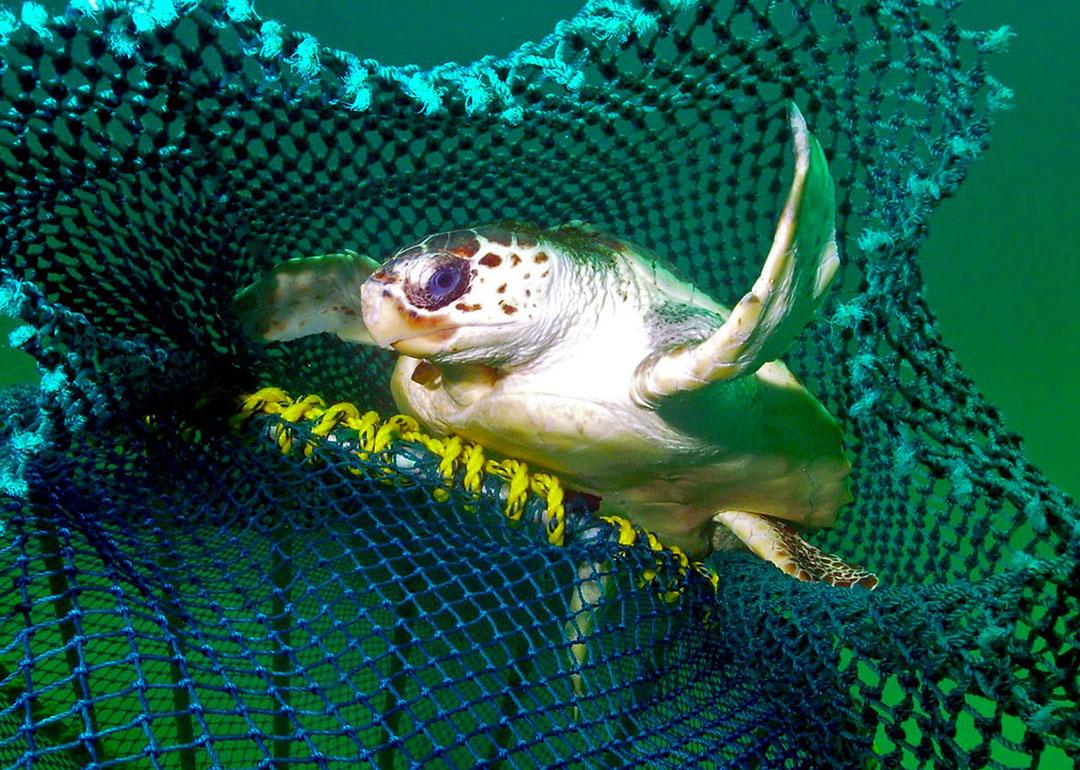
How new fishing tech can reduce bycatch of turtles and other creatures
Our oceans are full of sophisticated, perfect traps: Nets, hooks, fishing lines. Designed to capture animals destined for our dinner tables, they often catch other wildlife too.
This accidental harvest is known as bycatch, and every year it causes the death , including whales, dolphins, sharks, turtles and seabirds. Nets and gear can asphyxiate animals or cause fatal injuries; even when the animals are tossed back to sea, they frequently die. Bycatch is also a dilemma for fishermen 鈥� entangled creatures can destroy equipment, costing time, money and fisheries鈥� reputations.
Over the decades, conservationists, researchers and fishermen have developed ways to minimize various kinds of bycatch in different fishing stocks around the world. But putting these solutions to work is often a challenge, and many mitigation strategies are never widely implemented, reports.
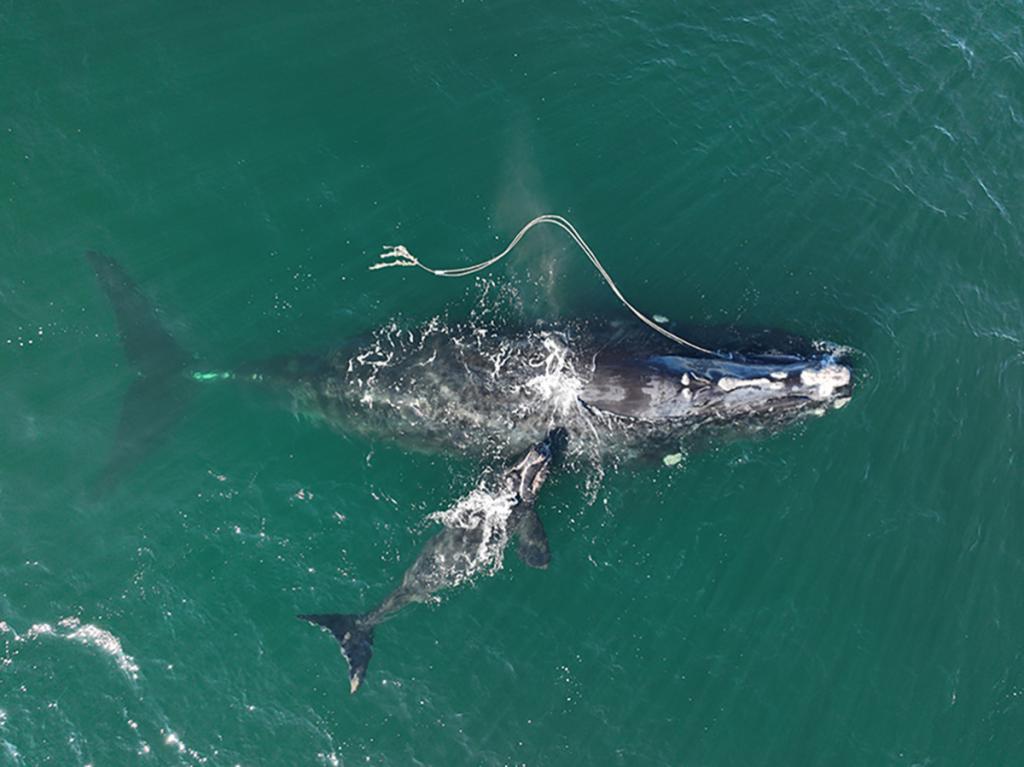
Some approaches, however, now have a proven success rate 鈥� and more may be on the horizon. Recent research has explored nets equipped with lights; even low-tech tricks like kitting out gear with plastic water bottles show promise of reducing some kinds of bycatch while also being practical for fishermen to use.
Despite the challenges, researchers are hopeful. 鈥淭here are not very many conservation issues that I鈥檓 aware of where industry and conservationists and consumers and the fishermen and the resource users all want the same thing,鈥� says marine biologist Matthew Savoca, a research scientist at Stanford University鈥檚 Hopkins Marine Station. 鈥淓very stakeholder wants less bycatch.鈥�
Keeping turtles out
The bycatch problem has always existed. 鈥淚t鈥檚 a conflict that鈥檚 intrinsic to the whole idea of fishing,鈥� says marine scientist Nancy Knowlton, marine biologist emerita at the Smithsonian鈥檚 National Museum of Natural History. 鈥淚f you have something that鈥檚 designed to catch animals, you鈥檙e going to wind up, almost always, catching some things that you didn鈥檛 mean to catch.鈥�
Yet mitigation measures can make a difference 鈥� and without significantly reducing the catch of the target species, says Cheng Huang, an expert in sustainability ecology at South China Normal University. Huang and colleagues recently assessed 42 reported in 121 case studies and found they generally do reduce bycatch of vulnerable marine species. But there isn鈥檛 a one-size-fits-all solution.
鈥淏ycatch is a multi-species, multi-gear and multi-scale problem,鈥� says Huang. 鈥淓xpecting a single technical fix to work everywhere is unrealistic.鈥�
Sea turtles, many species of which are endangered, are among the animals harmed by bycatch 鈥� and one of the success stories. In the 1970s, populations of the animals were threatened by shrimp fisheries in waters off the southeastern United States. Researchers started working with commercial fisheries to develop turtle excluder devices that provide an escape route for turtles and other marine animals after they鈥檝e entered the wide mouth of trawl nets. After , the devices became widely adopted, and current designs are 97% effective. The devices also save fishermen time and money 鈥� preventing the loss of shrimp to fish and hungry turtles.
Yet turtles are still threatened by multiple types of fishing gear: Estimates suggest that more than 250,000 of the creatures die as bycatch each year. Gillnets, which hang like curtains in the water, or bottom longlines, which string baited hooks held in place by weights along the seafloor, can be especially dangerous for the animals.
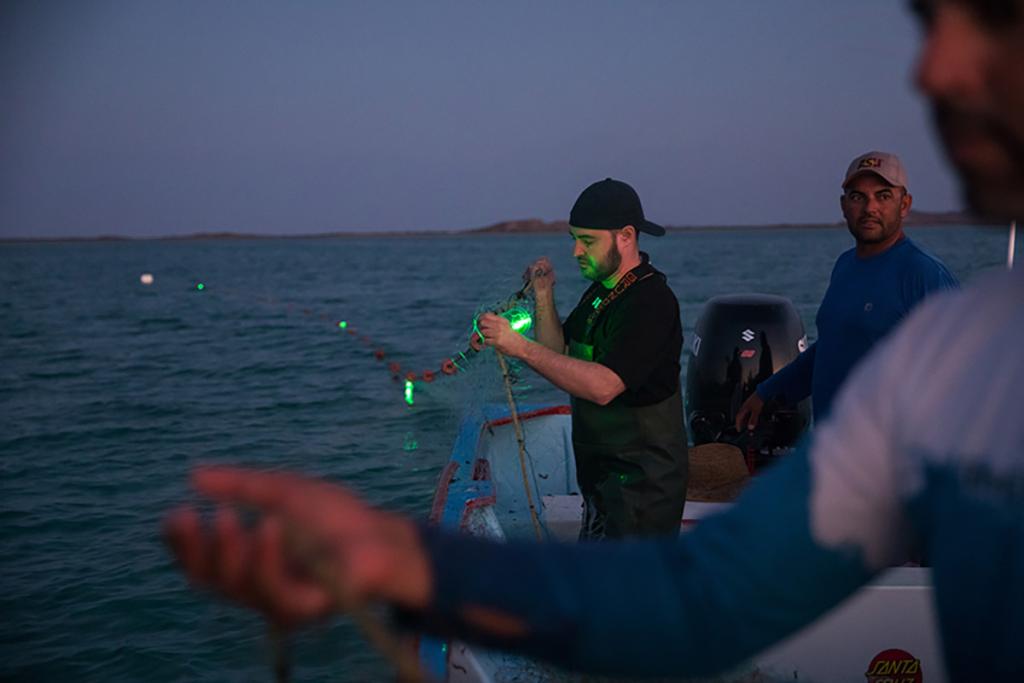
Attaching green LED lights or UV lights to gillnets in the water seems to deter turtles from the deadly traps. In one early test of the idea, researchers compared UV-illuminated gill nets to non-illuminated gill nets in Baja California, Mexico, and found that the lighted nets .
Lighted nets have since been tested for multiple species and fisheries worldwide. A study in the waters of northern Peru鈥檚 Sechura Bay, for example, showed a thanks to LED-illuminated nets. But they have yet to be implemented in fisheries on a large scale. Barriers include cost and the perception that lights might reduce target fish catch, says marine conservation scientist Jesse Senko of Arizona State University. Part of the expense is batteries for the lights, which need to be replaced often.
Senko and his colleagues, after consulting with local fishers, designed solar-powered lights that regularly flash and tested the approach in a coastal gillnet fishery that catches yellowtail amberjack in the Gulf of California, Mexico. They attached lights to 28 gillnets, each paired with a gillnet with deactivated lights as controls, for 650 hours in an area known for high levels of turtle bycatch. The nets with lights while maintaining target fish catch, the researchers reported in Conservation Letters in October 2025.
The lights not only reduced power consumption, they also worked as buoys, making them easily integrated into the fishing gear. This is crucial for adoption of new techniques, says Senko. 鈥淎ll of a sudden, the light was more or less part of their gear,鈥� he says. 鈥淚t wasn鈥檛 some foreign thing on their net. It was just another buoy that happened to flash green light.鈥�
Pingers and plastic bottles
Another bycatch prevention method that鈥檚 demonstrated some success is pingers 鈥� devices attached to the fishing gear that emit sounds that deter echolocating whales and dolphins. A field trial of the devices in three Norwegian fisheries using gillnets, for example, showed that pingers reduced , a team reported in 鈥淔isheries Research鈥� in 2023.
But pingers can have their downsides. An analysis of pinger effectiveness in waters off the United Kingdom, where they have been used for more than a decade, found that while they were linked to a reduction in bycatch of porpoises, they were also linked with an , which seem to associate the sound with a potential meal. 鈥淚t鈥檚 like a dinner-bell effect,鈥� says policy specialist Sarah Dolman of the Environmental Investigation Agency, a London-based nonprofit that campaigns for environmental issues.
Pingers that transmit at frequencies outside of pinnipeds鈥� hearing range and are thus considered 鈥渟eal-safe鈥� have been developed. But the devices can also be expensive, especially for , who tend to use lower-tech gear and may lack supportive government policies and investments.
Some of those small-scale fisheries may reduce bycatch of echolocating animals with a low-tech approach: fixing plastic water bottles to their nets. Detecting thin, fine nets is difficult for dolphins, porpoises and other echolocators, but water bottles are a more easily detectable obstacle that could help them avoid the net. A preliminary study conducted in Brazil found that using plastic bottles on nets , a threatened river dolphin species. It鈥檚 a realistic option, says Dolman, in places where fishermen don鈥檛 have the funds to buy and maintain pingers.
Practicalities, along with cost, often prevent implementation of bycatch prevention measures, even the ones that work. Many solutions that get developed and tested never end up being widespread.
鈥淲e鈥檙e very good at providing funding for scientists to conduct trials to reduce bycatch, but very rarely do those trials then continue to the whole of the fleet,鈥� says Dolman.
For a solution to work on a large scale, a number of conditions must be met, says marine sustainability scientist Lekelia Jenkins of Arizona State University. Policies and regulations need to be in place, and they need to be enforced. And perhaps just as important, the preventive measures need to be practical for fishermen and not add extra time and money to the job. 鈥淭he smaller the change, and the more it feels like their traditional fishing practices, the more likely they鈥檙e going to adopt it,鈥� Jenkins says.
The human side of the issue also needs to be acknowledged. 鈥淓motionally, fishermen around the world are beat up and beat down,鈥� Jenkins says. 鈥淲e say, 鈥榊ou鈥檙e the problem. You鈥檙e catching sea turtles and whales. You are the bad guy.鈥欌�� Instead, fishermen should be empowered and included in the discussions and development of solutions. 鈥淭he weight of saving the world鈥檚 oceans,鈥� Jenkins says, 鈥渃an鈥檛 fall solely on their shoulders.鈥�
was produced by and reviewed and distributed by 爆料TV.