How Pennsylvania voters reacted to national spotlight on judicial retention races

How Pennsylvania voters reacted to national spotlight on judicial retention races
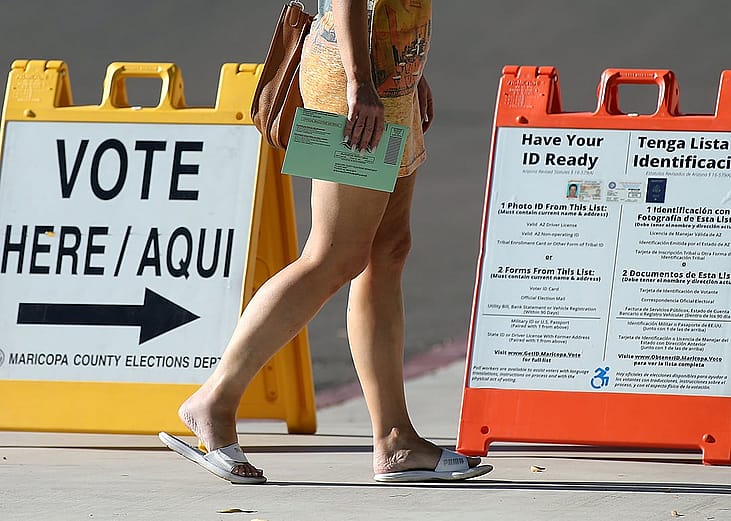
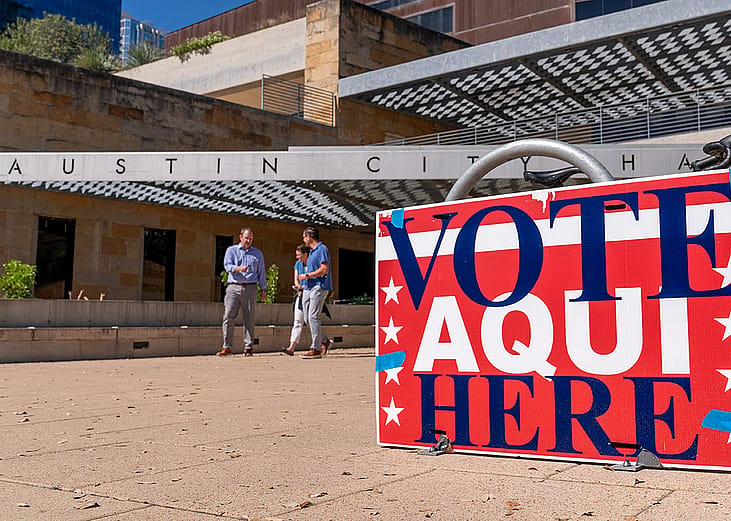
Pennsylvania voters headed to the polls Tuesday to decide in a typically sleepy race that drew national political attention this year, reports.
But despite the amount of money spent on the contests, many voters said they hadn’t seen much of the political messaging about the race.
Some voters said they wanted to send a message to President Donald Trump by voting to retain the justices for another 10-year term. Others said they felt the justices weren’t following the law. Few voters of any political persuasion seemed familiar with the judges’ specific rulings.
The three Supreme Court justices up for yes-or-no retention votes were all originally elected as Democrats in 2015: Christine Donohue, Kevin Dougherty, and David Wecht. Two lower appellate court justices were also up for retention.
The two parties and interest groups spent on the race, seeing it as critical to the ideological balance in the state Supreme Court, which is dominated by justices elected as Democrats. Leaders such as Trump and former President Barack Obama weighed in, and the attention on the race may have contributed to a .
Republicans hoped that a vote against retention would open up a rare opportunity to remake the composition of the court in 2027. They campaigned in part by criticizing the court’s on 2020 election logistics, , and redistricting.
Only one judge in modern history has lost a retention election, but this year’s organized effort was unusual, and some voters showed up at the polls Tuesday hoping they could help buck that trend. (All three Supreme Court justices .)
Craig Ferich, a retired Republican voter in West Lampeter Township, Lancaster County, said he believes there’s “too much judicial hanky-panky going on with partisan agendas†and voted against retaining the judges.
Mackenzie Kombo, a Democrat who showed up early to cast his ballot at a firehouse in the Lancaster County community of Willow Street — a predominantly Republican precinct that Trump won by 30 percentage points in 2024 — said he voted to retain some judges, but not others.
“Some of them have been there for a long time, so they need to go,†he said, a sentiment echoed by at least one fellow voter there.
At a polling place at the city government center in downtown Harrisburg, an area where former Vice President Kamala Harris won by 50 percentage points in 2024, voters were hoping to keep the justices in place.
Michael Lauer, a Democrat who voted to retain the justices, said he felt he didn’t hear as much messaging coming from the Democrats and the “yes†campaign as he did from the Republicans and the “no†campaign.
“I feel like a lot of Democrats don’t feel like it’s super important to advertise in an area like this. They feel like it’s mostly secure,†he said.
Tami Dykes, a member of the Dauphin County Democrats, was standing outside the government center with information about the justices and other local candidates on the ballot. She said educating voters on the retention race this year has been a challenge, since it’s not a contest that usually receives a lot of attention.
“Many don’t understand that we never vote our judges back in. We vote to retain or not to retain,†she said. “So I would say there is a lack of awareness of what retention is.â€
When judges first run for office, they list a party affiliation on the ballot, and the Supreme Court justices originally ran as Democrats. But retention elections are considered nonpartisan, and at least one voter told Votebeat they were frustrated in the voting booth because they weren’t immediately sure if the judges were Republicans or Democrats.
Chris Borick, a professor of political science at Muhlenberg College in Allentown, said removing the partisan designation can trip up voters, and “how we decide it gets jumbled a bit.â€
was produced by and reviewed and distributed by ±ŹÁÏTV.