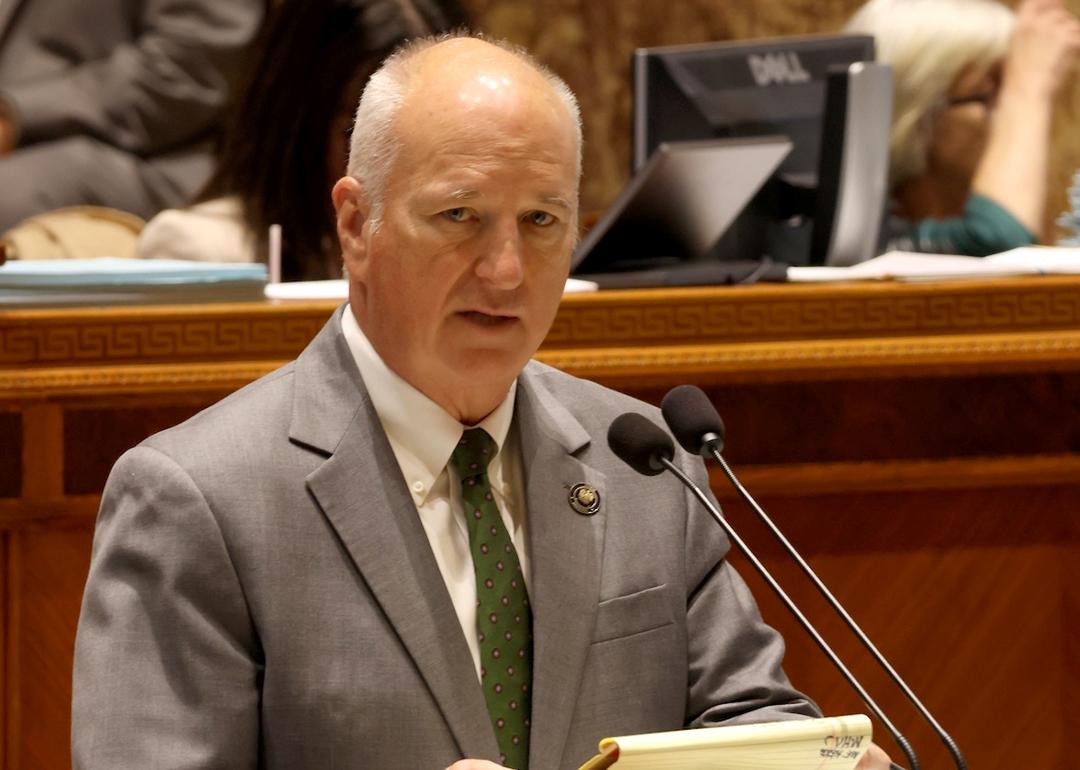
Louisiana senator helped secure Meta's largest data center. Then he sold the land beside it.
For more than two years, Louisiana State Sen. John “Jay” Morris helped pave the way for Meta to build one of the world’s largest data centers, called , in Richland Parish.
The Republican attorney lobbied a utility regulator for a key approval. He co-sponsored two bills that enabled the land deal between Meta and the state. And he voted “yea” on two additional bills that provided the trillion-dollar tech company with tax breaks that one analysis .
Now, a investigation has found that while Morris used his political position to advance the project, he and his business partners were buying and selling the land around it over the past 15 months.
As recently as February, Morris and his partners sold hundreds of acres to utility giant for a methane-burning power plant to provide electricity for the data center.
Morris’ recent land deals haven’t been disclosed until today, according to Floodlight’s review of ethics filings, votes, media coverage, and state Senate records. It’s unclear how much money he has made from these transactions — Louisiana law does not require buyers and sellers to publicly disclose sale prices.
Experts told Floodlight the senator’s actions may violate state ethics laws — such as , , and — which prohibit government officials from participating in official actions that benefit them financially, require them to recuse themselves from voting when a conflict exists, and prohibit the use of public office for private gain.
"What makes it particularly egregious is not one isolated vote, but a sustained pattern: creating legal authority for a specific land deal, backing a huge tax break, lobbying a regulator, quietly positioning personal real estate around the project,” said professor Dane Ciolino, an expert in governmental ethics at Loyola University New Orleans.
In an interview with Floodlight, Morris denied wrongdoing. He said his land holdings are public record and that the tax breaks he voted for applied to all data centers — not just the Meta project.
“It makes a nice story if you can try to show that I have some sort of conflict,” Morris told Floodlight. “But under Louisiana's ethics laws, I don't.”
After years of maintaining a relatively low profile in the legislature, Morris has become a prominent political figure since Gov. Jeff Landry took office. He’s chair of a judiciary committee, a member of three financial committees, and joined the powerful State Bond Commission in 2024.
He’s also recently become a lightning rod for controversy at the statehouse after authoring bills Louisiana’s majority-Black congressional districts and of a Black court clerk who had just been elected in New Orleans.
Morris told Floodlight his maps are intended to protect Republican incumbents in Louisiana's House races. As for eliminating a court clerk's post in New Orleans, he said he simply wanted to streamline court operations in New Orleans — and held nothing against the man.
“You can find some pundits and lawyers to say bad things about politicians. It's pretty easy, we're a popular target. But I haven't done anything wrong,” Morris said.
“I just hope you'd write a fair story.”
Entergy and Hyperion
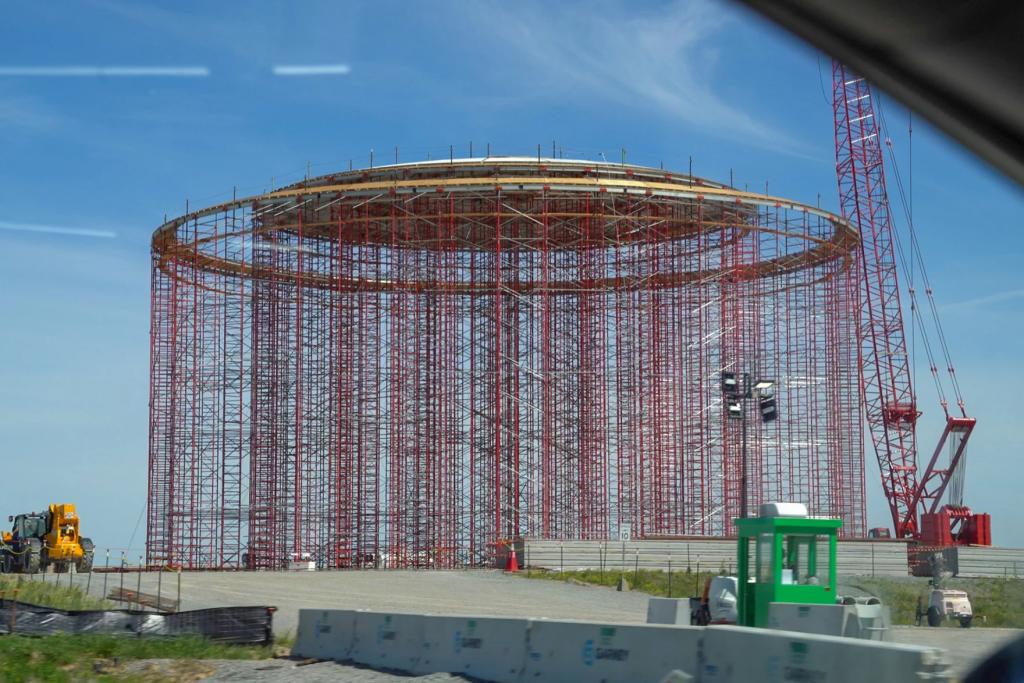
In Northeast Louisiana’s Richland Parish, former farmlands are transforming into a vast expanse of concrete and steel.
Hyperion spans more than 3,650 acres, an area more than twice the size of Rayville, the town beside it. Once up and running, it’s expected to consume the amount of energy each day than the city of New Orleans.
Despite public opposition, state officials including Morris have pushed the project forward as part of a . Since construction began over a year ago, locals have complained of from dust blowing off the vast construction site and from heavy commercial vehicles around once-quiet rural streets.
“Yes, there are a lot of complainers, and a lot of the complainers are from out of state,” Morris said. “But the people in our area are generally happy about it.” He argued that the project’s benefits include new high-paying jobs, an increased tax base and money pouring into the education system.
Meta told Floodlight that the company is “committed to creating a positive impact” in Richland Parish, that it works actively to limit the impact of traffic on local residents and is investing in local schools, nonprofits, and small businesses.
It was Entergy — not Meta — that initially pitched state officials on the project, according to a with Susan Bourgeois, who helped negotiate the deal as the head of the state’s economic development agency.
The Louisiana Economic Development agency issued a statement saying that “any inference that Morris inappropriately influenced LED or any of our projects is simply incorrect.” The administration “makes no apologies for bringing diverse partners together to drive the outcomes and opportunities our state has so long deserved,” its spokesperson said.
Entergy has claimed in regulatory filings that Hyperion’s immense power needs will require a historic buildout of power plants — enough to fuel a more than 50% increase in its statewide power-generation capacity, .
Morris, who grew up in the area, owns and co-owns two dozen properties spanning over 2,000 acres surrounding Hyperion, including at least three that share a border with the complex, according to the Richland Parish Assessor’s office. He’s held many for over a decade.
“I bought the property for farmland and the rent that's derived therefrom. But would I hope that there would be some economic development someday? Of course. Absolutely,” he said. “But was I counting on it? Did I know it would happen? No. Nobody can read the future.”
But now that the future has arrived in Richland Parish, Morris has been on a buying spree.
Broadening power, weakening oversight
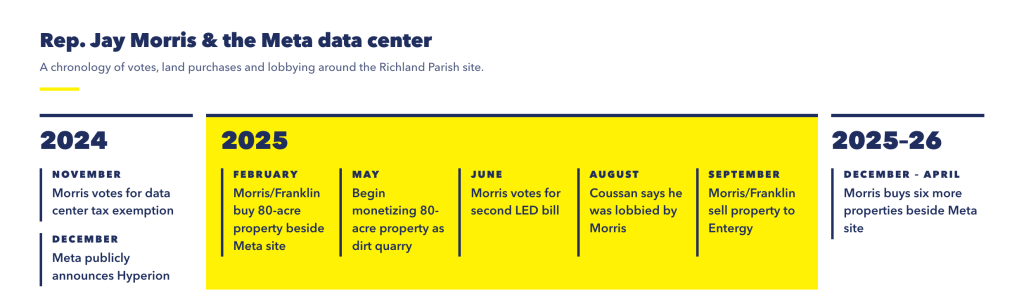
Morris bought seven properties within five miles of the data center since the Meta announcement in December 2024 — plus a 165-acre tract about 10 miles southwest.
The timing of those land deals shows how closely he mixed official actions with personal business dealings.
In 2024, Morris co-sponsored and voted for a wide-ranging bill that, among other things, gave LED new authority to lease state-owned property.
The state had purchased a large tract of land from the family of Fred Scott Franklin Sr. — Morris’ business partners — nearly two decades earlier, for a deal that fell through with a different company. But shortly after the 2024 bill passed, LED used its new authority to lease the site to Meta.
Four months after Meta signed the lease, Morris and the Franklins paid $1.2 million cash to buy an 80-acre plot just across the street from the project site. Morris signed the deed in early 2025. Less than two months later, one of the senate committees he’s part of began considering a second bill that would play a pivotal role in finalizing the state’s deal with Meta: giving LED the authority to sell state-owned property.
By late April, Morris had signed on as a co-sponsor and voted for its passage.
By early May, Morris and the Franklins had begun monetizing the property in a more immediate way: turning it into a dirt quarry for eventual use on the Meta job site, the senator told Floodlight.
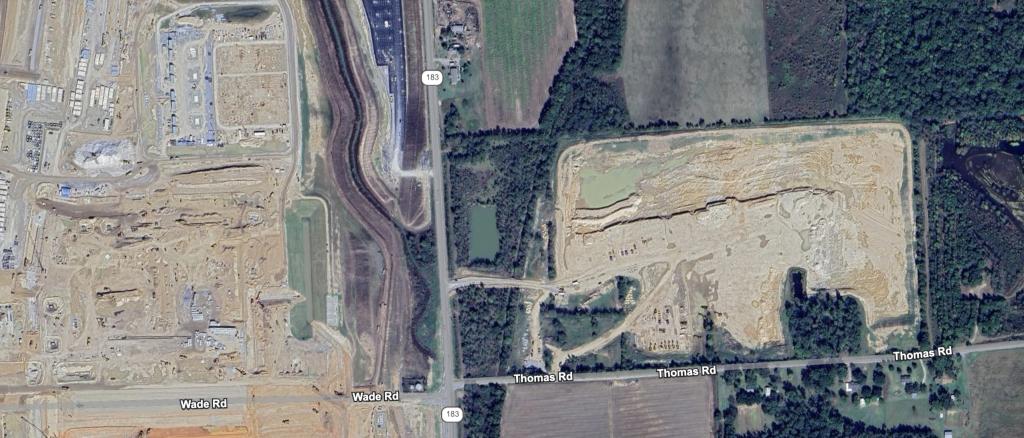
Three months after that second bill was signed into law, LED sold Meta the property that the tech company had been leasing, which was just a stone’s throw from Morris’ land.
That series of events raises serious ethical concerns, according to La Koshia Roberts, a former chair and currently the longest-serving member of the Louisiana Board of Ethics — the body that investigates potential ethical misconduct by government officials.
“The fact that he actually voted and didn't recuse himself is a major concern of mine,” Roberts said.
“When you have your elected officials who are not only drafting proposed legislation that he or she knows will benefit them financially … that's one problem. But then to have that person continue with this knowledge and not disclose it, not even to his body, not even to the committee, is problematic."
Yet during those legislative proceedings — which concerned a dramatic overhaul of the state agency in charge of economic development — Morris never mentioned his interest in the state’s largest economic development project.
“A lot of my colleagues know that I have land holdings in Richland Parish, some of which are near the Meta site,” Morris told Floodlight. “But no ... I didn't put it in the record and announce it. But there was nothing to require me to do that. And I don't know why I would need to do that.”
The states that an official with a substantial financial interest in a governmental proceeding must recuse from voting and disclose their interest if they continue to participate in discussions about the matter.
“He should not have voted for it,” Roberts said.
Morris said the bills he co-sponsored were not targeted at any particular data center, and that although he signed on in support, he had nothing to do with drafting them.
“The LED bills were part of a broad restructuring that Secretary Bourgeois was pushing. I had no idea that any of that was needed for the Meta development,” he said.
According to Ciolino, the government ethics expert at Loyola, Morris’ strongest defense is that the bills and tax break applied broadly to LED’s restructuring or all data centers — not just the Meta project. “That matters,” he said. “But it does not end the analysis.”
The question isn’t just whether the bill’s text was general — it’s whether Morris had an economic interest in it greater than that of a general class or group of persons, Ciolino said, referring to of Louisiana law.
“A senator who owns dozens of nearby parcels, co-owns adjoining land, sells dirt for the project, and later sells land to Entergy for a project power plant has a far more particularized economic stake than ordinary citizens or even ordinary landowners in the region.”
Old friends
Morris explained that he and his business partners, the Franklins, are close. He and Franklin Sr. have been friends since nursery school.
They own several properties together, including the one across the street from Meta. The Franklins have transferred Morris at least $200,000 since 2015 as part of a mutual business endeavor renting out farmland, according to Morris’ financial disclosures and Fred Scott Franklin Jr. The family has also contributed over $15,000 to Morris’ election campaigns over the past 16 years, according to state campaign finance data.
Franklin Sr. and Morris were also co-owners, along with a third man, of a company called FMB Downtown Ventures, which hasn’t been active for well over a decade, according to Franklin Jr.
Franklin Jr. often represents his family in media appearances and at business events. He confirmed that Morris and the Franklin family are close and have a long history of purchasing and co-owning properties, which they often lease for use as farmland.
He said that Morris was not involved in any negotiations with Meta. “ I would very much disagree that Jay Morris was an active participant in landing Meta [in] Richland Parish. I just don't think that's accurate,” said Franklin Jr. “I don't think he's any more responsible for it than whoever else voted for the sales tax exemption in the legislature.”
The Franklins are one of the largest local beneficiaries of the Meta project: They owned nearly all of the land that the data center is being built upon. State officials dubbed the property the “Franklin Farms Megasite,” and Entergy has referred to the power plants that will be attached to it as the Franklin Farms Power Stations.
When Entergy, LED, and Meta held a press event to announce the project and perform a ceremonial groundbreaking in December 2024, Fred Scott Franklin Jr. was a shovel. Landry and Entergy’s CEO stood alongside him. Morris was also there and Entergy circulated on Instagram to tout the event.
“This project that Meta and Entergy have come together to bring to Northeast Louisiana, most importantly, will bring jobs and will bring economic development to a region that’s needed it for so many years,” Morris said in the video.
Morris said he didn’t remember being filmed, hadn’t known the video existed, and hadn’t received any payment from Entergy for being featured.
“I guess they randomly saw me and asked me a couple of questions or something,” he said.
‘I was under an NDA’
To build three new gas-fired power plants for Hyperion, along with 100 miles of high-voltage transmission lines, Entergy needed a key approval from the Louisiana Public Service Commission.
And on Aug. 20, 2025, before the commission voted 4-1 to approve Entergy's $3.2 billion plan, Commissioner Jean-Paul Coussan disclosed on the record that Morris had personally lobbied him to approve the plants.
"I also heard from Sen. Jay Morris, who represents in the northeast, in support of the issue," Coussan said.
Four weeks after the commission’s vote, Morris and the Franklins together signed agreements to sell nearly 300 acres to Entergy for one of the company’s methane-burning power stations for Hyperion. They had co-owned the property for roughly 15 years prior to the sale.
Coussan, a Republican, had served alongside Morris in the state legislature until his election to the commission in 2024. Morris described him as a friend and, in a single exchange, alternated between saying he “didn't reach out” to Coussan, was “pretty sure I didn't even talk to him,” and “probably did talk to him some.” Later, by email, he said, “I’m sure we likely discussed it.”
Coussan told Floodlight that any conversation he had with Morris was part of his due diligence as a commissioner.
He also said he only learned of Morris’ land deals from being contacted by Floodlight.
“No, we didn't talk about his property, nor do I think it was relevant to my deliberations,” Coussan said. “I actually don’t see what the story is.”
Entergy Louisiana told Floodlight that it “acquired two sites near the proposed facility that offer access to necessary infrastructure, including electric transmission lines, natural gas supply and pipelines, and transportation routes. The location was selected in part due to these advantages, as well as its proximity to the customer’s site, which had been owned by the state for more than 20 years.”
Morris pointed out that his land holdings are reported publicly in his annual financial disclosures. But his most recent disclosure is from 2024, making the past two years of his land deals difficult to piece together.
He was also clear that he did not disclose his Entergy negotiations to Coussan ahead of the vote.
“I'm really sure he didn't know that I was gonna sell any land to Entergy because I was under an NDA, and I couldn't say anything to him anyway,” Morris said.
The NDA (nondisclosure agreement) is a previously undisclosed fact: Morris indicated he had a confidential commercial relationship with Entergy when he contacted Coussan — one that obligated him not to discuss his pending business with the company. Under Louisiana , the question is not whether he was allowed to discuss the deal, but whether he should have disclosed his personal financial interest to the regulator as part of that conversation.
Morris also sold rights of way to Entergy across four other properties he owns for the company to build transmission lines and, in one case, establish an access road and lay water, sewer and other utility lines.
How much Entergy paid Morris for the property and rights of way remains unclear — neither he nor Franklin disclosed the values of any of their land deals when asked by Floodlight. But when property values rise, it drives up the prices that companies like Entergy must pay landowners to build across their land. Under , the legal standard of “just compensation” requires Entergy to pay an amount consistent with the land’s value.
And property values beside the data center have skyrocketed.
“I would argue just compensation is a lot different now than it was before all this started,” Franklin Jr. explained.
Due to another new law passed that same year, and which Morris voted for, the roughly $12 million the state received from selling land to Meta went back to a special fund that LED controls and can use as it sees fit to advance similar economic development projects around the state.
The Meta deal is the first of several similar Landry-administration projects moving through LED on the same statutory authority Morris helped create. Landry’s office did not respond to Floodlight’s request for comment.
Over recent years, the Louisiana Legislature has weakened ethics laws, according to Roberts. Because of that, “ it is imperative on the public to be substantially more aware of potential unethical or questionable actions, and to demand more from their elected officials,” she said.
When asked how he responds to experts alleging that his conduct violated ethics rules, Morris replied:
“They're wrong. I would guess whoever you talked to probably has an axe to grind or is politically opposed to me, to what I do. But they're free to turn me into the ethics board, which I'm sure would do nothing.
“But if they think it's egregious, why haven't they turned me in?”
This story was published in collaboration with and the .
was produced by and reviewed and distributed by ±¬ÁÏTV.