US Supreme Court’s uneven rulings in election lead-up causing chaos, experts say
When the U.S. Supreme Court allowed Texas’ gerrymandered congressional map to take effect in December, its conservative majority wrote that a lower court had “improperly inserted itself into an active primary campaign” when it blocked the map more than three months before the election.
Now, as examines here, the Supreme Court is the one upending elections.
For the past two decades, the Supreme Court has advanced the idea that federal courts should not order major changes close to an election to limit voter confusion. Over time the doctrine, first articulated in the 2006 case , became known as the Purcell principle.
But election law experts and one of the court’s liberal justices say the Supreme Court is wielding — or disregarding — the principle unevenly in ways that aid Republicans.
In recent weeks, the Supreme Court has effectively allowed last-minute election changes in Southern states that hold major consequences for what districts voters are assigned to and the future of Black political representation across the region.
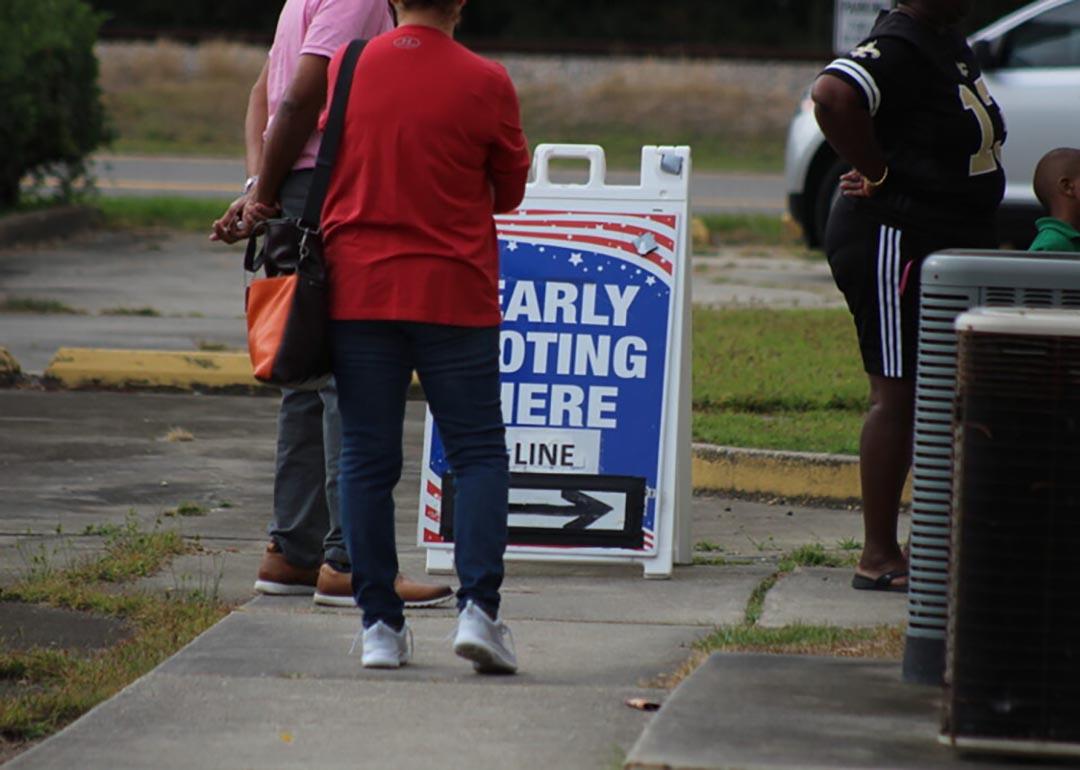
These Republican-controlled states are racing to redraw congressional maps to eliminate majority-Black districts, many of which have elected Black Democrats to Congress. The gerrymandering rush has come even with early voting underway in some states.
Wilfred Codrington III, a professor of law at the Benjamin N. Cardozo School of Law in New York, who has studied the Purcell principle, said limiting voter confusion is common sense. But after that general idea, the principle “just falls apart” because the Supreme Court has never answered questions raised by the doctrine — like how close to an election is too close.
“The court has not thought through them and it seems like when the court applies them, they’re being applied in partisan ways,” Codrington said, about questions the doctrine raises.
April ruling OK’d redistricting
After the high court gutted the federal Voting Rights Act in Callais, a landmark decision on April 29 that found Louisiana’s map unconstitutional, it fast-tracked paperwork so the state could quickly redraw district lines.
Voting had begun in the state’s congressional primary election, which Republican Gov. Jeff Landry suspended, discarding 42,000 votes already cast.
A majority of the court voted to immediately certify its decision instead of observing its typical 32-day waiting period. In , Justice Ketanji Brown Jackson wrote that the justices were disregarding their previous insistence that courts shouldn’t risk assuming political responsibility for a redistricting process that often produces hard feelings.
“There is also the so-called Purcell principle, which we invoked only five months ago to chide a federal district court for ‘improperly insert[ing] itself into an active primary campaign,’” Jackson wrote. “The Court unshackles itself from both constraints today and dives into the fray. And just like that, those principles give way to power.”
The conservative justices on May 11 then cleared a path for Alabama to move toward implementing a Republican gerrymander that state lawmakers approved in 2023 but was blocked by a lower court. Their decision came a little more than a week before the state’s primary election.
Republican Gov. Kay Ivey has called an August special primary election for some of the state’s congressional districts.
“The United States Supreme Court’s decision is plain common sense and enables our values to be best represented in Congress,” Ivey said in a statement.
‘Like it doesn’t exist’
The Supreme Court’s actions this spring stand in stark contrast to its to allow Texas’ gerrymander to take effect. After President Donald Trump urged GOP states to redraw their maps for partisan advantage, Texas was the first state to respond, enacting new lines that could help Republicans pick up five seats.
A three-judge district court panel ruled against the map, finding that it was racially gerrymandered. The Supreme Court paused the panel’s decision, finding that the panel likely made serious errors and that the district court was “causing much confusion and upsetting the delicate federal-state balance in elections” amid the campaign season.
That language echoed the Purcell decision, which found that an appeals court had erred in blocking an Arizona law requiring a photo ID to register to vote. The Supreme Court’s cautioned that court orders affecting elections can cause voter confusion.
“As an election draws closer, that risk will increase,” the 2006 opinion said.
Nearly 20 years later, the Supreme Court made no mention of Purcell in its Callais opinion, which dropped like a political bomb across the South. , Alabama, Florida, Louisiana, South Carolina and Tennessee have either enacted new maps or are seeking to do so ahead of the November midterm elections.
Mark Johnson, a Kansas City-based lawyer with a long history of working on election litigation, noted that Callais was argued at the Supreme Court twice, first in March 2025 and again in October. The justices then waited a long time before releasing their decision, he said, adding that if they didn’t realize the implications of their ruling they were “asleep at the wheel.”
“That’s why the Callais case is so disturbing, because a Supreme Court that has by and large followed Purcell just acted like it doesn’t exist,” Johnson said.
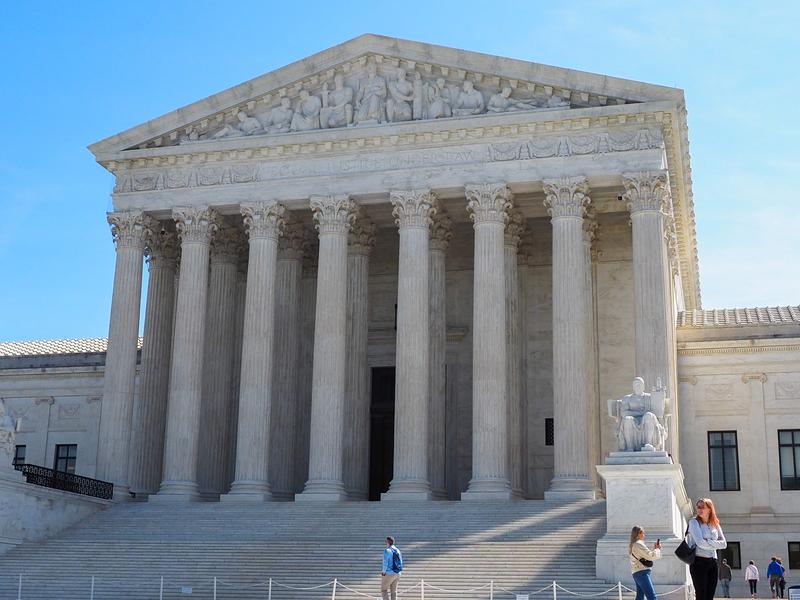
Court legitimacy at stake
Several high-profile observers of the Supreme Court have been unsparing in their criticism of the justices’ approach.
Steve Vladeck, a professor of law at the Georgetown University Law Center and a foremost expert on the court, wrote in that the court’s recent decisions “fatally undermine” the animating purpose of the Purcell principle.
“The Court’s own interventions are now wreaking havoc—and a majority of the justices either don’t think it’s their fault, or don’t care that it is. Either way, they don’t seem to mind the inconsistency—in a context in which it’s having the remarkably coincidental effect of benefiting Republicans,” Vladeck wrote.
Rick Hasen, a professor at UCLA School of Law and director of the Safeguarding Democracy Project, wrote that the Supreme Court in Chief Justice John Roberts’ hands “has become a chaos agent in elections.”
Public support for the Supreme Court was dropping prior to Callais. An August 2025 Pew Research Center found 48% of Americans hold a favorable view of the court, a 22-percentage point drop from August 2020.
In the wake of the decision, Democrats have for court reform. Some have proposed term limits for the justices or expanding the size of the court to dilute its conservative majority. However, major changes are unlikely to become law while the U.S. Senate retains the filibuster and Trump remains in office.
For his part, Roberts has taken pains to paint the court as outside of politics. But at a judicial conference in Pennsylvania in early May, Roberts acknowledged the public thinks the justices are expressing policy preferences rather than interpreting the law.
“I think they view us as purely political actors, which I don’t think is an accurate understanding of what we do,” Roberts said, The Associated Press.
Justice Brett Kavanaugh, another of the court’s conservatives, has drawn a distinction between federal courts ordering last-minute changes to elections and states making changes themselves — suggesting that courts shouldn’t necessarily thwart state legislatures that alter rules and procedures in the run-up to elections.
In a 2020 about a federal judge who had altered Wisconsin’s absentee ballot deadline amid the COVID-19 pandemic, Kavanaugh wrote that it was one thing for state legislatures to change their own election rules “in the late innings” and bear responsibility for unintended consequences.
“It is quite another thing for a federal district court to swoop in and alter carefully considered and democratically enacted state election rules when an election is imminent,” Kavanaugh wrote.
Chaotic campaign season
But voting rights advocates say Callais is unleashing a wave of voter confusion as Southern legislatures rush to gerrymander.
Tennessee’s Republican-controlled legislature passed a map on May 7 that divides the Memphis area among three congressional districts. The move splits a majority-Black district in Memphis represented by U.S. Rep. Steve Cohen, a white Democrat. Cohen announced on May 12 .
The state’s primary election is scheduled for Aug. 6.
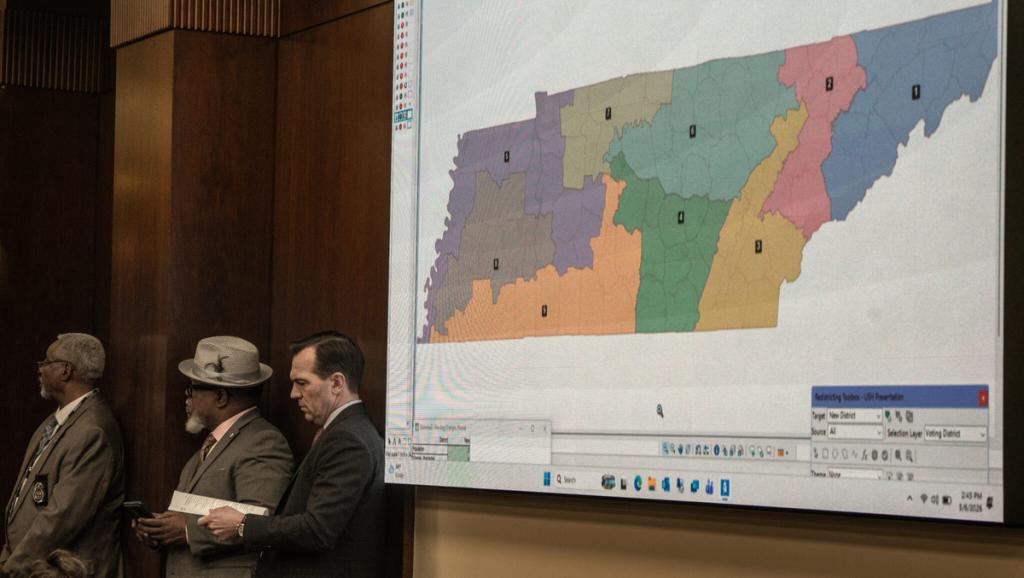
“This is a year where we’re already in the cycle and they’re going to have to redo everything they’ve already worked on because these districts are completely different,” Matia Powell, executive director of the voting rights group Civic TN, told reporters.
The Tennessee Democratic Party and several Democratic candidates, including state Rep. Justin Pearson, who is running for Cohen’s current seat, have filed a federal lawsuit against the map. They argue the new map will cause “significant voter confusion” and severely burden the right to vote.
Tennessee Republican Attorney General Jonathan Skrmetti argues the Democrats have a solution in search of a problem. Tennessee lawmakers have provided more than $3.1 million to implement the new map and that state officials are already working to meet election deadlines, Skrmetti’s office wrote in a May 10 court filing.
“At bottom, this suit is an invitation to play politics, not law,” Tennessee Senior Assistant Attorney General Zachary Barker wrote .
U.S. District Court Judge William Campbell, a Trump appointee, on May 11 declined to immediately halt the map.
The Supreme Court has sent states the message that “there are no rules” and that state legislatures are welcome to gerrymander Black representation at any point, said Anna Baldwin, voting rights litigation director at Campaign Legal Center, which has sued over Florida’s recent gerrymander.
And the way the court applies the Purcell principle encourages states to make changes close to elections — because courts are more reluctant to block them.
“The court is creating a perverse incentive structure that ultimately does make it harder for people who are trying to protect voting rights to prevail,” Baldwin said.
was produced by and reviewed and distributed by ±¬ÁÏTV.