Why Pennsylvania鈥檚 secretary of the commonwealth has a unique understanding of noncitizen voting
Why Pennsylvania鈥檚 secretary of the commonwealth has a unique understanding of noncitizen voting
The potential risk of noncitizens illegally casting ballots has dominated the national conversation on election policy in recent years. But one major voice on the issue hasn鈥檛 been heard, reports.
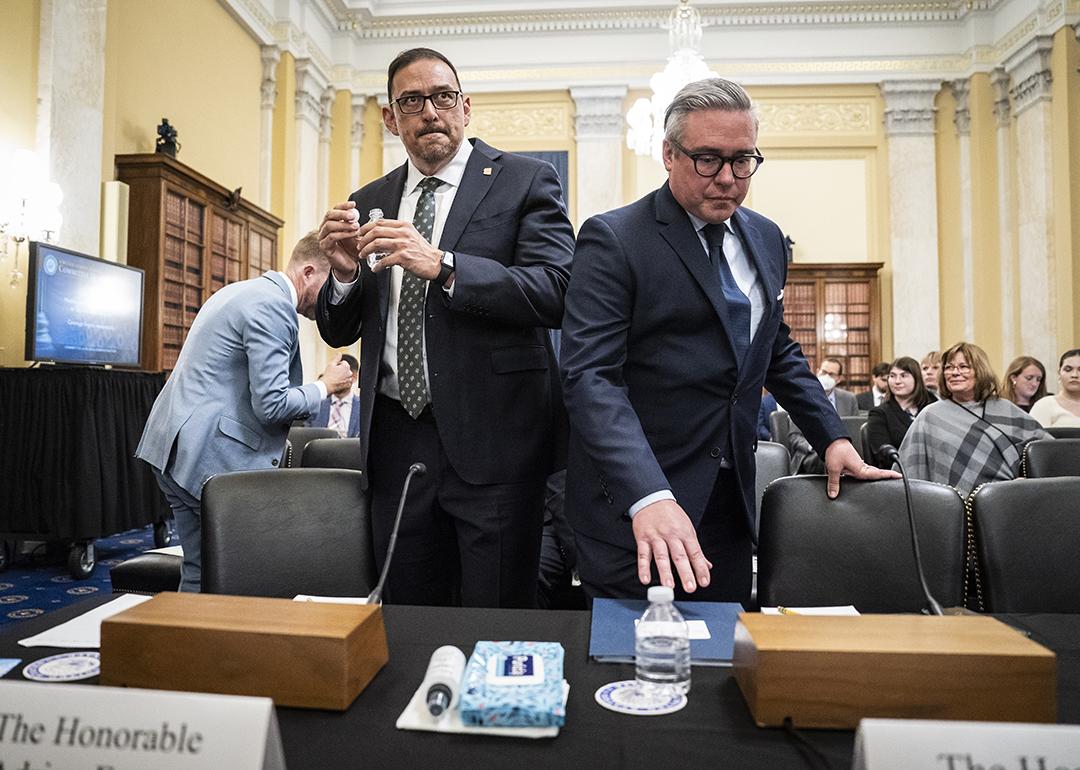
Pennsylvania is home to someone who has perhaps more experience addressing noncitizen voting than anyone else, a Republican who uncovered hundreds of noncitizens who had registered to vote and cast ballots in Philadelphia: Secretary of the Commonwealth Al Schmidt.
鈥淚鈥檝e always heard my whole life, even though I grew up in Western Pennsylvania, about concerns about voter fraud and voting irregularities in Philadelphia elections,鈥� Schmidt told Votebeat and Spotlight PA in a recent interview. 鈥淪o I wanted to be able to sort out fact from fiction.鈥�
But despite this experience, Schmidt hasn鈥檛 embraced the exaggerated claims about the prevalence of noncitizen voting that are common in today鈥檚 political rhetoric. Instead, he feels officials need to strike a balance between election security and voter access.
PennDOT error led to noncitizens registering to vote
When Schmidt came into office as a Philadelphia city commissioner in 2012, he began looking into various claims of voter fraud. Eventually, he discovered that an error with the Pennsylvania Department of Transportation鈥檚 motor voter system 鈥� which helps register voters who are obtaining a driver鈥檚 license 鈥� was enabling noncitizens to register. (In Pennsylvania, noncitizens are permitted to obtain a driver鈥檚 license.)
As Schmidt explained to , despite PennDOT having the paperwork confirming the individuals鈥� noncitizen status, they weren鈥檛 prevented from interacting with the voter registration screens when completing the license application process. The programming error that allowed noncitizens to register was fixed in 2017, and state Auditor General Tim DeFoor is currently conducting an audit to assess the system.
Schmidt discovered that this glitch had led to 168 noncitizens registering to vote in Philadelphia alone, and he discovered an additional 52 registered by other means. Schmidt found that collectively they cast 227 votes in the years they were registered. But the scope of the problem statewide was potentially much larger.
The glitch that allowed them to register , and in 2018, the state asking them to confirm their eligibility, though not necessarily meaning they were noncitizens. At least 1,915 of those voters were later confirmed to be eligible, and another 501 registrations were canceled or had been canceled previously. The state said this week it did not have an exact count of how many noncitizens were registered as a result of the error.
For Schmidt, the incident wasn鈥檛 just a bureaucratic or election integrity issue; it also became a personal, human story. Many of the noncitizen voters Schmidt identified were in the process of applying for their citizenship but were at risk of having their applications rejected 鈥� 鈥� because a simple technical glitch allowed them to register to vote when they weren鈥檛 legally allowed to. Schmidt went to several immigration court hearings to testify about how these registrations had been the result of the government鈥檚 mistake.
Schmidt suggested many of the noncitizens who registered through PennDOT might not have known they were doing anything illegal, since they had already presented the department with paperwork showing they weren鈥檛 citizens and were given the option to register anyway. Language barriers or the habit of just clicking through screens to get to the end could have also played a role, he said.
鈥淚 want to emphasize it鈥檚 an election integrity issue, and it is just a human issue in terms of being decent when it comes to people who want to become new Americans and any of us would be happy to have as our friends or neighbors,鈥� he said.
Schmidt still emphasizes the rarity of noncitizen voting
That episode represents one of the largest instances of illegal noncitizen voting in recent history. But it still represented only a fraction of a percent of Philadelphia鈥檚 roughly 800,000 registered voters at the time. And other recent investigations into noncitizen voting have turned up even fewer examples.
A recent audit of Utah鈥檚 2.1 million registered voters , and they hadn鈥檛 actually voted. Michigan discovered in the 2024 election. An found only 20 noncitizen registered voters out of the 8.2 million voters registered in the state. Even in Florida, where Republican state leaders have been focused on noncitizen voting, discovered only 198 voters the state deemed 鈥渓ikely鈥� noncitizens.
鈥淥ne thing that became very clear through that research and all evidence suggests that noncitizens voting in elections in the United States occurs very rarely,鈥� Schmidt said. 鈥淚t doesn鈥檛 mean that it鈥檚 not important. Like I said before, every vote is precious, and we want to make sure that we do everything we can to safeguard and strengthen election integrity. But there鈥檚 no evidence to suggest that it happens in any widespread way whatsoever.鈥�
Nevertheless, fears about noncitizen voting have risen to the forefront of election policy debates in recent years, in large part due to President Donald Trump.
After losing the 2020 election, he that his loss was due to immigrants being registered to vote. He made similar claims . Last year, he that sought to mandate proof of citizenship when registering to vote.
The Department of Justice is from states and to check if noncitizens are voting, and Republicans in Congress are pushing hard to pass a bill, the , which would require proof of citizenship when registering to vote 鈥� a step .
Asked what he thinks when he hears this rhetoric, and specifically when Pennsylvania is brought into the conversation, Schmidt said people should view the instances of confirmed fraud that are brought up as examples of the system working properly.
鈥淚t鈥檚 important that we, I think, see it not as a vulnerability, but as an aspect of the strength of our system, and that we are safeguarding election integrity,鈥� he said. 鈥淲hen people break the law, whether intentionally or not, they鈥檙e held accountable.鈥�
Schmidt noted that seeking to identify and remove noncitizens from voter rolls can inadvertently have harmful effects. In recent years, have flagged voters for removal who were, in fact, citizens. A found that 14% of Denton County, Texas, voters flagged as noncitizens by a Department of Homeland Security database were actually citizens after all.
Schmidt said people need to be able to 鈥渨alk and chew gum at the same time.鈥� Policymakers and election officials have to balance being vigilant about fraud with not overreacting to the low level at which noncitizen voting occurs.
鈥淚t鈥檚 important to take it seriously,鈥� Schmidt said. 鈥淏ut at the same time, putting so many resources behind looking into something that there鈥檚 really no evidence is occurring in any way that鈥檚 widespread or systematic 鈥� if not done responsibly, again results in eligible citizens being disenfranchised from that process, and certainly can do more harm than good.鈥�
Jordan Wilkie of WITF produced the audio version of this story.
was produced by and reviewed and distributed by 爆料TV.