VNutrition
1 / 1Most common foods linked to foodborne illnesses
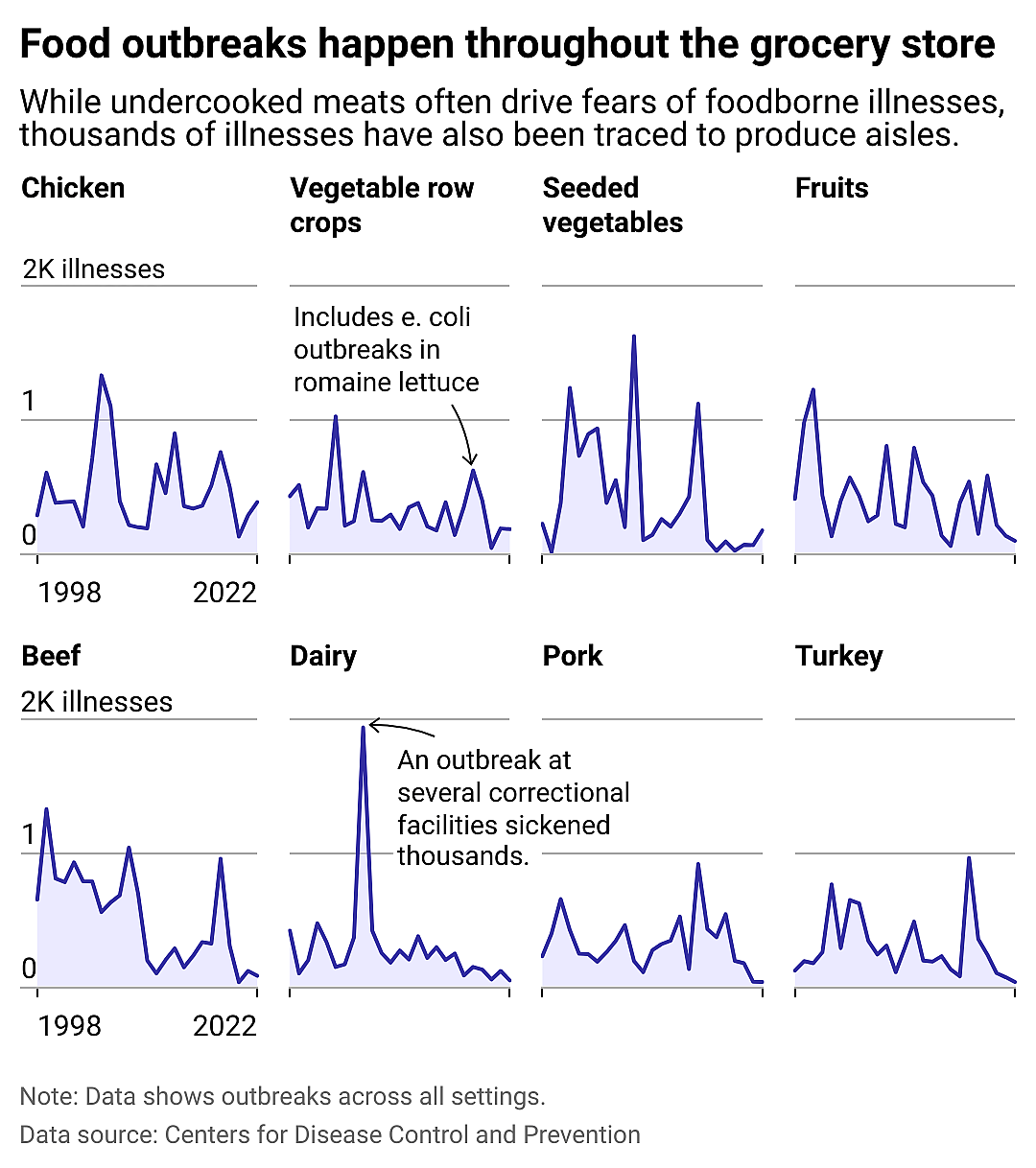
From this chart, it's clear that alongside fruits and vegetables, another frequent, nonmeat-related cause of foodborne illness is dairy products鈥攕oft cheeses being among the most frequent culprits (which is why pregnant women should avoid them).
A CDC study on attributed 30% of the cases to soft cheese, which due to its higher moisture content, is a better host for the pathogen than hard cheese. Plus, listeria can still grow at refrigerated temperatures, persisting in cold storage (and freezers) and transmitting to other foods in an open environment like a deli case.
What can be done to limit exposure to contaminated foods? One measure that's helped is the Food Safety Modernization Act, passed by Congress under the Obama administration in 2011. This law鈥攖he most comprehensive piece of food safety legislation made since 1937鈥攕hifts the Food and Drug Administration's food-safety focus from responding to preventing food contamination by creating science-based prevention controls across the food supply.
Part of the reason that foodborne illness was more prevalent in 2018 than in 2017 is that more infections are diagnosed thanks to testing procedures this legislation put into place鈥攖he FDA's ability to identify and track pathogens back to the source has greatly improved.
It's necessary to have regulatory agencies helping to ensure food safety, but alongside that are a host of safety measures individuals can take at home.
Stay up to date on recalls via the , which details current contamination concerns and the products and areas affected. The best way鈥攁nd unfortunately, the most time-consuming鈥攊s to eat only foods prepared and cooked at home. According to CDC data, 64% of foodborne illness incidents were attributed to dining out.
But even for those who cook at home, there's often a reliance on prepackaged or prepared foods. Processing fresh fruit and produce into ready-to-eat products increases the risk of contamination because it breaks the natural exterior barrier of the produce, say a cantaloupe's rind or an apple's skin, which might contain lingering pathogens or pesticides. Washing all fruits and vegetables and eating them as soon as they are cut (or, of course, cooking them, if that's appropriate) helps reduce the risk of contamination.
Still, the health benefits of eating fruits and veggies鈥攊n any form鈥攐utweigh the possible risk of exposure to a foodborne illness. A simple rule of thumb when it comes to avoiding nonmeat-caused foodborne illness is to cut out the major offenders鈥攕oft cheeses from unpasteurized milk, bagged or packaged salads with spoiled leaves, and raw, pre-cut fruit and vegetables.
The best practice for preventing foodborne illnesses for all foods, including meat, is the : clean, separate, cook, and chill. Wash hands, surfaces, utensils, and fruits and vegetables. Keep raw meats separate from other foods and use a specified cutting board for meat instead of the one used for vegetables. Cook foods to the right temperature. And finally, refrigerate perishables within two hours.
Story editing by Carren Jao. Additional editing by Kelly Glass. Copy editing by Kristen Wegrzyn.