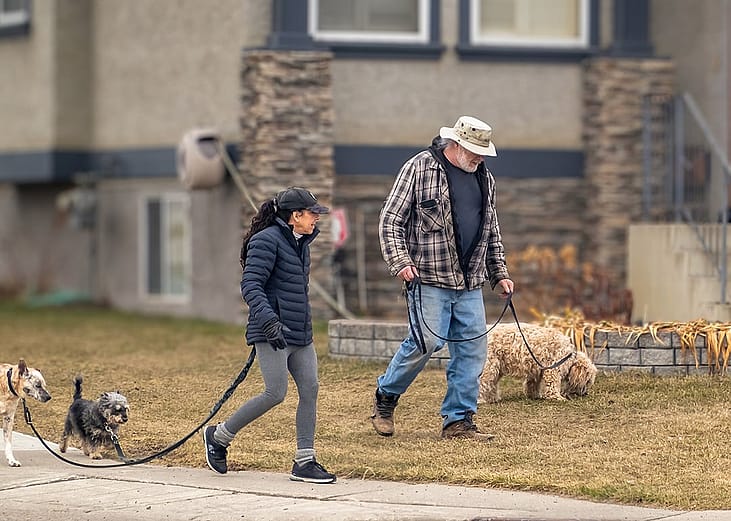
The walkability of a city brings a lot of benefits onto the sidewalk. For one, residents are able to get more exercise, increasing both physical and mental health. Plus, walkable cities are more likely to have a . To make it even better, 2019 research showed that kids growing up in walkable cities .
But in much of America, it's practically impossible to get around without a car. People must drive to get to school or work, to run errands, or visit friends鈥攕ince normally at least one of these destinations is too far away, or the roads do not have safe sidewalks. In some major cities, however, walking is much more feasible. One can cross a park to get to a friend's apartment, buy milk on the way home from a jog, or stroll a couple of blocks to eat at a 24-hour diner. These cities have the density and infrastructure to offer residents a healthier way of getting around.
But out of all the cities in the country, which ones are the best for walking? 爆料TV gives you the top 50 in this list, using data pulled from the tool.
These based on the walking distance from average homes to nearby amenities in the city (up to a 30-minute walk), and also take into consideration metrics of "pedestrian friendliness" based on population density and road conditions. The rankings include the obvious spots like New York City, Los Angeles, and Chicago, but you'll also find some surprising, overlooked cities鈥攍ike Des Moines, Iowa, and Tampa, Florida. Read on to find out where your city ranks on the list, as well as that city's walk score and the best-ranked neighborhoods within it.
You may also like: Tick bites are on the rise. Here's how to protect yourself.
1 / 50
#50. Irving, Texas
- Walk score: 43.8
- Population: 216,290
By 2017, Irving had and needed a new way to keep residents and visitors attracted to the area. Thanks to a thriving corporate culture, the city decided to create more walkable pockets. Now, three neighborhoods stand out as epicenters of walkability: Plymouth Park, Plymouth Park North, and Espanita.
2 / 50
#49. Des Moines, Iowa
- Walk score: 44.9
- Population: 203,433
When Des Moines decided to , the city brought in consultants from Chicago who spent 19 months figuring out how to make the city more walkable. And although the city is still fairly car-dependent, residents in Carpenter, Sherman Hill, and Drake Park enjoy the walkability on track for the rest of Des Moines.
3 / 50
#48. Fresno, California
- Walk score: 44.9
- Population: 494,665
Residents of the Cultural Arts District, Little Italy, and Lowell in Fresno enjoy the same amount of walkability that鈥檚 coming to other parts of the car-dependent city. New housing developments on the northeast side are 鈥攁ll with walkable shopping and entertainment.
4 / 50
#47. Norfolk, Virginia
- Walk score: 45.0
- Population: 242,803
If you live in downtown Norfolk, Highland Park, or ODU Village, you can enjoy proximity to almost a dozen restaurants within a five-minue walk. Developers are trying to bring that to other neighborhoods, too鈥攍ike , a once-industrial area now booming with condos and business.
6 / 50
#45. Sacramento, California
- Walk score: 45.3
- Population: 466,488
Sacramento as a whole struggles with walkability as well as the safety of doing so In 2016, Sacramento had the ; there鈥檚 even a nonprofit called WALKSacramento that strives to keep pedestrians safe. Of all the neighborhoods in Sacramento, Downtown, Midtown, and North Oak Park rate as the most walkable.
7 / 50
#44. Dallas, Texas
- Walk score: 46.0
- Population: 1,197,816
Even with walkable neighborhoods like Downtown, Oak Lawn, and Henderson, Dallas residents generally regard the city as non-walkable. Until the coronavirus hit, that is. Mark Lamster writes for the Dallas Morning News that when the virus began to rage, 鈥攁nd some things, like the addition of a bike lane or the removal of a stretch of highway, should probably be addressed if the city wants this momentum to continue.
8 / 50
#43. Omaha, Nebraska
- Walk score: 46.8
- Population: 408,958
Residents of Omaha are about to begin benefitting from more walkability outside of just the most accessible neighborhoods of Old Market, Market West, and Park East. , something that could increase bus traffic throughout the city. And developers are looking to like North 24th Street in northern Omaha.
9 / 50
#42. Atlanta
- Walk score: 47.8
- Population: 420,003
Atlanta may have public transportation like the MARTA and buses, as well as a fair amount of bike lanes, but the city is still lacking in walkability. Residents on the whole can get to approximately five restaurants within a five-minute walk, but for those in the more walker-friendly neighborhoods of , , and , that number skyrockets to around 20 spots in five minutes.
10 / 50
#41. Houston
- Walk score: 47.9
- Population: 2,099,451
In Neartown-Montrose, Midtown, and Greenway-Upper Kirby, residents may already enjoy the walkability perks of Houston. There are The city council in Houston is in the process of designed specifically to make the city denser and more walkable.
You may also like: Are you mentally healthy? 15 signs to look for
11 / 50
#40. Fremont, California
- Walk score: 48.3
- Population: 214,089
Fremont in September 2019 was named the . The weather is nice, crime is low, and if you live in Irvington, Centerville, or Sundale, you can do the majority of your errands on foot and also find plenty of restaurants nearby.
12 / 50
#39. Madison, Wisconsin
- Walk score: 48.3
- Population: 233,209
Madison isn鈥檛 just a city with great walkable neighborhoods like Downtown (home of the Dane County Farmers Market, one of the biggest in the country), Greenbush, and State-Langdon; it also ranks as . to live in overall. It鈥檚 not a huge city, but it鈥檚 teeming with people walking everywhere thanks to the University of Wisconsin, ample supply of tech campuses, and affordable housing.
13 / 50
#38. Paradise, Nevada
- Walk score: 48.4
- Population: 223,167
If you鈥檝e been to what many consider to be downtown Las Vegas, you鈥檝e been to Paradise; this town actually holds the infamous 鈥攚hich is also one of the most walkable neighborhoods in Paradise, along with and . You鈥檒l likely still need a car, but the amount of nearby attractions in each of these neighborhoods pulls in new residents who want quick access to entertainment and food.
14 / 50
#37. Spokane, Washington
- Walk score: 48.6
- Population: 208,916
Spokane developers in 2008 had a , complete with a boost to public transportation and real estate investments. Now, three Spokane neighborhoods have blossomed into walkable destinations: Riverside, Emerson Garfield, and Cliff Cannon. And there鈥檚 a new plan to spread that walkability throughout downtown, one that will also tackle dangerous intersections for bikers and walkers.
15 / 50
#36. San Jose, California
16 / 50
#35. Tampa, Florida
- Walk score: 49.4
- Population: 335,709
Historically, Tampa has struggled with a lack of walkability, leading to high levels of pedestrian deaths. The aims to put that history behind the city, working to make more neighborhoods walkable in addition to the top three of Uptown Tampa, Courier City-Oscawana, and North Hyde Park.
17 / 50
#34. Cincinnati
- Walk score: 49.8
- Population: 296,943
Some of Cincinnati鈥檚 neighborhoods, like the walkable Over-the-Rhine, benefitted from a allowing them to become more walkable through the removal of required parking spots. Now, the city is paying more attention to keeping the pedestrians safe while taking advantage of that walkability with a plan that continually .
18 / 50
#33. San Diego
- Walk score: 51.3
- Population: 1,307,402
San Diego鈥檚 Gaslamp, Little Italy, and Harbor View neighborhoods are considered walkers鈥� paradises, thanks to all the amenities available within a short walk. City officials now want to bring that feeling to the Downtown neighborhood with a plan to implement that allow for ample green and walking space while preparing for the population to rise.
19 / 50
#32. Richmond, Virginia
- Walk score: 52.2
- Population: 204,214
Though it appears to be taking a long time, Richmond is working toward creating a more walkable city鈥攎irroring its Monroe Ward, Jackson Ward, and Carytown neighborhoods鈥攑artially spurred on by coronavirus. Residents began biking and walking more once the pandemic hit, and Richmond officials have .
20 / 50
#31. Detroit
- Walk score: 53.2
- Population: 713,777
Detroit's most walkable neighborhoods are Downtown, University, and Central, and that's not by accident. Since 2010, the city has made a massive effort to increase the amount of walkable spaces throughout the urban sprawl, adding in the country.
You may also like: How stress shapes cancer's course
21 / 50
#30. Anaheim, California
- Walk score: 54.8
- Population: 336,265
Forget Disneyland: If you want to see the real Anaheim, head to one of the city鈥檚 walkable neighborhoods like North Euclid, The Anaheim Resort (away from the parks), and The Colony. The Colony neighborhood was the , and the city as a whole ranks as the 鈥攖hanks in part to the walkability.
22 / 50
#29. New Orleans
- Walk score: 58.9
- Population: 343,829
The French Quarter and adjacent neighborhoods Marigny and the Central Business District are the most compact in New Orleans and easily the most walkable. City officials are trying to build on that momentum with an arts initiative sponsoring .
23 / 50
#28. Cleveland
- Walk score: 59.5
- Population: 396,815
The Downtown, Ohio City, and University neighborhoods in Cleveland benefit from being the most walkable, with plenty of restaurants and entertainment options nearby. The next neighborhood on that list? Possibly Detroit Shoreway, where city officials are by changing zoning rules.
24 / 50
#27. St. Paul, Minnesota
- Walk score: 59.8
- Population: 285,068
Not only is St. Paul a moderately walkable city, it鈥檚 also the. While people shirk personal cars for walking and public transportation (mostly in the Downtown, South Frogtown, and Capitol neighborhoods), they鈥檙e taking that environmentally friendly ethos into their homes, tossing out the least amount of waste per person in the country.
25 / 50
#26. Denver
- Walk score: 61.0
- Population: 600,158
Partially thanks to a 2019 effort called Foot Traffic Ahead, Denver has steadily been rising in the ranks of walkable cities, particularly thanks to neighborhoods like Downtown, Capitol Hill, and Five Points, where food, entertainment, and public transportation are all nearby. According to developers in the city, the continued boost has a lot to do with .
You may also like: 5 key mental health trends from the 2025 State of Mental Health Report
26 / 50
#25. Milwaukee
- Walk score: 62.7
- Population: 594,833
Thanks to newer infrastructure developments like The Hop (Milwaukee鈥檚 streetcar) and redone roads, Milwaukee has been able to attract more major events and people over the last year. Now, the city has to point visitors to attractions鈥攕omething that will bring more walkability to downtown in addition to the already highly walkable Juneau Town, Lower East Side, and Yankee Hill neighborhoods.
27 / 50
#24. Pittsburgh
- Walk score: 62.9
- Population: 305,704
Pittsburgh鈥檚 walkable neighborhoods, like Downtown, Central Oakland, and Friendship, are only getting more popular鈥攁s evidenced by the residents are paying in rent just to live in those areas. And the city ranks highest in the absorption rate of these walkable neighborhoods, meaning more people are signing leases in them than in any other city.
28 / 50
#23. Honolulu
- Walk score: 64.6
- Population: 337,256
For Honolulu, becoming a more walkable city is a balancing act. In contrast with the idea of making more accessible areas, the city . It was for a good cause, though鈥攖hose crosswalks were dangerous for pedestrians and used less; removing them encourages use of safer ones, like those in the most walkable neighborhoods: Downtown, Ala Moana-Kakaako, and Mccully-Moiliili.
29 / 50
#22. Baltimore
- Walk score: 64.8
- Population: 620,961
Though Baltimore has three very walkable neighborhoods with excellent public transportation availability in Downtown, Mount Vernon, and University of Maryland at Baltimore, the city overall struggles with mass transit. They鈥檙e trying to fix it, though. In January, Baltimore City Councilman Ryan Dorsey 鈥攚hich is more accurately described as a list of tips or ideas鈥攖o make the public transportation more safe and equitable around the city.
30 / 50
#21. Rochester, New York
- Walk score: 64.9
- Population: 210,565
Outside the Pearl-Meigs-Monroe, Central Business District, and Swillburg neighborhoods, Rochester isn't exactly designed for walkers, thanks to limited public transportation and bike lanes. The city is trying to change that, though, with developments like , part of an overall residential transformation project around the 1950s Inner Loop highway.
You may also like: Tracking personal health data is the new midlife flex for men
31 / 50
#20. St. Louis
- Walk score: 65.5
- Population: 319,294
Thanks to green space, infrastructure and walkability (in part due to neighborhoods like Downtown, Benton Park West, and Soulard), . Although the population appears to be decreasing, tech opportunities abound, more neighborhoods are consistently being revitalized, and home prices are relatively low.
32 / 50
#19. Santa Ana, California
- Walk score: 66.3
- Population: 324,528
Santa Ana and its walkable neighborhoods鈥攍ike Downtown, Willard, and Eastside鈥攁re that way for a very specific reason, Walk Score co-founder Matt Lerner said. Cities of that age are generally more walkable because .
33 / 50
#18. Portland, Oregon
- Walk score: 66.6
- Population: 583,776
Just five years ago, Portland was suffering from a lack of walkability. But thanks to new neighborhoods and new apartment buildings in spots like Pearl, Old Town Chinatown, and Downtown, that鈥檚 a thing of the past. Now, there are entire walkable communities emerging in unexpected places鈥�.
34 / 50
#17. Buffalo, New York
- Walk score: 67.5
- Population: 261,310
Even though Buffalo ranks fairly high on this list, especially thanks to neighborhoods with high walkability scores like Allen, Grant Ferry, and the Central Business District, residents would still like to see more. Downtown, for example, presents by getting rid of excess parking lots and building more residential units.
35 / 50
#16. Los Angeles
- Walk score: 68.2
- Population: 3,792,621
One of the major things that old-world cities have going for them are walkable pedestrian areas where cars aren't allowed. And although Los Angeles has very walkable neighborhoods (like MacArthur Park, Central Hollywood, and Downtown) thanks to light rail and redevelopment, some residents are calling for more鈥�.
You may also like: 10 melatonin alternatives for sleep
36 / 50
#15. Hialeah, Florida
- Walk score: 68.7
- Population: 224,669
Hialeah is not only one of the most walkable suburbs of Miami, it鈥檚 also . Public transit is a little lacking, but neighborhoods Trojan Park, Semolina City, and Palmetto I-75 Industrial Center make up for it with quick foot access to restaurants and entertainment. And the city is .
37 / 50
#14. Arlington, Virginia
- Walk score: 69.2
- Population: 207,627
About 30 years ago, Arlington took the lead in suburban redevelopment in Virginia, . Now that momentum has pushed Arlington (and its most walkable neighborhoods of Clarendon-Courthouse, Ballston-Virginia Square, and Lyon Village) into the top walkable cities鈥攕omething we can expect to continue .
38 / 50
#13. Minneapolis
- Walk score: 70.5
- Population: 382,578
Thanks to a grant from the CDC last year, to neighborhoods outside the city鈥檚 most walkable ones of Lyn-Lake, Downtown West, and Lowry Hill East. While the central city area has plenty of public transportation and excellent capacity for bikes, other communities don鈥檛 have the necessary safety or access for those spaces. Walkable Community Workshops is hoping to change that with pilot programs.
39 / 50
#12. Long Beach, California
- Walk score: 72.4
- Population: 462,257
One of the perks of Long Beach is that public transportation takes you right into Los Angeles鈥攕o if you want to live somewhere that鈥檚 outside the city but just as walkable, Long Beach is a good choice, particularly in the Franklin School, Saint Mary, and Downtown neighborhoods. Long Beach has remained on the most walkable city list since 2016, .
40 / 50
#11. Oakland, California
- Walk score: 73.8
- Population: 390,724
Oakland's most walkable neighborhoods (Downtown, Koreatown-Northgate, and Temescal) enjoy ample public transportation and biking ability in addition to having a lot of food and entertainment options close at hand. Coronavirus has made it even more walkable for the long term, with .
You may also like: Is it harder for women to lose weight?
41 / 50
#10. Seattle
- Walk score: 74.0
- Population: 608,660
Thanks to a healthy activism for open public spaces and walkability, Seattle and its top three walkable neighborhoods of Downtown, International District, and Belltown continue to benefit from public transportation and spaces to bike. It can be tough, though; , which can make walking a slog.
42 / 50
#9. Washington D.C.
- Walk score: 75.9
- Population: 601,723
Some analysts in Washington D.C., are concerned that . Very walkable neighborhoods like U-Street, Dupont Circle, and Mount Vernon Square, come with a steep increase in cost of living, along with the increase in public transportation and accessible entertainment. As of 2016, only 2% of D.C. was truly walkable, and the concern is that as it spreads out, neighborhoods will be more gentrified.
43 / 50
#8. Chicago
- Walk score: 77.4
- Population: 2,695,598
Even though most tourists flock to Chicago鈥檚 downtown, it ranks sixth among the city鈥檚 most walkable neighborhoods. For the top three, you have to go north and west, to East Ukrainian Village, Near North Side, and West Loop. But other neighborhoods are quickly gaining steam thanks to .
44 / 50
#7. Miami
- Walk score: 77.6
- Population: 399,457
Miami and its most walkable neighborhoods鈥擠owntown, Wynwood-Edgewater, and Little Havana鈥攂enefit from a mayor who really gets it. Every month, major roads are shut down and opened for just bikers and walkers. It makes sense, since .
45 / 50
#6. Newark, New Jersey
- Walk score: 78.8
- Population: 277,140
In New Jersey's large cities, of where they need to go. Luckily, Newark is one of those cities with exceptional walkability鈥攑articularly in the Newark Central Business District, North Ironbound, and University Heights neighborhoods鈥攂ecause it's an older city center where officials are constantly working on projects to increase foot traffic.
You may also like: The real impacts of mental health stigma, according to research
46 / 50
#5. Philadelphia
- Walk score: 78.8
- Population: 1,526,006
Philadelphia was founded in 1682鈥攍ong before cars were ever an option. Partly thanks to that and to public transportation, the city has continued to develop into a walkable paradise. The , Center City West, Rittenhouse Square, and Avenue of the Arts South, for example, score nearly 100 across the board for walkability, public transit, and biking ability.
47 / 50
#4. Boston
- Walk score: 82.0
- Population: 617,594
Boston had the country鈥檚 first subway system鈥攁nd the drive to make it a walkable city is obvious in close-knit neighborhoods like Beacon Hill, North End, and Bay Village. The downside that comes along with that, though, is higher costs. In very walkable areas in Boston, 鈥攖he highest amount in the country.
48 / 50
#3. Jersey City, New Jersey
- Walk score: 86.8
- Population: 247,597
With excellent public transportation and bike infrastructure, it鈥檚 no wonder Jersey City has clinched a top spot on this list. In Historic Downtown, , residents can get to more than 20 restaurants and bars within a five-minute walk. In Journal Square, it鈥檚 14鈥攁nd you don鈥檛 need a car to run errands, either.
49 / 50
#2. San Francisco
- Walk score: 87.4
- Population: 805,235
If you can afford it, living in San Francisco doesn鈥檛 even require a car thanks to the streetcar, BART, and multiple other public transportation options. The top two neighborhoods鈥擟hinatown and Tenderloin鈥攅ach rank 100% on the walkability scale, and . Just be ready for some hills!
50 / 50
#1. New York CIty
- Walk score: 88.3
- Population: 8,175,133
New York City and its three most walkable neighborhoods鈥斺�攂enefit from massive access to public transportation, where one stop is almost always just a few minutes' walk away, whether it's the subway, a bus, or another option. There's also an ample supply of bike-shares and bike lanes. In fact, the city is so walkable that a lot of residents don't have drivers licenses or cars.
You may also like: 48.4 million Americans lack adequate access to a pharmacy