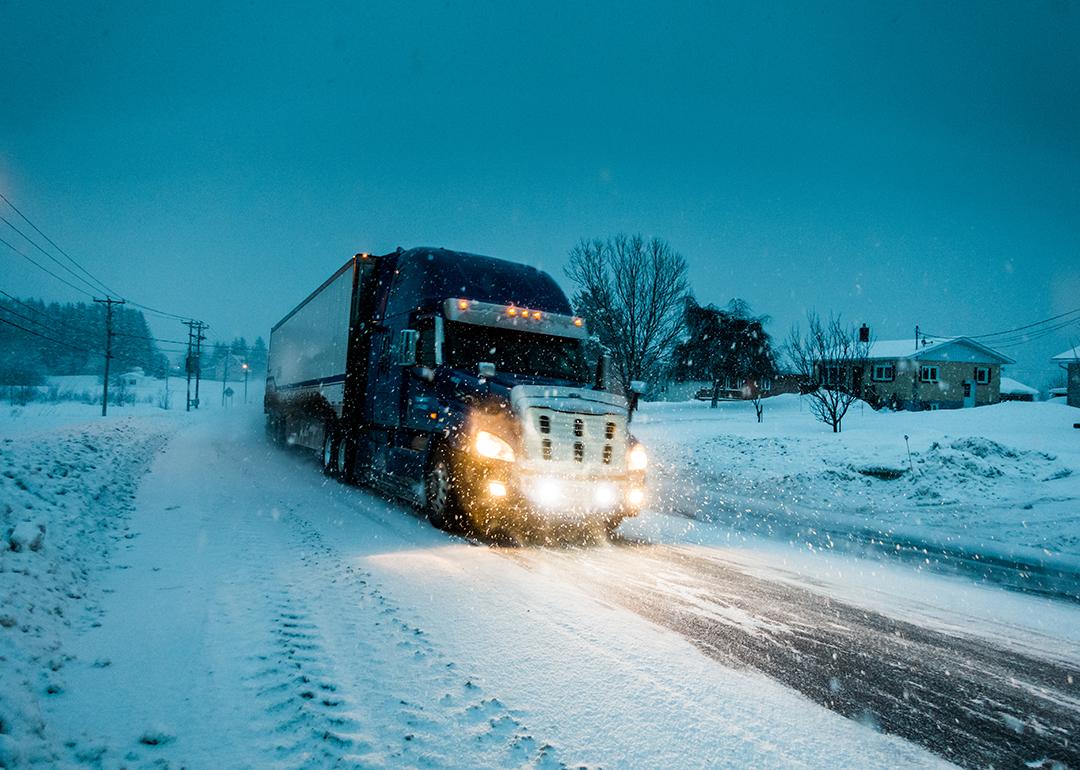
Canada cracks down on a billion-dollar trucking loophole
Canada cracks down on a billion-dollar trucking loophole
Phil and Francie Langevin have spent decades building P.A. Langevin Transport, their family trucking company in Carleton Place, Ontario. They pay their drivers properly, remit payroll taxes, and carry proper insurance. They follow the rules.
And they watch, year after year, as competitors who do none of those things undercut them on every contract.
鈥淭here鈥檚 so much wrong with this industry right now," s.
Francie put it even more bluntly: 鈥淭he next time you鈥檙e driving on a highway with a transport truck beside you, I want you to wonder鈥攈ow safe am I, really?鈥�
That鈥檚 a very good question. And now, the federal government is finally starting to ask it too.
Below, examines Canada鈥檚 crackdown on the 鈥淒river Inc.鈥� trucking model.
The Scheme Has a Name (and a Price Tag)
It鈥檚 called 鈥淒river Inc.鈥濃�攁nd if you鈥檝e never heard of it, that鈥檚 partly the point.
Here鈥檚 how it works: Instead of hiring truck drivers as employees with proper wages, payroll taxes, vacation pay, and employment insurance, some carriers classify their drivers as independent contractors operating through their own personal corporations. On paper, the driver is running their own little business. In reality, they鈥檙e showing up every day, driving a company truck, on a company schedule, with no benefits, no job security, and no safety net.
The carrier, meanwhile, pockets a cost advantage of up to 30% compared to a fully compliant competitor like the Langevins. They don鈥檛 offer payroll deductions, overtime, or vacation pay. That鈥檚 not a small edge. In freight, where margins are thin and contracts go to the lowest bidder, 30% is a huge advantage.
The Canadian Trucking Alliance (CTA) estimates that the scheme has cost the Canadian economy roughly $1 billion in lost tax revenue. That鈥檚 money that was supposed to fund line items such as healthcare, public services, and Canada Pension Plan contributions that drivers thought they were earning. They weren鈥檛.
The People Caught in the Middle
Behind the numbers are real people, and their stories are not pretty.
Karanveer Singh came to Canada from Punjab, India, as an 18-year-old international student in 2018, chasing what he called the 鈥淐anadian dream.鈥� He got his commercial trucking license and went to work. The first two companies he drove for classified him as an incorporated contractor and, eventually, stopped paying him altogether.
Singh fought back. He took his case to the Canadian Labour Board, proved he鈥檇 been misclassified, and won. One company paid up. The other still owes him nearly $40,000, and he may never see it.
鈥淯ntil the government enforces it, it is useless,鈥� he . 鈥淭hese companies, they know what they are doing. Most of the time, they will find new immigrants, new truck drivers to target鈥攂ecause they are so easy to target, because every new immigrant is desperate for a job.鈥�
Singh鈥檚 experience isn鈥檛 an outlier. Roughly , many of whom entered the industry through exactly these kinds of contractor arrangements. The 鈥淒river Inc.鈥� model, critics say, specifically targets these newcomers who don鈥檛 yet know their rights鈥攐r who feel they can鈥檛 afford to push back.
Now Ottawa Is Acting, With Real Money
For years, the problem was acknowledged and largely ignored. The CTA has been lobbying the federal government about 鈥淒river Inc.鈥� since at least 2018. Progress was slow. Moratoriums on penalties were quietly extended. Enforcement stayed minimal.
That changed with Budget 2025, enacted last November. , with $19.2 million annually on an ongoing basis, to crack down on the loophole, using the Canada Revenue Agency and Employment and Social Development Canada (ESDC). The CRA simultaneously lifted its long-standing moratorium on penalties for carriers who fail to issue T4A tax slips to incorporated drivers, effective for the 2025 tax year.
In plain terms: If your trucking company has been using the 鈥淒river Inc.鈥� model and not issuing the right tax paperwork, the grace period is over. ESDC inspectors can now show up unannounced, demand to see your payroll records and driver contracts, and levy fines on the spot. The CRA and ESDC are also sharing data directly, meaning a carrier flagged by one agency is now visible to both.
Federal task forces have already conducted more than 670 inspections and 420 education and outreach sessions nationwide. Enforcement is concentrated heavily in Southern Ontario鈥攖he Hamilton-Toronto corridor鈥攐ne of the busiest freight regions in North America. In April 2026, the Council of Ministers responsible for Labour and Transport officially called for a unified National Action Plan to end 鈥淒river Inc.鈥� entirely.
The message from Ottawa is clear: This is no longer a warning phase. It鈥檚 now enforcement.
So What Does This Mean for You
Here鈥檚 where it gets practical for everyday Canadians, because the effects of this crackdown won鈥檛 stay inside the trucking industry.
Trucking moves virtually everything you buy. Groceries, furniture, medication, clothes, electronics鈥攁t some point, it rode on a truck. When it costs more to move things, those costs work their way down the supply chain and eventually arrive at the cash register. that it takes about six to nine months for cost changes in transportation and logistics to fully show up in retail prices.
When carriers that have been operating at a dishonest 30% cost advantage suddenly have to comply, or exit the market entirely, available trucking capacity shrinks. Fewer trucks chasing the same loads often means higher freight rates. Industry analysts already project that the crackdown will contribute to reduced capacity and upward rate pressure through 2026, especially in high-volume corridors.
For Canadians who have already watched since 2022, that鈥檚 not welcome news. But there鈥檚 a longer-term argument to be made: The artificially cheap freight rates that 鈥淒river Inc.鈥� produced weren鈥檛 actually free. Someone was always paying. It just happened to be the drivers being stiffed on wages, the compliant carriers being undercut, and the public losing $1 billion in tax revenue.
There鈥檚 a Safety Angle Too, and It鈥檚 Serious
The financial picture matters, but Francie Langevin鈥檚 highway warning points to something even more immediate.
Karanveer Singh described his 鈥渢rainer鈥濃�攁 driver at a 鈥淒river Inc.鈥� company鈥攈itting a concrete wall at the Port Huron border crossing during what was supposed to be a training run. On Singh鈥檚 very next trip, he was handed a new trainee to mentor. Nobody told him anything. The company just needed the load delivered.
Critics argue that 鈥淒river Inc.鈥� operators, laser-focused on cutting costs and winning contracts, routinely cut corners on training and safety. A federal crackdown that removes that competitive pressure, or removes those operators from the market entirely, means better-trained drivers on the road. That matters to everyone who shares a highway with an 80,000-pound truck.
Who Wins, Who Adjusts, and What Comes Next
Not everyone loses in this shift. Companies like Kriska Transportation Group鈥攁 large, fully compliant carrier in Prescott, Ontario鈥攈ave been playing by the rules for years while watching 鈥淒river Inc.鈥� operators lowball them on bids. For them, enforcement is a long-overdue leveling of the playing field.
Smaller fleets and owner-operators that built their models around contractor arrangements face harder choices. Restructuring quickly isn鈥檛 always financially viable, and some will exit the market rather than comply, which is part of why analysts expect capacity to keep tightening through the year.
For drivers themselves, the picture is complicated. Some genuinely preferred the contractor structure, the flexibility, and, in some cases, higher short-term take-home pay. Others, like Singh, found themselves exploited with no recourse. What reclassification as an employee means in practice depends enormously on the carrier doing the reclassifying and whether they do it in good faith.
What鈥檚 not complicated is the direction of travel. Ottawa has committed real money, activated multiple agencies, and set enforcement machinery in motion that will be hard to walk back. The Ontario Trucking Association, which has been fighting this battle since 2018, calls the current moment the closest the industry has come to a genuine resolution.
The Bottom Line
Canada鈥檚 鈥淒river Inc.鈥� crackdown is more than a regulatory housekeeping exercise. It鈥檚 an attempt to correct a decade-long imbalance in one of the most fundamental industries in the country鈥攐ne that affects every supply chain, every grocery store shelf, and every Amazon delivery that lands on your porch.
The transition will have costs. Some of those costs will eventually be visible in freight rates and, down the line, in the prices of goods. That鈥檚 real, and it鈥檚 worth being aware of.
But the alternative was a trucking industry where companies that cheat consistently undercut compliant carriers, immigrant drivers like Karanveer Singh worked for months without pay and had little recourse, and undertrained drivers navigated border crossings on public highways. It was just cheap for the people gaming the system.
Phil and Francie Langevin have been paying the real price for years. So has everyone else, without even knowing it.
was produced by and reviewed and distributed by 爆料TV.