Are microschools a solution to falling public school enrollment?
Seventh grader Taitym Lynch plans most of her school day herself, mapping out a schedule each morning on her school laptop. She typically starts with math when her brain is sharpest, logging into an online platform her school uses for math lessons. Next she often tackles science with her “class guide,” a teaching assistant who walks her through topics like animal food chains. Lynch chooses to have lunch around noon, and finds time to take breaks in the woods that surround her school, Nature’s Gift.
Lynch, 13, came to Nature’s Gift this fall after years in a traditional public school. She kept trying to adapt, but her anxiety made it difficult. “Honestly, I had problems with school,” Lynch said. “I didn’t feel like going every day.” She also had a brief stint in virtual school.
So far, Lynch is happy at Nature’s Gift. She feels comfortable asking questions of teachers and likes the small size. There are just 64 kids in grades kindergarten through 12th, taught by three licensed teachers and several class guides who provide extra support.
Lynch is the sort of student George Philhower had in mind when he helped start Nature’s Gift — one of a small but growing number of public “microschools” across the country. In this article, examines the rising trend of microschools.
Philhower is the superintendent of Eastern Hancock Community Schools, a rural district of 1,200 students about 30 miles east of Indianapolis. He’d worried for years about the district’s financial health as more families whose kids didn’t thrive in public school considered homeschooling.
Around the same time, the concept of microschooling was gaining traction nationally. Microschools offer multiage learning environments that focus on personalized, often less-regulated instruction. Popularity grew during the pandemic when families sought learning alternatives in online, hybrid and pod options; an estimated 750,000 to 2 million students .
The schools are typically privately run, but Philhower saw a role for them in his small district. Last year, he won approval from the state’s charter school board to establish the Indiana Microschool Collaborative, which he says will incubate a network of microschools statewide. They will operate as charter schools, meaning they are public but have more flexibility in terms of curricula and other operations than traditional public schools.
Nature’s Gift, the first such school, received so many applications for its original 50 spots that it twice added additional seats and still has a waiting list. Philhower hopes that by 2030, the network will add at least 10 more schools and enroll some 6,000 students statewide. Word is spreading: He said he’s received inquiries about the model from school district leaders and education organizations from elsewhere in the state and beyond.
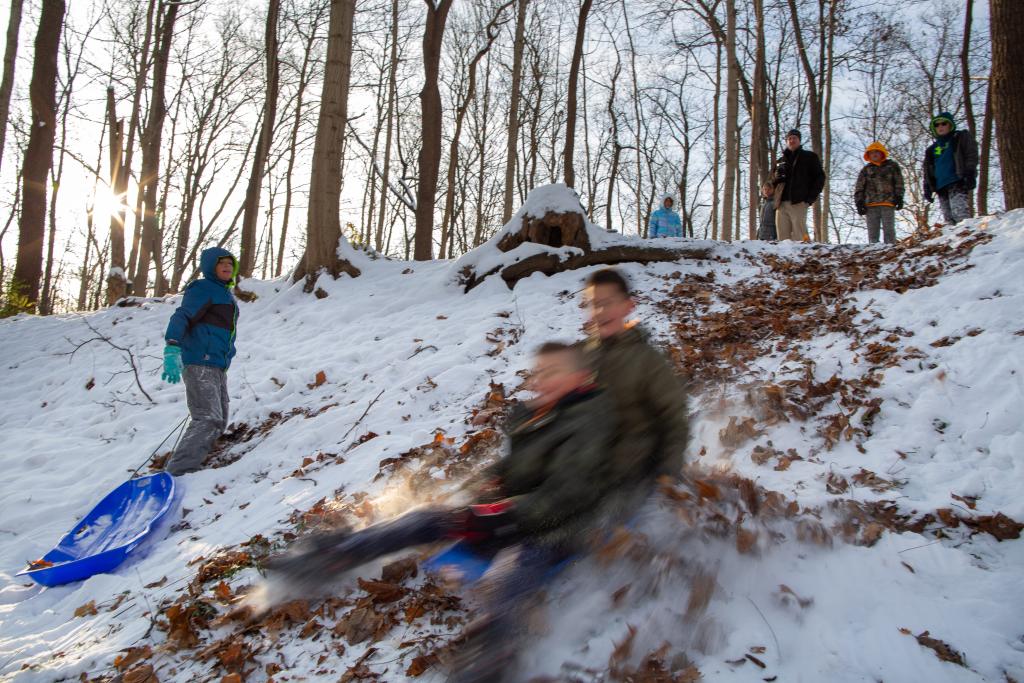
“The interest has been higher than we ever imagined,” Philhower said.
While some government and education leaders praise the public microschool model as an innovative way to allow more personalized approaches to learning, it’s far too soon to know the extent to which they can succeed in effectively educating students or stemming falling enrollment. Some experts also worry that the innovation that has defined microschools may be lost as the model expands.
“American education is populated with fads and failed reforms and that type of thing, things that don’t work out, and it’s hard to start a school and sustain it,” said Christopher Lubienski, director of the Center for Evaluation and Education Policy at Indiana University. Still, he said the collaborative model in Indiana could give the schools a strong shot at succeeding.
Don Soifer, CEO of the National Microschooling Center, an industry nonprofit that works to grow the microschool movement, estimates that only about 5% of the country’s microschools are public charter schools. But his organization hears from public school superintendents in states with school choice who are curious about the model, he said. “They’re losing some of their best teachers and families to microschools, and they want to get out in front of that.”
According to a of more than 800 microschools Soifer’s group conducted, more than 40 percent of students previously attended district-operated schools or were homeschooled before enrolling in a microschool.
Indiana’s public schools, meanwhile, Just over attend them, while about 70,000 students receive school vouchers for private schools through the state’s voucher program, started in 2011. , above the national average.
Scott Bess, a board member for the Indiana Microschool Collaborative, said he thinks Philhower has found a middle ground for some rural families who chose to homeschool only because they didn’t have other non-public options such as nearby private schools. “It’s going to feel like a small private school, but it’s public,” Bess said.
Philhower said he understands that some people might question why a public school superintendent is embracing and growing charter schools, but that’s what his community asked of him. “School choice isn’t going anywhere, especially in Indiana,” he said.
Indeed, the state’s Republican governor, Mike Braun, is an advocate of choice and microschools, and a July visit to the state from Education Secretary Linda McMahon. Indiana is going to offer microschool options to parents so “they can educate their kids in a way that they think makes sense,”
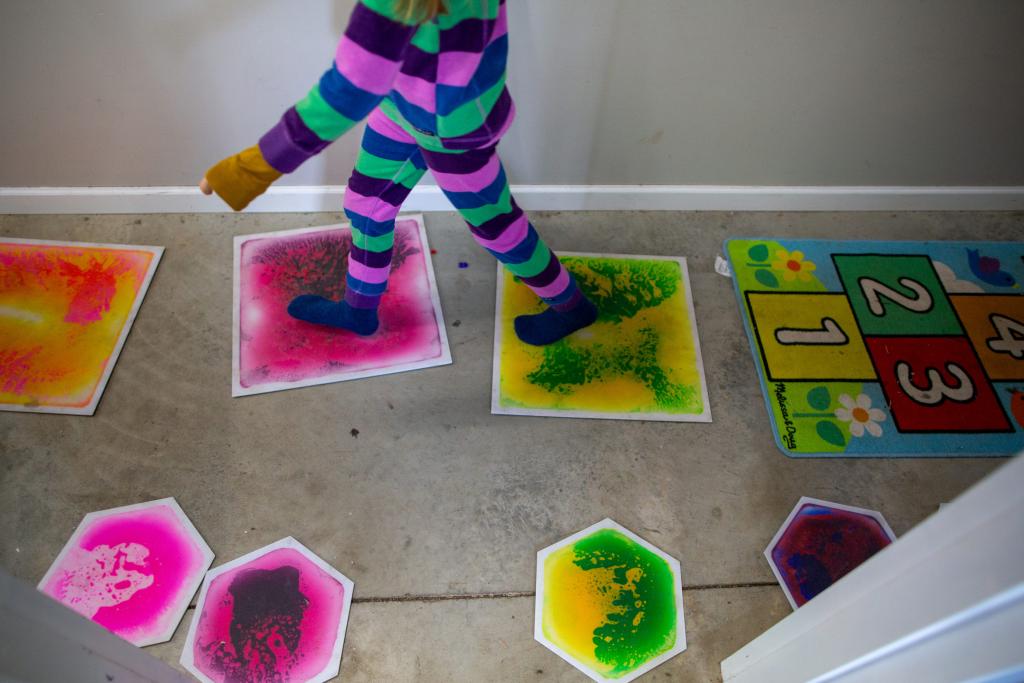
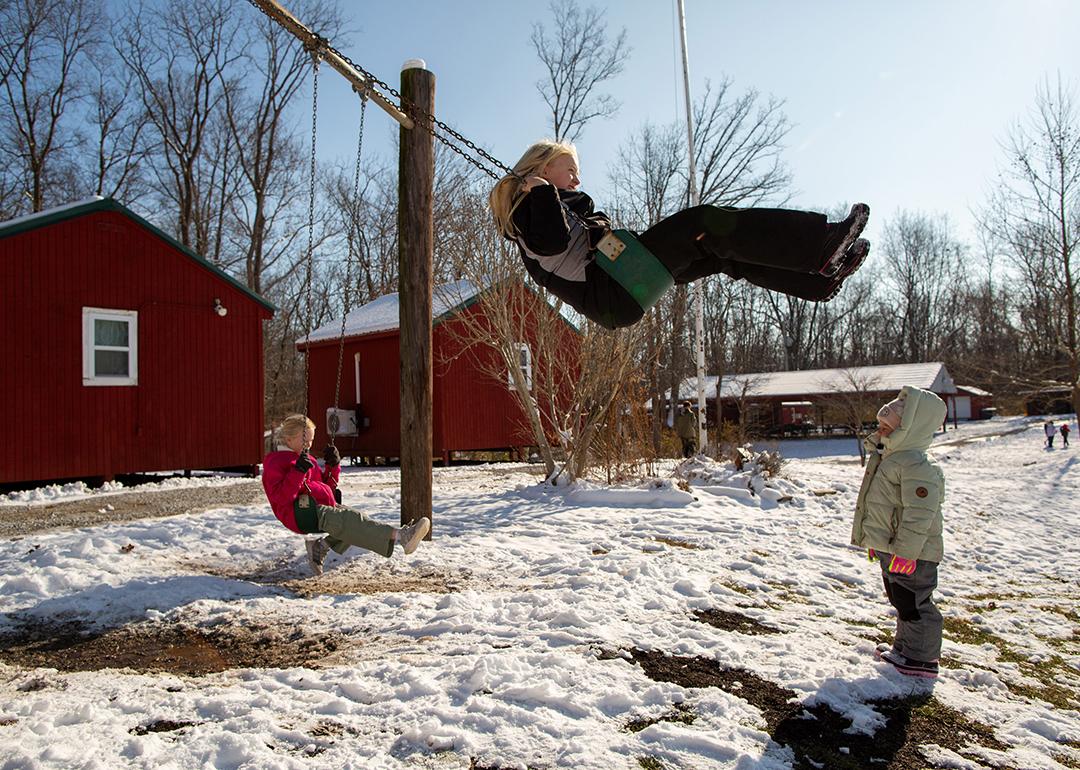
At Nature’s Gift — located at a 12-acre surrounded by woods that includes four barn-red cabins and a main building leased by the school — learning is personalized, with many of the middle and high schoolers managing parts of their daily schedule. Students advance by displaying ability or showing interest in a subject, not by grade level, testing or age alone.
Most students also participate in hybrid learning and are homeschooled half the time.
Erin Wolski, lead educator of Nature’s Gift, helps with classes for elementary through high school students, while running day-to-day operations. At any given time, she might be leading group math work, hopping on a walkie-talkie to answer a teacher’s question or taking kids on a nature hike.
Before joining Nature’s Gift, Wolski spent more than 16 years in traditional public schools, most recently in the Eastern Hancock district, her alma mater. In early 2025, she approached Philhower about wanting a change, and he told her about his plans for Nature’s Gift. Together, they started the school. Most of its budget revenue comes from state per-pupil spending and some state grants, like one that funds up to $1,400 per student.
Another Nature’s Gift teacher, Christina Grandstaff, also taught in traditional public schools for years. She said she prefers how responsive Nature’s Gift can be to individual students’ needs. “We’re still doing all the things that you need to do for public school, but we have the flexibility,” she said. “We’re outside more, or we can learn outside, or we have kids that move from that group up to this level.”
The school has a very different relationship with parents than traditional public schools.
Danielle Maroska enrolled her daughter, Kinzie, in Nature’s Gift after homeschooling her for years. She initially chose homeschooling in part to accommodate Kinzie’s athletic schedule: The 11-year-old is a gymnast who spends 16 hours a week practicing.
“Covid really opened the doors for homeschooling to be enough,” Maroska said. “Most of her gymnast friends are homeschooled, so we went that route, and we did that for a couple years.”
But Kinzie began to miss having a sense of community. This fall, she began attending Nature’s Gift full days on Mondays and half days the rest of the week. Her mother homeschools her those afternoons when she’s not at the gym. Maroska describes herself as a “co-captain” in her daughter’s education, with Wolski being the captain.
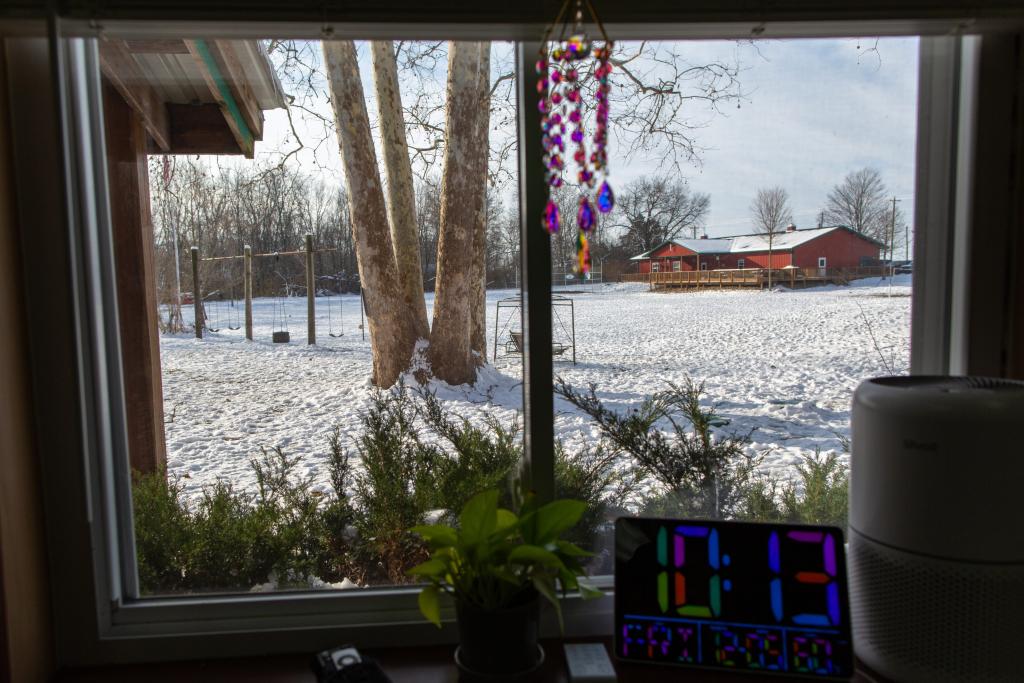
Since attending Nature’s Gift, Maroska said she’s noticed her daughter’s approach to learning change. She used to hate reading, Maroska said, but now she regularly curls up with a book, even ahead of pickup time in early December.
“I feel like this is kind of how college is, in a sense,” Maroska said. “It’s making them take initiative to guide their own learning.”
Still, Maroska said Nature’s Gift isn’t right for all kids. Her two sons, in the second and eighth grades, are thriving at a traditional public school in Eastern Hancock, she said, and she would never pull them from that school unless something changed.
By contrast, mother Jen Shipley said she was initially skeptical of Nature’s Gift, never having seriously considered public education for her homeschooled 9-year-old. But like Maroska, she appreciates the flexibility and close relationships with teachers. Her daughter, Elliana, attends the school roughly three days a week and is homeschooled the other two.
“We feel like partners in her education, versus I’m just handing her over and I just have to deal,” Shipley said.
As a public charter school, Nature’s Gift must take state tests, unlike private microschools that do not. So far, the results have been mixed. On state benchmark tests in November, the majority of students, 70 percent, scored below proficient in math while only 10 students, or 30 percent, scored below proficient in English and language arts, according to Wolski.
She said it’s too soon to use student test scores to evaluate the school since it’s been open less than a year. She noted too that her students were educated in a variety of settings before joining the school.
Only one-third of microschools affiliated with the National Microschooling Center take state tests, according to the Las Vegas-based nonprofit, so data on their performance overall is limited.
Some microschool researchers worry that as public microschools are increasingly evaluated based on state tests, they could become more beholden to that accountability framework and some of what makes them innovative could disappear. “If that high-stakes accountability piece is there, it is inevitable that schools will have to change their operations to lean more towards performing on those metrics,” said Lauren Covelli, an associate policy researcher at Rand, a research organization, who studies microschools.
She added: “With so many school choice options in Indiana, specifically, if families don’t want their child to be taking a standardized test, it’s probably not the choice for them.”
For families and educators who have chosen Nature’s Gift, the future seems encouraging. “This is sustainable, because so many parents are seeking something different,” said Wolski, the teacher and co-founder. “They have more access to things now than they ever did before.”
As 3 p.m. neared on a recent weekday, Grandstaff wrapped up a lesson and sent some students to the main building for pickup, then checked on a student who was studying at his laptop outside in the 20-degree weather. “He prefers it,” the teacher said.
Wolski said she doesn’t want to be part of undoing what’s happening in traditional schools but, rather, building more options into the public school system. “Families want different things,” she said. “Kids want different things.”
Nature’s Gift still has a long way to go, she said, but she is motivated to keep building it.
“Parents are happy. Kids are happy,” Wolski said. “So we’re going to keep going.”
was produced by , a nonprofit, independent news organization focused on inequality and innovation in education, and reviewed and distributed by ±¬ÁÏTV.