Trump aims to shrink the Education Department, while Washington tightens its grip on schools
Trump aims to shrink the Education Department, while Washington tightens its grip on schools
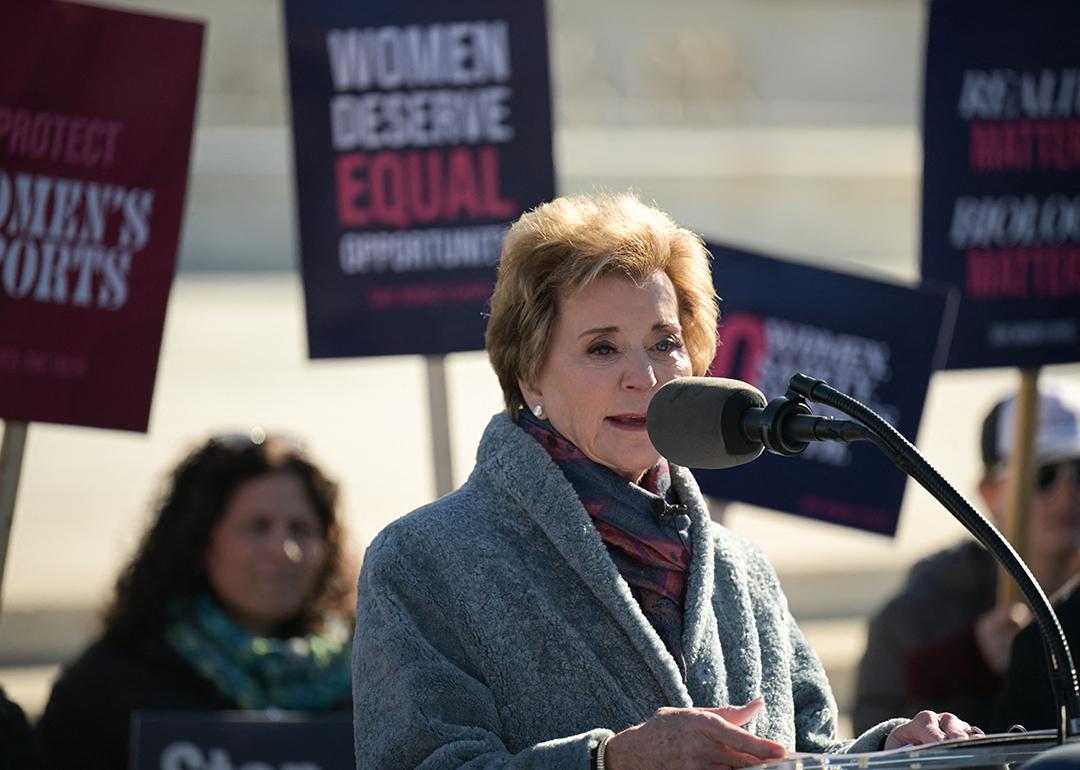
Since taking office, the Trump administration has offered a consistent message: It鈥檚 getting the feds out of the way of schools by trying to abolish the Education Department. Education Secretary Linda McMahon has to 鈥渂reak up the federal education bureaucracy,鈥� 鈥渞eturn education to the states,鈥� and 鈥渆mpower local leaders.鈥�
Yet many local and state leaders whose politics differ from Trump鈥檚 are not feeling empowered 鈥� quite the opposite, as explores in this article. 鈥淲e have seen unprecedented federal interest,鈥� says Aaron Spence, the superintendent of Loudoun County schools, a suburban Virginia district outside Washington D.C. that has been at the center of a number of high-profile culture-war .
In July of last year, the Education Department found Loudoun and a number of other Northern Virginia districts had violated Title IX by allowing transgender students to access bathrooms and locker rooms based on their gender identity. The decision was startling to Spence because Loudoun was following a 2020 appeals that required bathrooms in Virginia schools be made available to trans students.
The federal government had reopened an issue that seemed settled. This has taken up 鈥渁n inordinate and significant amount of staff time,鈥� says Spence. Now Loudoun is threatened with a loss of federal funding as the issue plays out in court. The district wants to follow federal law but doesn鈥檛 know how, Spence says: 鈥淲e would frankly love some resolution.鈥�
Loudoun鈥檚 experience underscores Trump鈥檚 efforts to stamp out local school policies that the administration disagrees with and the challenge that鈥檚 created for local school leaders. Despite his promise to reduce federal involvement in education, D.C. influence hasn鈥檛 gone away.
In response to a request for comment on this story, a spokesperson for the Education Department pointed to the administration鈥檚 accomplishments.
The Trump administration has launched a flurry of investigations into local school systems and states. That includes probes into a California law prohibiting teachers from being to disclose students鈥� gender identity to parents and Black student achievement programs in and . The Education Department has also sought to restrict at a Denver high school and to restore a at a Long Island high school.
Some state and school leaders say they鈥檙e monitoring federal policy more closely than at any point in recent memory.
鈥淭he Trump administration will keep coming after us because that鈥檚 their values, and I understand that,鈥� says Chris Reykdal, the superintendent of Washington state. 鈥淏ut it鈥檚 totally inconsistent with their idea of returning education and policy back to the states.鈥� Trump is investigating Washington, and a number of other states, over policies to allow transgender girls to compete in female athletics.
To be clear, many voters agree with Trump鈥檚 approach to these social and cultural issues. Some observers also contend turnabout is fair play: Democrats federal power in aggressive ways, so it鈥檚 more than fair for Republican presidents to do the same.
Rick Hess of the American Enterprise Institute, who has criticized some of Trump鈥檚 moves, says it was predictable that conservatives would use the tools pioneered by progressives. 鈥淭here鈥檚 a degree of schadenfreude,鈥� he says.
For their part, administration officials say they are simply following civil rights statutes. 鈥淎s long as this agency exists, we need to be sure we鈥檙e enforcing the law,鈥� the Education Department鈥檚 Lindsey Burke said at a .
But the administration is going further than enforcing existing law; it is seeking to reinterpret and create new law, often in ways that maintain a powerful federal role in education.
Consider, for instance, the interpretation of Title IX, which prohibits sex discrimination in education. The Biden administration contended this protects transgender students, which infuriated many conservatives and was in a number of courts.
Others argue that the law is silent about gender identity and that the issue should be left up to states. 鈥淲hy would we at this point 鈥� jump in and try to constitutionalize a rule for the whole country while there鈥檚 still uncertainty and debate?鈥� said Trump-appointed Justice Brett Kavanaugh during in a pending case on transgender athletes.
The Trump administration is taking a third position, which is that Title IX broadly prohibits transgender students from sex-separated spaces and sports. In Virginia, it鈥檚 pushing that view even where an appeals court decision says otherwise. (The administration did notch a win in early March after the parents likely have a right to know if their child鈥檚 gender identity changes in school.)
Shep Melnick, a political scientist at Boston College, has criticized Democratic presidents for what he sees as too much federal meddling. But he says Trump has taken federal power to a new level. 鈥淭he more you reinforce that these tools can be used in a heavy-handed partisan way, the more you鈥檙e going to make sure that happens the next time the administration changes,鈥� he says.
Trump has sought a from universities including on antisemitism, DEI, grade inflation, intellectual diversity, admissions practices, transgender accommodations, and more. The administration has aggressively, and often successfully, leveraged federal funds to push colleges to change some of their practices.
Meanwhile, Congress and Trump have a large school choice tax-credit program through the 鈥渂ig beautiful bill.鈥� This means the federal government will now provide subsidies to private schools and perhaps certain public schools. States don鈥檛 have to participate, but the Trump administration is what rules states can put in place if they do opt in.
This law could ultimately lead to more federal regulation of private schools, which is one reason some conservative groups have federal choice measures. The Trump administration has indicated it will include few if any regulations, but future administrations may not do the same. Just ask private universities, which have grown accustomed to federal funds and are now facing unprecedented federal pressure.
The persistent, and even growing, federal power over education has been obscured by Trump鈥檚 high-profile effort to . This gives the impression that the federal role is shrinking. It鈥檚 true that there are fewer people doing and investigating civil rights claims in schools. There鈥檚 also no longer a health clinic at the Education Department building, which officials have repeatedly . The administration has issued guidance on how schools can use federal funding more flexibly and recently to the state of Iowa.
Yet some school officials say so far has been minimal.
鈥淭he promise was deregulation,鈥� says Sasha Pudelski, advocacy director of AASA, the association of school superintendents. 鈥淭he reality has been paperwork, guidance, and reminders.鈥�
was produced by and reviewed and distributed by 爆料TV.