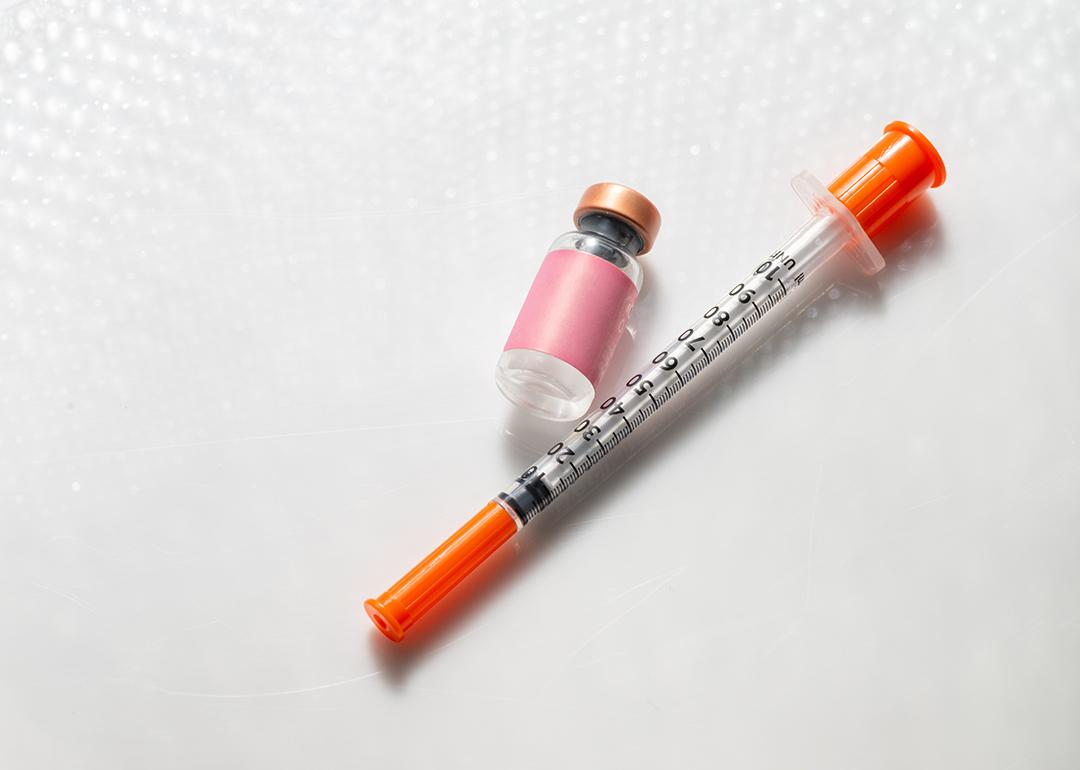
50% of peptide users are taking compounds not approved for human use. Most don't know it
Ahead of a July FDA meeting that could influence how several popular peptides are regulated, a new survey suggests many current peptide-users may not realize the compounds they鈥檙e taking are experimental.
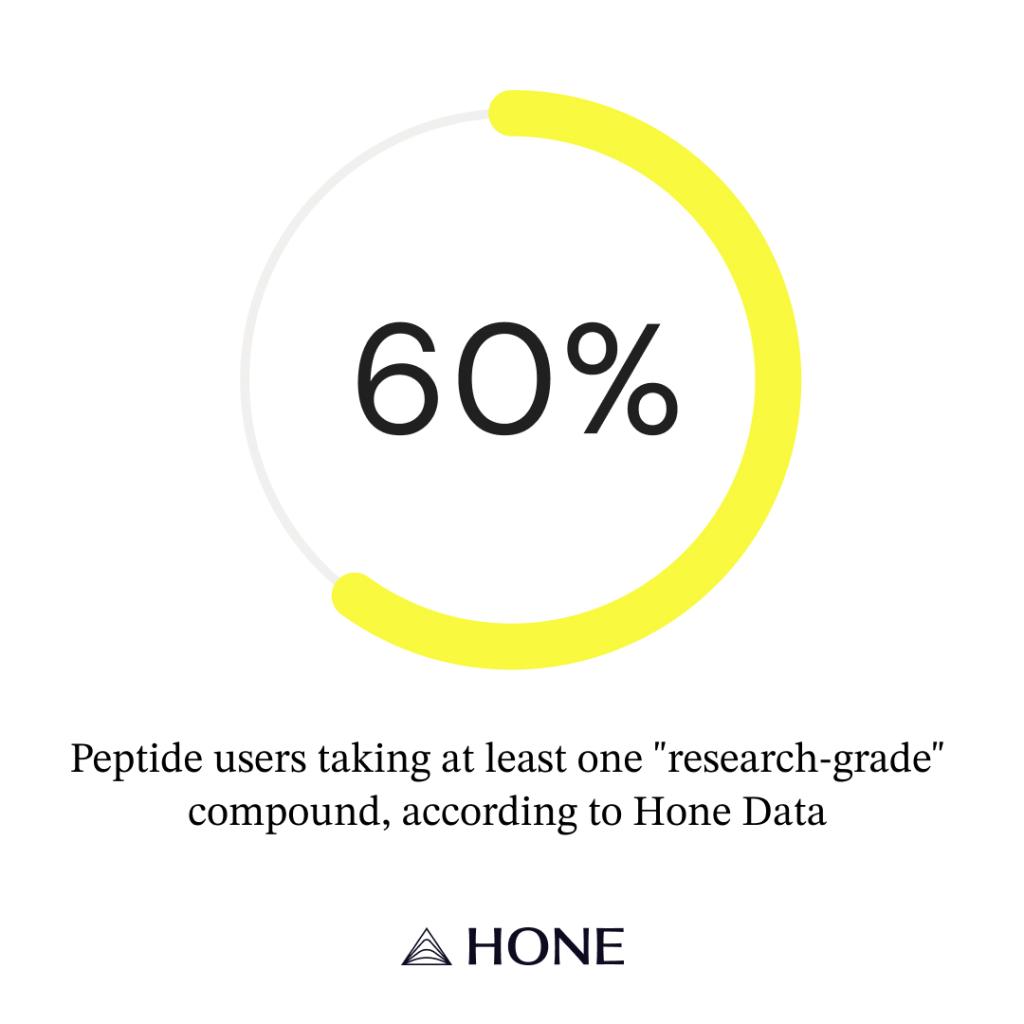
Half of people taking research-grade peptides mistakenly believe the compounds they're using are FDA-approved, according to a new survey of peptide-aware U.S. adults by , a personalized medical platform focused on longevity.
Based on the May 2026 survey of 2,491 U.S. adults with at least some familiarity with peptides as a health and wellness tool, the findings highlight a challenge as : understanding what level of evidence exists for a given peptide and how it's being sourced, prescribed, and monitored.
鈥淧eptides can help you reach your health goals if they鈥檙e medical-grade and taken under professional supervision,鈥� says , a triple-board-certified physician specializing in peptide therapy. 鈥淚f not, you鈥檙e playing roulette with your health.鈥�
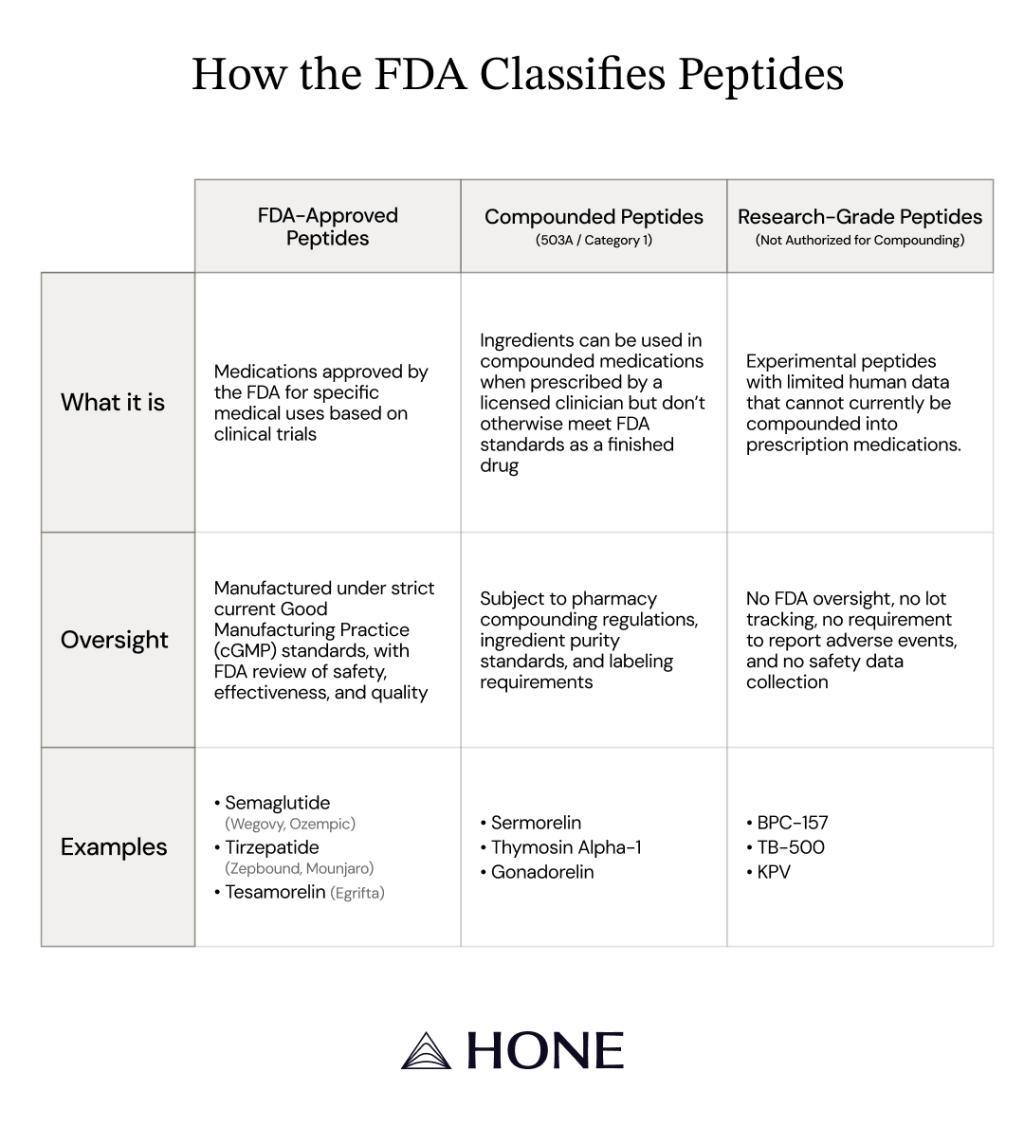
How the FDA Classifies Peptides
Not all peptides are subject to the same level of evidence, oversight, or regulation.
Some peptides, including insulin and GLP-1 medications, are FDA-approved drugs that have cleared clinical trials and are manufactured under current Good Manufacturing Practice (cGMP) standards. Every batch is tested for potency and purity, and each one carries a lot number that makes it traceable back to the raw material. FDA-approved peptides are dispensed only through licensed pharmacies with a prescription, which guarantees you鈥檙e getting the right compound at the right dose with proper handling, meeting the same standard as any prescription drug from your pharmacy.
Other peptides, such as , are included on the FDA's 503A Bulks List, also called Category 1. These compounds can be prescribed through compounding pharmacies under physician supervision, with purity and labeling oversight.
A third category includes compounds currently classified as research-grade. These peptides into prescription medications and typically have less clinical evidence and regulatory oversight than FDA-approved drugs. They鈥檙e also sold outside traditional medical channels. Research-only peptides are typically produced in bulk overseas with no FDA oversight, which means there's no guarantee of what's actually in the vial. Some 3 in 10 research-grade peptide products fail basic quality checks 鈥� they鈥檙e mislabeled, below purity thresholds, or dosed incorrectly, according to a . There's also no lot tracking, no requirement to report adverse events, and no one collecting safety data, so if users have reactions, you may not hear about it.
At the July meeting, an will review several high-profile research-grade peptides 鈥� including BPC-157, TB-500, KPV, and MOTs-C 鈥� for possible inclusion on the 503A Bulks List, which would create a pathway for compounding under medical supervision.
A peptide's regulatory status is not a simple measure of whether it does or doesn't work, Husain says. Rather, it reflects the evidence available, how the compound is manufactured and distributed, and whether regulators believe it should be available through established medical channels.
鈥淕别迟迟颈苍驳 reclassified as category one would be a big deal,鈥� Husain says. 鈥淚t wouldn't mean the peptides are FDA-approved, but it would mean they could be manufactured at compounding pharmacies, which would automatically make them safer.鈥�
Considering Peptides?
Injecting yourself with substances that are unapproved and unregulated is inherently risky, says Husain. 鈥淭hey can be unsafe for humans, unsafe in the amounts you鈥檙e taking, or unsafe for you even if your friend got great results,鈥� he says.
Peptide effects can vary significantly from person to person, Husain says. For example, increase levels of IGF-1, a hormone involved in tissue growth and repair. That may be beneficial for people with low levels of IGF-1, but taking a comes with some risk. For example, if your levels are already elevated 鈥� from an undiagnosed pituitary issue or just natural 鈥� growth hormone peptides could raise your risk for certain cancers and . 鈥淚t鈥檚 impossible to know whether a peptide will be safe for you without consulting a physician who can consider your medical history,鈥� Husain adds.
If you鈥檙e considering peptides, Husain recommends looking on the to understand the classification of every compound in your stack 鈥� as well as learning where it comes from. You can find the manufacturer鈥檚 location on the product packaging or on the supplier鈥檚 cGMP/FDA registration details on their site. If you request the product鈥檚 Certificate of Analysis (CoA) from the seller, it should list the name of the manufacturing facility as well as the batch number and date. Ideally you want a vendor that operates through a licensed pharmacy, requires a prescription, and is transparent about sourcing, , and medical oversight.
You鈥檒l also want to work with a doctor who can monitor your health, explain the research, and help you make decisions based on medical evidence, not just glowing testimonials on TikTok.
Methodology
Results come from a May 2026 online survey of 2,491 U.S. adults with at least some familiarity with peptides as a health and wellness tool, fielded May 8-11, 2026. Participants were ages 18-60+, 61% female and 39% male, representing all major U.S. regions and a broad distribution of household incomes, with the largest share of respondents in the $75,000-$99,999 bracket.
was produced by and reviewed and distributed by 爆料TV.