
Is there a best allergy medicine for seniors? Safe medications and which ones to avoid
There are some medications that older adults due to their risk of side effects. This includes some of the most well-known allergy medications. But that doesn鈥檛 mean you have to avoid all if you鈥檙e over the age of 65. There are plenty of treatment options that are still safe and effective for older adults with .
In this article, , a platform for medication savings, explains which allergy medications are considered safer for older adults and which ones to avoid
Key takeaways:
- Preferred allergy medications for older adults are corticosteroid (steroid) nasal sprays, such as Flonase Allergy Relief (fluticasone propionate), and antihistamine nasal sprays, such as Astepro (azelastine). Nondrowsy oral antihistamines, such as Claritin (loratadine), are also safe options.
- NasalCrom (cromolyn) nasal spray and antihistamine eye drops, such as Zaditor (ketotifen), are also safe for older adults. But they may be less effective for managing allergies.
- Older adults should avoid antihistamines that cause drowsiness, such as Benadryl (diphenhydramine), and oral decongestants, such as Sudafed (pseudoephedrine). These come with a risk of serious side effects, such as a higher risk of falls or high blood pressure.
- There are ways to save on your allergy medications. Many options are available as lower-cost generics.
6 of the best allergy medicines for seniors
There isn鈥檛 just one best allergy medicine for older adults. You have a choice between lots of safe, effective options. Let鈥檚 take a look at safe over-the-counter (OTC) allergy treatment options.
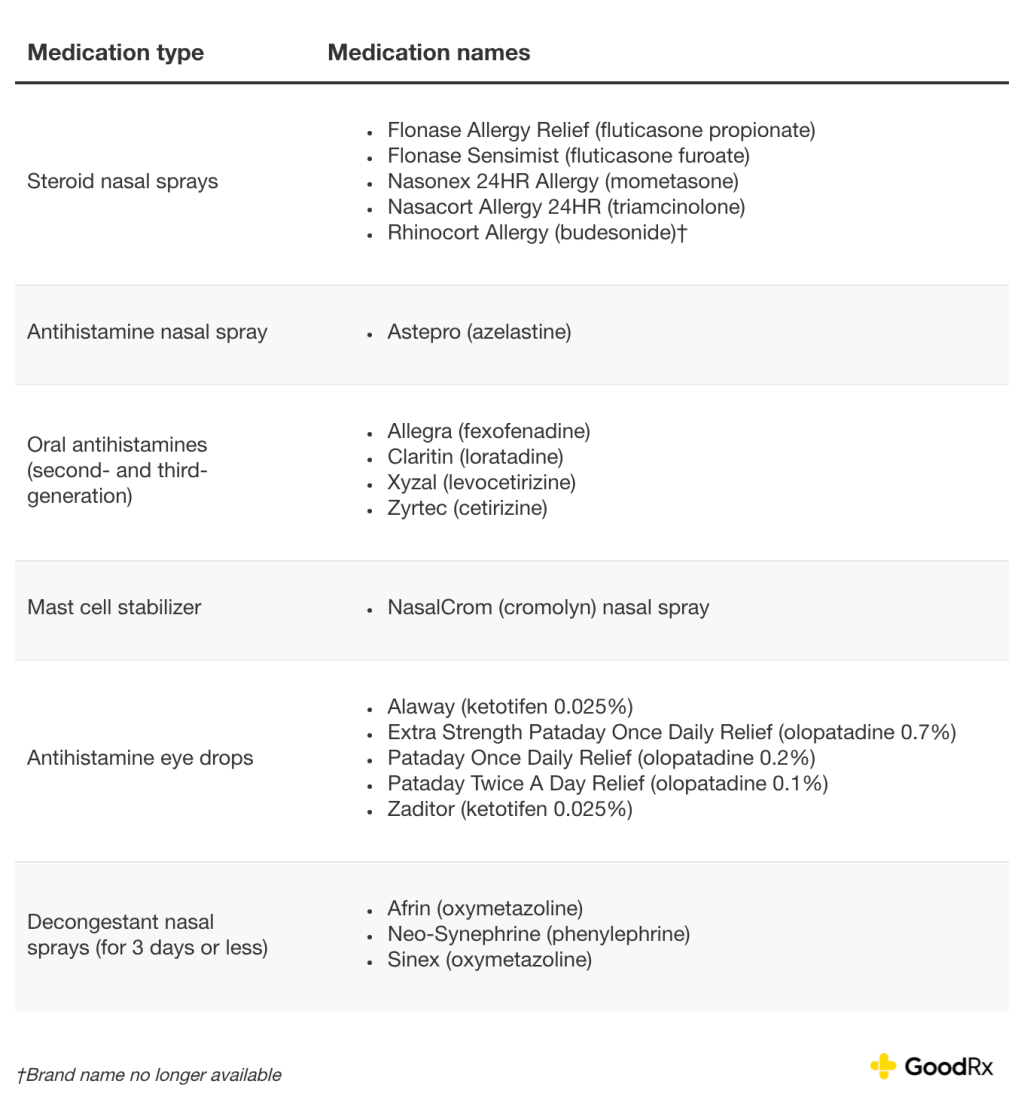
1. Steroid nasal sprays
Corticosteroid (steroid) nasal sprays are a first-choice option for treating allergies and are for older adults. They鈥檙e the option for treating multiple allergy symptoms, including eye symptoms. But you鈥檒l need to , and it may take up to two weeks to see their full effects. So if you know when your allergies tend to start, you should begin using a steroid nasal spray about two weeks before to help prevent symptoms.
OTC steroid nasal sprays include:
- Flonase Allergy Relief
- Flonase Sensimist 鈥� a finer, gentler spray than regular Flonase Allergy Relief
- Nasonex 24HR Allergy
- Nasacort Allergy 24HR
- Rhinocort Allergy 鈥� brand name no longer available
2. Astepro nasal spray
Astepro (azelastine) is the only antihistamine nasal spray , and it can be a first-choice option for treating allergies. It works fast 鈥� within 15 to 30 minutes 鈥� and is safe for older adults. It treats multiple allergy symptoms and may work better than oral antihistamines, especially for treating congestion.
It鈥檚 unclear how Astepro compares to steroid nasal sprays. Some studies show they鈥檙e similarly effective, while others suggest Astepro works better.
Good to know: Astepro can cause for some people who use it. Make sure you use it when you don鈥檛 have to drive or perform tasks that require attention until you know how it makes you feel.
3. Nondrowsy or less-drowsy oral antihistamines
Newer, second- and third-generation antihistamines are also first-choice options for treating allergies. They鈥檙e generally considered safe for most older adults. They start working about one to three hours after you take them and last for about 24 hours. They treat multiple allergy symptoms but may be than the nasal sprays listed above for chronic symptoms.
Nondrowsy or less-drowsy antihistamine pills and liquids include:
- Allegra
- Claritin
- Xyzal
- Zyrtec
Just be sure to avoid any products that have a 鈥�-D鈥� after their name, such as Allegra-D (fexofenadine/pseudoephedrine). These contain an oral decongestant. And as this article details later on, oral decongestants aren鈥檛 considered a safe allergy medicine for older adults.
Good to know: Even though these are labeled as , they can still cause mild sleepiness for some people. This is especially true for Zyrtec, which is more likely than the others to cause drowsiness. Consider trying Allegra first, as it鈥檚 the of all antihistamines to make you sleepy.
4. NasalCrom nasal spray
NasalCrom nasal spray is a safe choice for older adults when it comes to preventing and treating allergy symptoms. But it鈥檚 than other options and may take to be fully effective. It鈥檚 recommended to start it at least a month before you expect allergy symptoms to start. It may be an option if you can鈥檛 tolerate the medications discussed above.
5. Antihistamine eye drops
Sometimes allergy symptoms only affect the eyes (called ). If you鈥檙e just treating , consider trying an antihistamine eye drop. These drops are also sometimes labeled as 鈥渁ntihistamine/mast cell stabilizer鈥� eye drops since they work like both antihistamine and mast cell stabilizer medications.
Examples of antihistamine eye drop brands include:
- Alaway
- (comes in )
- Zaditor
When choosing an allergy eye drop, look out for combination products. These often include a decongestant. Decongestant eye drops only treat red-looking eyes, not allergy symptoms. And they should only be used for up to three days in a row. Using them longer than this can cause redness to be worse when you stop using them (鈥溾��).
6. Decongestant nasal sprays
Short-term use of decongestant nasal sprays is generally considered safe for most older adults. But they only treat congestion, not other types of allergy symptoms. They work very fast (within ). But you should only use them for up to three days in a row. After that, there鈥檚 a risk of , which is worsening congestion when you stop using them.
Consider saving decongestant nasal sprays for just when you have severe congestion. You can find them OTC under many brand and generic names. A few popular examples are:
- Afrin
- Neo-Synephrine
- Sinex
Good to know: There鈥檚 conflicting information on whether decongestant nasal sprays . To be safe, ask a healthcare professional before using one if you鈥檝e been diagnosed with high blood pressure or other heart problems.
Which allergy medications aren鈥檛 recommended for older adults?
Steer clear of older, first-generation antihistamines that you take by mouth, such as Benadryl (diphenhydramine). These older antihistamines don鈥檛 work any better than newer ones. And they come with more and , such as dizziness and a .
Older adults should also avoid oral decongestants, such as Sudafed (pseudoephedrine). Decongestant pills and liquids aren鈥檛 recommended for older adults because they can raise . They can also be risky if you have , such as thyroid problems, , or an enlarged prostate.
Can you treat allergies without medication?
Yes, there are some for managing allergies. If possible, avoid or limit your exposure to allergens. Strategies for this might include more frequent vacuuming, using air purifiers, or keeping the windows of your house closed to keep pollen out.
can also help soothe nasal passages and clear mucus. You can find it OTC in many forms, including nasal sprays, , or drops. Any type of nasal saline can be helpful. And since it doesn鈥檛 contain medication, you can use it as often as needed. Just be sure to use distilled water if you鈥檙e using a saline rinse (neti pot). Using tap water can lead to infections.
For eye allergies, consider using . These don鈥檛 contain medication and can be used to rinse out allergens and soothe irritated eyes. Other include wearing sunglasses or a wide-brimmed hat when outdoors to prevent allergens from getting into your eyes.
Frequently asked questions
Can Allegra cause diarrhea?
Allegra shouldn鈥檛 cause diarrhea. This isn鈥檛 a for the medication. But it鈥檚 possible that you may be sensitive to one of the in the product.
If you experience diarrhea after taking Allegra, try switching the dosage form you鈥檙e taking, such as switching from tablets to capsules. Or try changing to a different manufacturer, such as switching from brand-name Allegra to generic fexofenadine. Different products may contain different inactive ingredients. And you may tolerate one better than others.
Can Claritin cause nosebleeds?
People taking Claritin have experienced . But this doesn鈥檛 mean that the medication definitely caused it. Nasal congestion due to allergies is a common . There are also other medications that are more likely to cause this side effect, such as steroid nasal sprays.
Using a saline nasal spray or gel can help keep the nasal passages moist. This can help limit or prevent nosebleeds. If you鈥檙e experiencing frequent nosebleeds or they last for longer than 10 minutes, contact a healthcare professional. This isn鈥檛 typical, and you should be evaluated.
Why do allergies get worse as you get older?
If your allergies seem to be worse now than when you were younger, you鈥檙e not alone. Many people develop as they get older. This happens because of how your with age. Some immune functions, such as responding to vaccinations, decrease over time. But others, such as reacting to allergens, can increase.
The bottom line
Corticosteroid (steroid) nasal sprays, such as Flonase Allergy Relief (fluticasone propionate), are some of the best allergy medicines for older adults. Astepro (azelastine) nasal spray and nondrowsy oral antihistamines, such as Allegra (fexofenadine), are also first-choice options. All of these allergy medications are safe for older adults.
NasalCrom (cromolyn) and antihistamine eye drops, such as Zatidor (ketotifen), are also safe but may be less effective. Older adults should avoid older antihistamines, such as Benadryl (diphenhydramine), and oral decongestants, such as Sudafed (pseudoephedrine). They have a greater risk of more serious side effects.
was produced by and reviewed and distributed by 爆料TV.