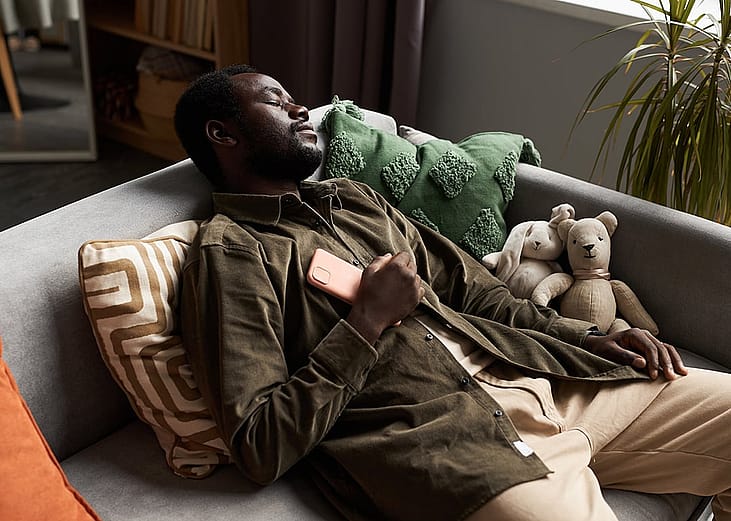
Rewriting the rules for men’s mental health

For too long, masculinity has been associated with optics. Phrases like “never let them see you sweat†or “tears are for the weak†suggest that men should internalize how they truly feel and instead portray a version of themselves devoid of their true colors. But allowing other people to dictate how they should feel or prescribe what a “real†man looks like can have serious consequences for men’s mental and physical health.Â
Nearly  in the United States experience depression or anxiety, but less than half receive treatment, according to research. Tragically, men are also four times more likely to die by suicide than women. In another study of 716 men and women experiencing stress, men were 29% less likely than women to go to therapy. In that , those who saw themselves as more masculine generally reported fewer mental health symptoms.
November is recognized as , and this year,  is challenging you to rewrite the rules. It’s time for a clean slate and to unlearn long-standing gender norms that can hold men back from being their truest selves.Â
“When there is an unspoken societal expectation to live one's life this way, it can create a fairly significant amount of pressure on men in general,†says Talkspace therapist H. Jay Swedlaw, MS/EdS, LPC, LMHC. “Therapy can help men to find what they feel to be a healthy balance of working to incorporate the healthy parts of some of these long-held beliefs while also allowing them room to be able to incorporate concepts such as emotional expression and vulnerability.â€
However, you don’t have to be a therapist to start a mental health conversation. No matter your gender, commit to asking the men you care about a question or two to get them talking about how they really feel. But asking vague questions like “How are you?†or “You okay, man?†might not be enough to get a guy to open up, because they’re so easy to brush off with brief answers.Â
Instead, try this list of questions that anybody can use to get the guys in their lives to express themselves freely:
- What’s something you wish more people knew about you?
- What’s something you enjoyed in the past that you wish you had more of in your life today?
- What are you doing when you feel your most satisfied and least stressed?
- If you wake up in the middle of the night, what thoughts keep you up?
- What have you been doing during your downtime?
- What activities have you been enjoying lately, despite how they may be perceived?
- What’s one thing you wish people would be more understanding of?
- What are some things that have been bothering you?
- Could you describe a situation or event that has had a significant impact on you?
- Is there anything on your mind you'd like to talk about?
- What can I do to support you?
Asking one or more of these questions gives a guy in your life—partner, friend, brother, dad, uncle, cousin, coworker—the opportunity to open up if they need to. If posing a question feels awkward, Talkspace therapist Minkyung Chung, MS, LMHCH, suggests relating to it yourself: “Sometimes, it helps if there is an air of sharing. So say something like, ‘It looks like you are just as stressed as me. Let’s talk about it.’â€
Setting and context are also key. “With any situation, it’s important to ask or show concern in a private setting. Be sure it’s somewhere the person feels comfortable,†she adds. “As long as you maintain an honest and open approach, it allows for that sense of safety to have that conversation.â€
If they don’t give you an in-depth answer, don’t worry. Asking a thoughtful question shows you care and can prompt self-reflection. And if they do open up with deep thoughts, big feelings, or revelations about inner life? Listen, wait to respond, and do so without judgment.Â
“Sometimes a man will say, ‘I’m fine,’ because he doesn't have the vocabulary to describe what he's feeling. Let's teach our men it's okay to say, ‘I’m struggling, can you help?’†says Famous Erwin, LMHC, LPC, a Talkspace therapist who works primarily with men. “Creating a safe, judgment-free space will give him the liberty to be vulnerable and express his deepest concerns about life and any challenges he faces.â€
Erwin also encourages men to “check in on†themselves by asking these questions:
- What are my current stressors or challenges?
- How am I handling stress and emotions?
- How am I feeling physically?
- Am I finding joy and satisfaction in my daily activities?
- Do I feel overwhelmed or isolated?
- Have there been any significant changes in my behavior or habits?
- Have I experienced any traumatic events or losses?
- Am I able to talk openly about my feelings with friends and family?
- How will I rate my overall well-being on a scale of 1-10?
If reflecting on any of these questions makes you realize you could use more mental health support, therapy is one place to turn. Therapy can help free people from others’ expectations, let go of shame, and quiet the outside noise.
“Men have been taught to push through it, provide for others, and stay tall,†says Erwin. “Mental health allows us to also learn how to pause, acknowledge our feelings, and care for ourselves.â€Â
“Typically, men deal with therapy differently than women,†he adds. “Men can be analytical and untrusting of unfamiliar people entering their private affairs. However, when trust is earned, men will participate in therapy and trust the therapist and the therapeutic process.â€
 was produced by  and reviewed and distributed by ±ŹÁÏTV.