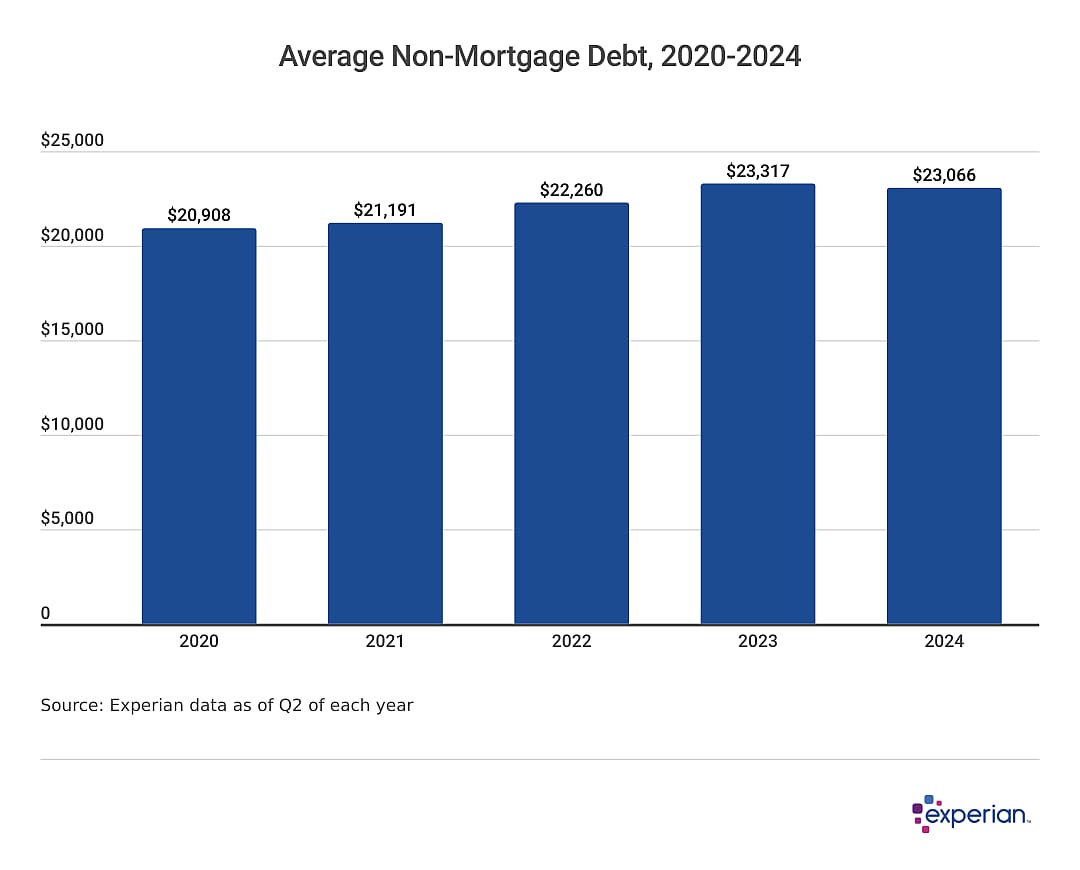
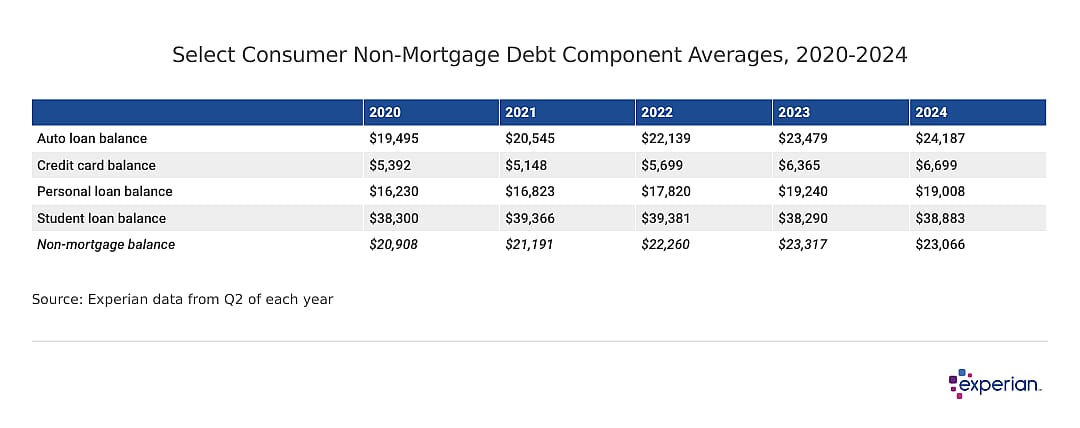
Indeed, peaked in 2021 and 2022 at roughly $39,400 before falling by more than $1,000 in 2023, when student loan cancellations started climbing and some borrowers decided to repay their student loan balances prior to interest accruing once again in September 2023. And now that student loan payments鈥攁nd interest鈥攈ave resumed, student loan balances are rising again for those still with student loan debt.
But even with student loan repayment resumed, forgiveness sums are massive, and they've reached nearly 5 million student loan borrowers so far, roughly 10% of all student loan borrowers in the U.S., according to the Department of Education. In effect, that means that while student loan averages remain statistically elevated versus 2023, so many borrowers being removed from the pool of student loan borrowers entirely has contributed to a dip in overall non-mortgage balances.
There are also signs of other types of consumer debt, like , plateauing in 2024. So although auto and credit card debts get an outsized amount of coverage in the financial media, not all types of debt have increased so sharply, if at all.
The Bottom Line
Non-mortgage debts have declined in 2024, largely due to the cancellation of around $175 billion of student loan debt since 2021. Although those cancellations were focused on a particular set of consumers, the size of the cancellations was large enough to lower overall non-mortgage debts for the first time in at least 15 years, according to Experian data.