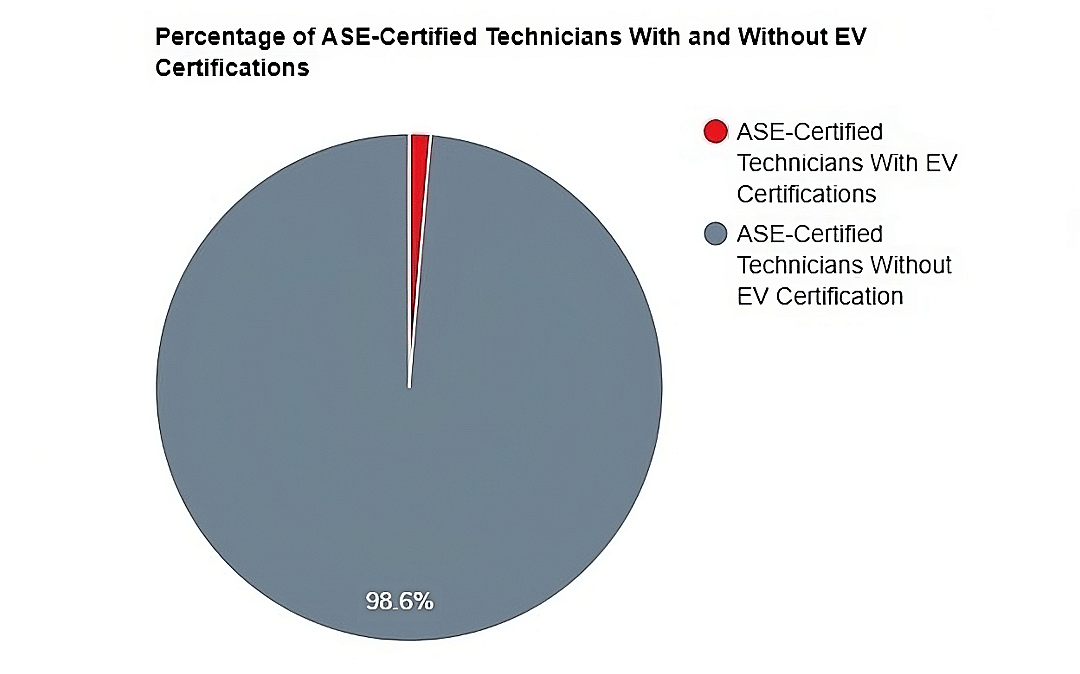
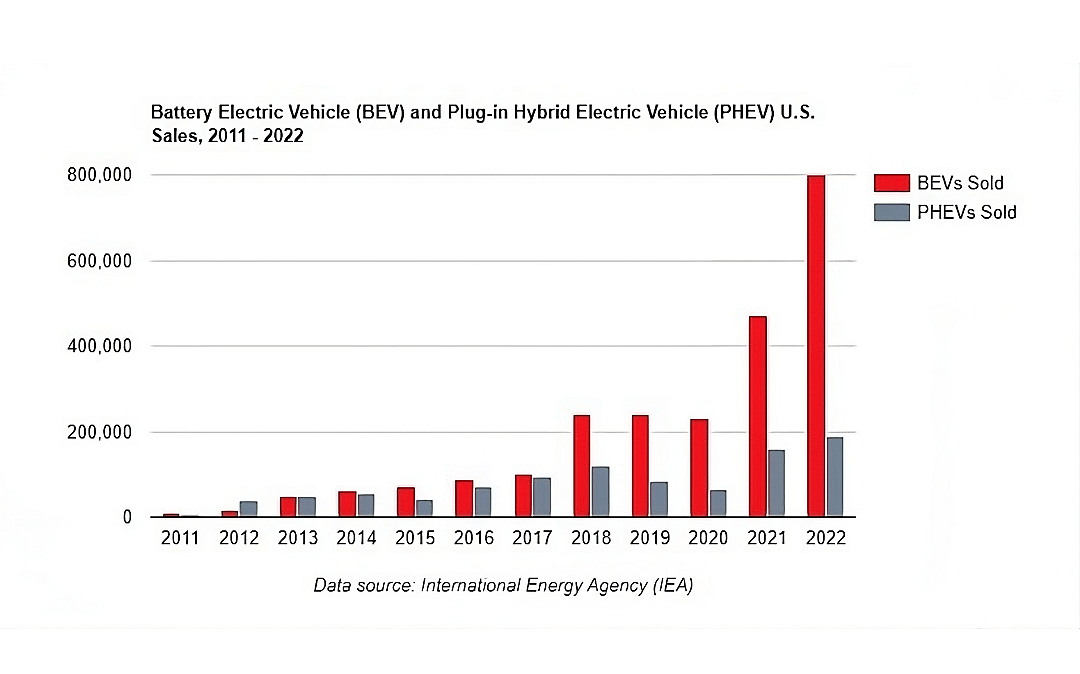
Demand for technicians trained and certified to repair and maintain EVs is all but certain to grow in the coming years. But the opportunity for mechanics to learn those skills and become certified is already increasing. The automotive industry's foremost training and certification organization, the National Institute for ASE, currently offers .Ìý
ASE Vice President of Communications Trish Serratore told Automoblog that the organization has seen an increase in demand for these courses.
"We see great interest in the EV service area," she said. "Most vehicle manufacturers are offering training and requiring their service outlets to have the training and certifications necessary to work on EVs."
The primary certification that ASE offers is its Light Duty Hybrid Electric Vehicle Test and Certification. This course teaches technicians how to diagnose and repair BEVs and PHEVs. Technicians are required to pass both the organization's electrical and electronic systems test and the engine performance test to take the EV course.
In addition, ASE offers two levels of EV High-Voltage Electrical Safety certification. The first level teaches general safety practices around high-voltage batteries and electrical systems in BEVs and PHEVs for technicians working with the vehicles but not on EV-specific components. The second level is an advanced course that teaches safety skills for technicians working directly on those components.
Serratore said that safety is one of the biggest points of emphasis for ASE's EV courses.
"The most important thing to learn and practice is safety," said Serratore. "It is essential that technicians understand these systems and how to work on the entire vehicle safely and efficiently. Paying attention to and using personal protective equipment is paramount."
EVs may not actually require as many technicians
While the need for more EV-certified technicians in the near future is real, that need may be partially alleviated by the very nature of EVs themselves. Many of the repairs and maintenance services that are common to ICE vehicles aren't necessary for BEVs simply because they lack the complex mechanical engines of ICE vehicles.Ìý
In a publication on its Alternative Fuels Data Center, the why EVs, and especially BEVs, generally require less maintenance and fewer repairs.Ìý
According to the publication, "All-electric vehicles typically require less maintenance than conventional vehicles because the battery, motor, and associated electronics require little to no regular maintenance; there are fewer fluids, such as engine oil, that require regular maintenance; brake wear is significantly reduced due to regenerative braking; [and] there are far fewer moving parts relative to a conventional fuel engine."
A reduced need for repairs and maintenance means that, in theory, EVs require fewer service appointments on average than ICE vehicles. This could translate into an overall reduction in the labor force needed to service these vehicles. The need for EV technicians will still exist, but that need could be tempered by the improved reliability and simplicity of the vehicles.