More than a quarter of private colleges are at risk of closing, new projection shows
More than a dozen newborn lambs cavorted around a fenced-in yard beneath the scrutiny of their mothers and a few watchful students taking turns attending to them.
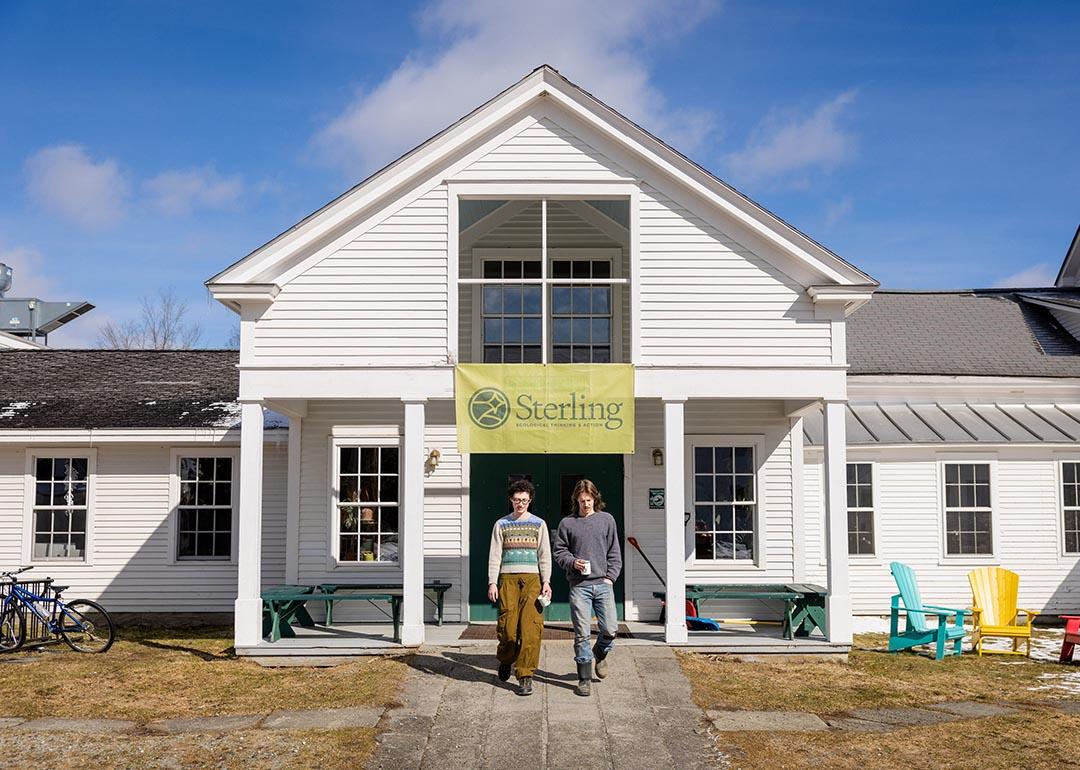
The lambs’ successful births have been a needed bright spot at tiny Sterling College, which uses a 130-acre farm to teach agriculture and other disciplines in a part of northeastern Vermont so isolated it’s rare to see a passing car, and there’s no cell service.
LillyAnne Keeley, a senior, likes that remoteness. “We have a beautiful view,” said Keeley, in the barn where she’s come for her turn checking on the lambs. “There are beautiful sunsets here. I kind of take it for granted every day.”
She and her classmates have started taking such experiences less for granted now, since Sterling has announced that it will close at the end of this semester.
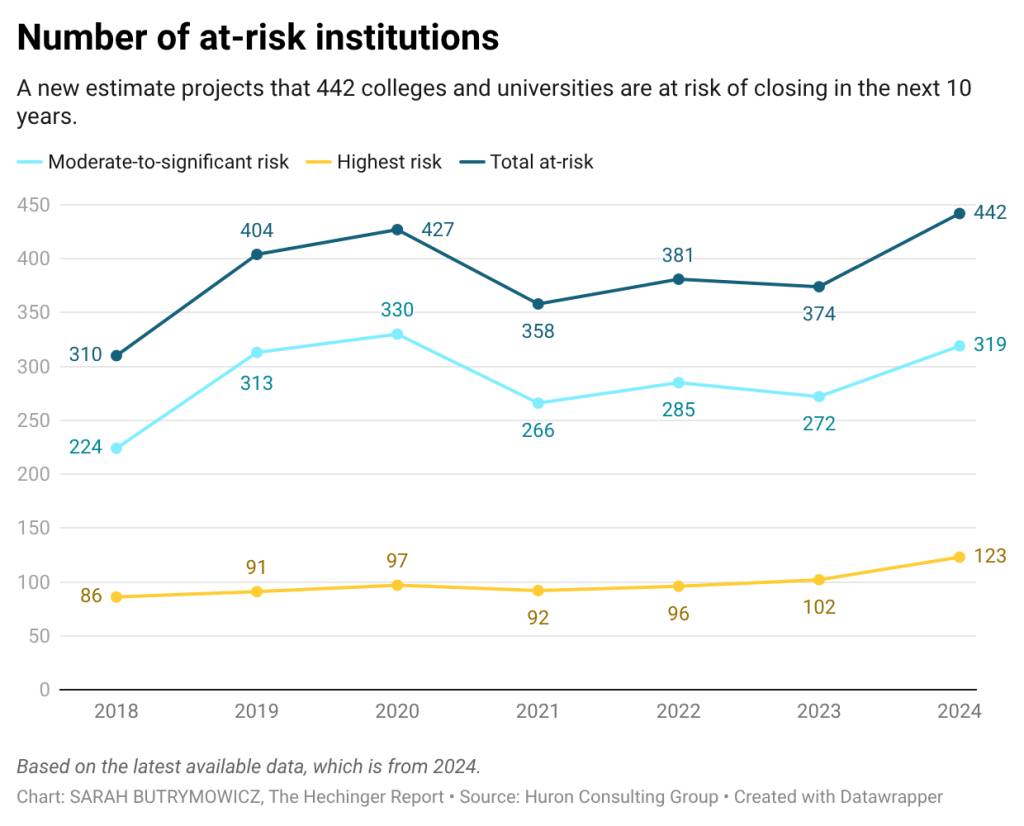
They’re not the last students who will suffer such disruption, notes . A new estimate projects that 442 of the nation’s 1,700 private, nonprofit four-year colleges and universities, with a combined 670,000 students, are at risk of closing or merging within the next 10 years.
More than 120 institutions are at the very highest risk, according to the forecast by Huron Consulting Group, which analyzed enrollment trends, tuition revenue, assets, debt, cash on hand and other measures. Many are, like Sterling, small and rural.
“Now that this might be gone, I just really worry about some students out there that are going to have less and less choices,” Keeley said.
It’s a crisis whose magnitude has been shrouded by political and culture-war attacks on higher education and is propelled by the simple law of supply and demand after a long decline in the number of Americans who are going to college.
“We have too many seats. We have too many classrooms,” said Peter Stokes, a managing director at Huron. “So over the coming five to 10 years, this shakeout is going to take place.”
Sterling — the seventh private college in Vermont to close since 2016 — offers a rare glimpse into the human impact of this trend. That’s because it gave students a final semester to stay and complete their degrees or transfer, rather than locking the doors with hardly any notice, as many other colleges have done.
of students at colleges that close continue their educations, according to the most comprehensive study of the issue, produced by the State Higher Education Executive Officers Association, or SHEEO. Of those who do, many lose credits they’ve already earned and paid for, and fewer than half eventually earn degrees.
Twenty-year-old Izzy Johnson has already been buffeted by this. The college he originally wanted to attend closed the month before he graduated from high school. So he enrolled in the fall at Sterling — only to learn that it would also close.
“Having to pick up everything and find a new place to settle down is really miserable,” said Johnson, who is weighing where to go next.
Started in 1958 as a prep school for boys, the remote rural college was never very large. Its enrollment peaked at 120 and fell to about 40 students this year, spread around a few white clapboard buildings indistinguishable from the houses of the surrounding farm town .
Those numbers weren’t sustainable, even at a work college whose students pitch in on the farm and in the dorms and kitchen, said the president, Scott Thomas. Though financial documents show Sterling , margins were thin.
In its last semester, the campus appeared surprisingly upbeat. At a weekly community meeting, students, faculty and staff in farm boots and hiking shoes lugged tables to the edge of the dining hall and formed a circle to talk about routine business, including warnings of bears coming out of hibernation and a reminder to provide contact information so everyone could stay in touch after commencement in May.
Students have decided “that we’re just going to have a really good last semester and go out on a really positive note,” said Keeley, who, like several classmates, is cramming to earn the credits she needs to graduate this spring. “And I feel like we’ve been really able to do that so far, but it’s still really sad.”
Most said they were drawn here precisely because of the college’s small size and far-flung location.
“I don’t think I would have done well at a big, traditional college,” said Jack Beatson, a first-year student from California. “I just sort of get freaked out in a big space like that.”
Added Samuel Stover, a senior from Connecticut whose mother also went to Sterling: “I have really amazing role models and instructors and teachers who I feel like I really connect with on a deeper level than just ‘I’m a student and I hand in papers.’ ”
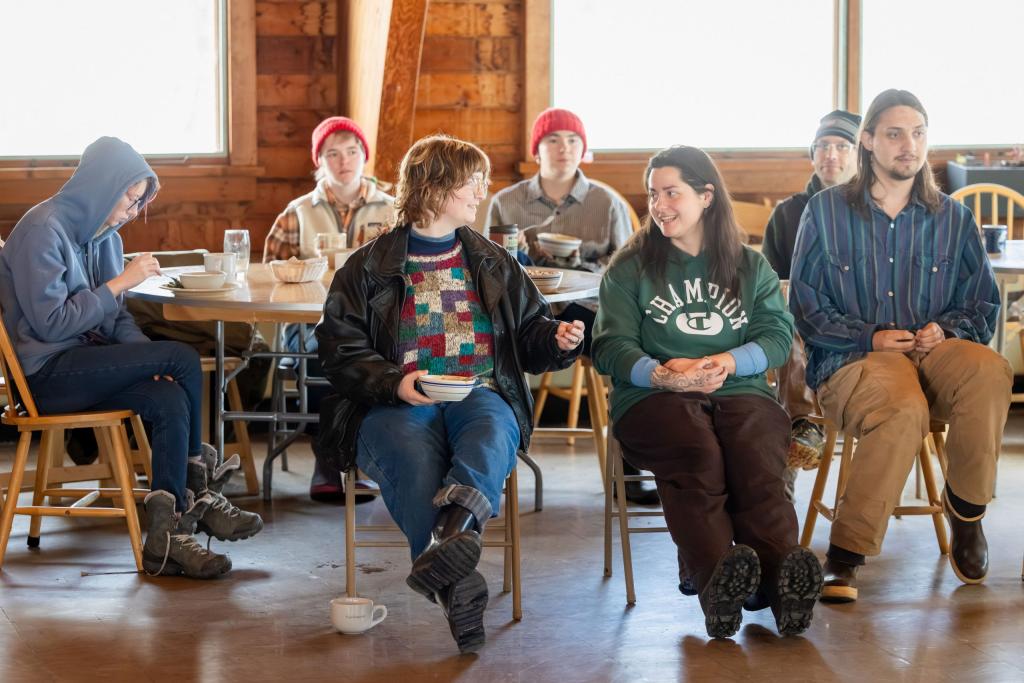
As more small colleges close, said Keeley, it’s getting harder for students to find this kind of an alternative to what she called “the larger, monotonous type of education.”
People around town are equally concerned about the local impact of the closing — not only the loss of jobs and spending by the few remaining students at the , but an end to the pipeline through which many graduates have stayed to work or start businesses of their own in a state whose population is the third-oldest in the nation.
“We always joke that Sterling kids stick around. But it’s true, they do, and they contribute to the community,” said Liz Chadwick, who moved from New Jersey in 2013 to finish her bachelor’s degree at the college, where she now teaches food systems, the study of the process by which food is produced and consumed. “They build families here.”
Losing colleges like Sterling “leaves craters in the small rural communities that they have been a part of for, in some instances, decades or a century,” said Thomas.
Paul Lisai, another Sterling grad, stayed and started his own milking herd and creamery in nearby West Glover: Sweet Rowen Farmstead, named for a particularly sweet kind of hay.
“The impact is far beyond the local economic impact,” said Lisai, whose milk, yogurt and 17 types of cheeses are sold around New England and in upstate New York. “For me as a business owner, what I’m scared about most is not having access to that group of like-minded people.” With a state unemployment rate of , he said, “Try running a business here. We really struggle to find good folks.”
Many converging reasons explain why colleges and universities are under existential strain.
There are already than there were in 2010. Now, a drop in the birthrate that began around the same time means there is about to be in the number of 18-year-olds through at least 2041.
The proportion of high school graduates who go on to college is also down, from , the most recent year for which the figure is available. The number of visas issued for new full-tuition-paying international students coming to the United States this year, or 36%. And looming caps on federal loans for graduate study, which take effect in July, threaten to reduce demand for yet another crucial source of revenue for universities and colleges.
While higher education institutions previously weathered short-lived declines in enrollment and increases in costs, today “every major revenue stream and expense category is under pressure at the same time,” in a new analysis.
Eighty-six percent of college and university leaders , according to a survey by the American Council on Education, the principal industry association. A fifth of college and university presidents say they’ve had , a separate survey by Hanover Research and the industry news site Inside Higher Ed found.
Signs of strain are spreading.
Nearly a third of private, nonprofit colleges and universities nationwide in 2024, according to research by Robert Kelchen, director of the Department of Educational Leadership and Policy Studies at the University of Tennessee, Knoxville. More than a third of 44 comparatively small colleges in New England analyzed separately by education consultant Steven Shulman are , Shulman found.
And it’s not just small schools that are affected.
The University of Southern California has sent pink slips to . Stanford laid off . Northwestern University . DePaul University and , citing a big drop in international graduate enrollment, spiking benefit costs and growing demand for financial aid.
As part of what a “broader strategy to strengthen GW’s long-term financial health,” George Washington University announced in March that it had sold a satellite science and technology campus in Virginia for what the student newspaper reported .
The New School in New York . Rider University in New Jersey and lease some of its facilities, which will raise the roughly $10 million it needs to avert a financial crisis.
Even public universities and colleges , reports the Fitch bond-rating agency, citing slowing economic growth and federal policy changes. These include cuts to Medicaid and SNAP that will have to be made up by states, according to SHEEO, which projects for state funding for public universities and colleges.
“We are seeing state funding pressure now in a way that we wouldn’t have expected perhaps five or 10 years ago,” said Emily Wadhwani, senior director and sector lead for education and nonprofits at Fitch. “We are seeing federal funding pressure now in a way that we would not have expected a few years ago.”
Community colleges, too — which — are suffering that leave them less able to adapt or respond to change, according to Daniel Greenstein, former chancellor of the Pennsylvania State System of Higher Education, who now tracks financial exposure in the industry.
In this case, wrote Greenstein, “The risk is not a sudden collapse of the sector. The risk is a slow erosion of capacity in precisely the institutions on which communities rely most.”
Still, after two and a half decades in which more than 40% faster than inflation, for a payoff consumers , higher education gets limited sympathy for its predicament — and even less after years of political and culture war attacks on .
“Free market wins!” , in response to Sterling College’s announcement that it would close. “They woked themselves right out of business,” wrote another. Added a third: “Now where will they teach all the 20 year olds to protest and whine?”
Among its students, however, Sterling elicits something increasingly rare among higher education institutions: gratitude.
“I’m so glad I got to spend at least a year here,” said first-year student Jack Beatson. “Just feeling like you’re really part of something, and other people depend on you — that’s very important to young people especially, and today especially.”
Beatson is transferring to another small college in upstate New York. But even after Sterling closes, he said, “We’ll all take this place with us, wherever we end up.”
was produced by , a nonprofit, independent news organization focused on inequality and innovation in education, and reviewed and distributed by ±¬ÁÏTV.