Everything you need to know about endorsing a check
Everything you need to know about endorsing a check
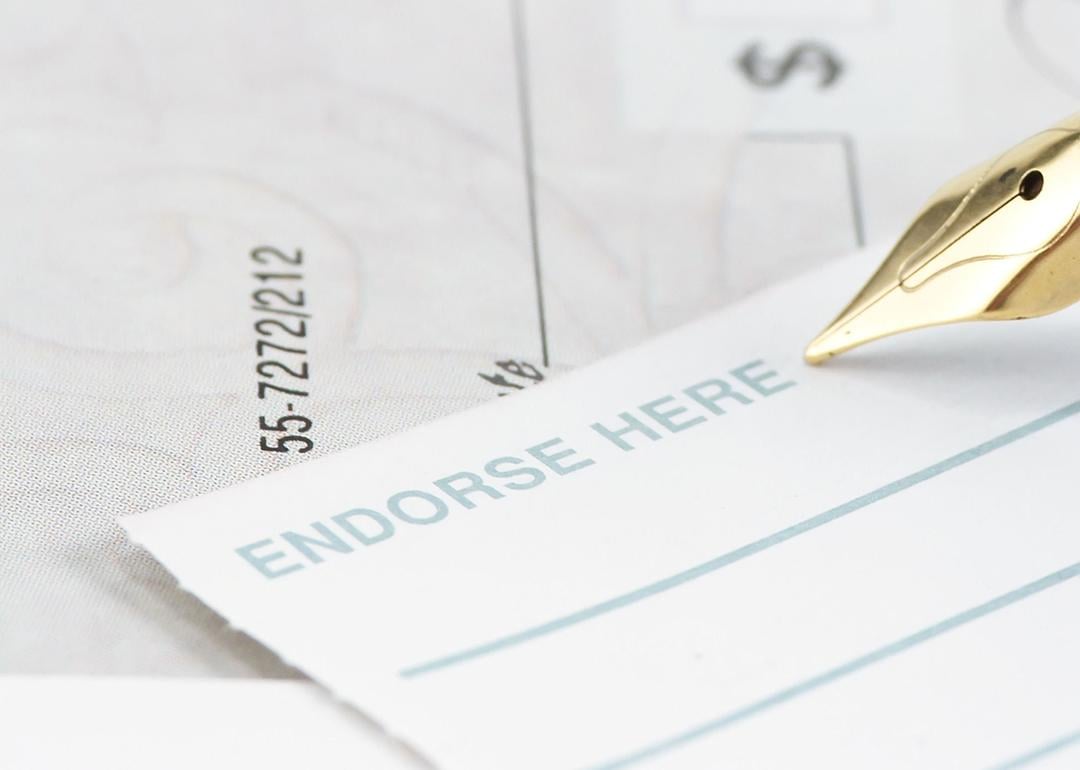
Endorsing a check means signing, stamping, or marking the back of a check so the bank can verify you as the intended payee and process the transaction, explains. “Endorsing a check isn’t just a signature,” said Chris Starr, head of deposits. “It’s also an important security step. It verifies identity, authorizes the transaction, and helps ensure the money goes exactly where it’s intended.”
Key takeaways
- Endorsing a check means signing the back to authorize the bank to deposit or cash it.
- You can use different endorsement types — blank, restrictive, special/third‑party, and business — depending on how you want the check handled.
- A restrictive endorsement (“For deposit only”) is the most secure option for most people.
- Wait to endorse until you’re ready to deposit.
- Proper endorsement helps prevent fraud, reduce deposit delays, and ensure your funds are processed correctly.
Who still receives checks?
With the popularity of peer-to-peer payments, direct deposit, and bank transfers, receiving a check is something that doesn’t happen too often to most of us these days. However, you may still receive a check for these reasons:
- Government agencies. For example, the if you do not provide direct deposit information.
- Business refunds, vendor payments, rebates, and class action payouts.
- Employers in cases where payroll isn’t fully digitized yet.
- Personal payments for gifts, reimbursements, shared expenses, rent, and so on.
How endorsement protects the payer and payee
Endorsement is a security step that helps prevent fraud and ensures the right person receives the money.
- It confirms your identity as the intended payee.
- It authorizes the bank to transfer or deposit funds.
- It reduces the risk of fraud if the check is lost or stolen.
- It creates a clear record in case any issue needs to be resolved.
Banks typically reject unsigned checks because they cannot verify the payee or legally complete the transaction without authorization. If a check isn’t endorsed, the bank may either return it or, in some cases, treat it as “deemed endorsed,” depending on the account agreement.
Now that you know why endorsement matters, here’s exactly how to do it correctly.
Key steps for how to properly endorse a check
These guidelines walk you through what to review, who needs to endorse, and how to sign properly so your money gets deposited without surprises.
Step 1: Confirm all the information on the check
Before you endorse a check, take a moment to make sure everything is accurate. Even small errors like an incorrect date, a missing signature, or a mismatched amount can delay your deposit or prevent the check from being accepted.
- Look at the date: Make sure the check is still valid. Most banks won’t cash or deposit a check that’s more than six months old. If the check is post‑dated (written for a future date), a bank may still process it before that date.
- Compare the written and numerical amounts: Confirm the amount is correct. If the two don’t match, the spelled-out amount is the one the bank will use, according to the .
- Review the writer’s signature: Make sure the person who wrote the check signed it. A missing signature is a common reason checks are rejected. If the signature line is blank, you’ll need the payer to sign the check or write a new one before you can deposit it.
- Scan the front and back for markings, damage, or alterations: Look for anything that could interfere with processing: “VOID” anywhere on the check; smudges, stains, or ink marks that obscure information; signs of erasure or alteration; or names or amounts that appear changed or overwritten. If the check is not presented properly, you’ll need the payer to write a new check before you can deposit it.
Step 2: Identify who must endorse the check
Before you sign anything, make sure the check is made out to you. The name you write in the endorsement area must match the payee (“Pay to the order of…”) listed on the front. Someone handing you a check doesn’t automatically mean you’re allowed to deposit it. If it’s made out to someone else or if the payee line is blank, the bank won’t accept it.
Payments can also be issued to more than one person. In these cases, the wording determines who needs to endorse it:
- “Person A and Person B” means both individuals must sign, and both must be involved in depositing it.
- “Person A or Person B” means either individual may sign and complete the deposit.
Step 3: Sign in the endorsement area
Flip the check over to find the endorsement section. This is typically a 1.5‑inch box at the top of the back of the check, often marked with “Endorse here” and “Do not write, stamp, or sign below this line.” Only sign inside this designated area, because signing anywhere else can interfere with bank processing.
Using blue or black ink, sign your name exactly as it appears on the front. A clear, consistent signature in cursive helps prevent processing delays and reduces the risk of forgery. Printed names do not serve as legally valid endorsements.
If your name is misspelled on the front, first sign the misspelled version exactly as it appears on the check, then sign your correct legal name directly beneath it. This two-step endorsement confirms that you are the intended payee and allows the bank to match both versions of your name.
“A clear, accurate signature is one of the easiest ways customers can avoid delays,” said Starr. “Most deposit issues we see come from signatures placed outside the endorsement box or names that don’t match the payee line.”
Endorsement safety checklist
To avoid delays and protect your deposit:
- Sign the check only when you’re ready to deposit it. If your check is lost, someone else could deposit it.
- Keep your signature inside the endorsement box.
- Use blue or black ink.
- Make sure your signature matches the payee name exactly.
- Ensure all required payees sign.
Types of check endorsements
While it’s totally acceptable to just sign your name on the back of the check, you have other options. “Choosing the right endorsement type matters,” said Starr. “It affects how securely and quickly your money moves, and it prevents many of the delays we see in day‑to‑day deposits.”
Endorsement types at a glance:
- Blank: A simple signature, but the least secure.
- Restrictive: Adding “For deposit only” makes this the most secure.
- Special: Signs the check to someone else.
- Business: Requires business name and authorized signer.
- FBO: Used when funds are for the benefit of someone else.
- Mobile deposit: Signature plus “For mobile deposit only.”
How to make a blank endorsement
A blank endorsement is just signing your name on the back of the check. It’s also considered the least secure because the check can be cashed by anyone who holds it.
At the bank, you can tell the teller whether you want to cash or deposit the blank-endorsed check. You can also deposit it at an ATM. While some mobile banking apps may still accept blank endorsements, that’s becoming less common.
In short, use a blank endorsement only when you are ready to hand the check directly to the teller or at the ATM.
How to make a restrictive endorsement (“For deposit only”)
A restrictive endorsement is one of the safest ways to endorse a check because it limits how it can be used. It tells the bank to deposit the money into a specific account and not to cash the check or pass it along to someone else. Even if someone else tries to use the check, the bank should only deposit it into the account you listed. Many banks also require this type of endorsement for mobile deposits.
To use a restrictive endorsement, write “For deposit only to [your account number],” then sign your name below it, within the endorsement area.
Be aware that the check writer may see your account number on a copy of the canceled check through their bank app. If this concerns you, you can write “For deposit only” without your account number. Although this option is less secure because it does not identify the exact account, it keeps your number private, and most banks will still treat it as a deposit-only instruction.
In short, a restrictive endorsement limits how the check can be handled and gives clear direction to the bank, which makes it a strong choice for security even though it does not fully protect your account number from being visible.
How to endorse a check to someone else (special endorsement)
A special endorsement (sometimes called a third party endorsement) lets you sign a payment over to someone else. By doing this, you’re authorizing that person to deposit or cash the check.
Here’s how to do it correctly:
- In the endorsement area, write: “Pay to the order of [recipient’s name].”
- Beneath that, sign your name.
- For an added layer of security, write “For deposit only” under your signed name.
- The recipient may also need to sign under your name before completing the deposit.
A special endorsement makes it possible for the recipient to give the check to someone else, rather than depositing the check themselves. This creates a fraud risk, and therefore, some banks and check-cashing services may decline them altogether. A safer alternative is to deposit the funds yourself and then use a payment method, such as Zelle, to pay the other person.
In short, use a special endorsement only when you fully trust the person you’re signing the check over to.
How business owners should make endorsements
When a check is made payable to a business, an authorized representative must endorse it on the business’s behalf. To do this:
- Sign the business name as it appears on the pay‑to line.
- Sign your own name.
- Add your title with the company (for example, owner, accountant, or manager).
- Include any restrictions, such as “For deposit only,” if needed.
“Business endorsements are especially important,” said Starr. “A single missing title or signature can hold up a deposit or create account issues.”
In short, a business endorsement ensures the check is handled by an authorized representative only.
How to make an endorsement for the benefit of someone else
Sometimes a check is made payable to one person or organization for the benefit of (FBO) someone else. This often happens when funds are intended for a person who needs help managing their care or expenses. For example, someone may write a check to an assisted living facility for the benefit of a family member.
The pay‑to line might look like:
- Assisted Living Facility FBO Jane Smith.
- Assisted Living Facility for the Benefit of Jane Smith.
In these situations, the first party listed is usually the custodian of the funds and typically the one who endorses the check.
Some banks may require both parties to endorse it. Requirements vary, so it is a good idea to check with both your bank and the organization receiving the funds. It can become complicated if both signatures are required and the person receiving the benefit is incapacitated and cannot sign.
In short, the listed custodian usually signs, but requirements vary — always check with the receiving organization.
How to endorse a check for mobile deposit
To make sure your deposit goes through smoothly, endorse your check the way your bank’s mobile deposit system requires.
- Sign the back of the check.
- Write “For mobile deposit only at [your bank]” directly beneath your signature or check the mobile deposit box.
“For mobile deposit only” helps ensure the check can only be deposited into your account. Some banks ask for additional details, such as an account number or the bank’s name. Even if a printed box appears on the check, many banks still require the endorsement to be handwritten.
In short, mobile endorsements must include “For mobile deposit only.”
What to do after you endorse your check
After you endorse a check, you can either deposit it or cash it, depending on what you need. You can deposit the money into your account using your bank’s mobile app, an ATM that accepts deposits, or by taking it to your bank. If you prefer to receive cash, you can go to your own bank or the issuing bank listed on the front of the check.
Endorsing a check may not be something you need to do often, but when the moment comes, you’ll know how to do it properly and safely.
FAQ
What does endorsing a check mean?
Endorsing a check means signing the back of the check so the bank can verify you as the intended payee and process the transaction. Your endorsement authorizes the bank to transfer or deposit the funds securely, whether you’re cashing the check, putting it into your account, or signing it over to someone else.
How do I endorse a check?
- Flip it over and find the designated endorsement box at the top.
- Sign your name exactly as it appears on the front using blue or black ink.
- If your name is misspelled, sign the misspelled version first, then sign your correct name directly beneath it.
How do I endorse a check to someone else?
Sign your name, then write “Pay to the order of” and the person’s name you want to sign the check over to. This indicates you are transferring the check to that person.
Can I deposit a check without endorsing it?
Some banks will accept a check without an endorsement, but they may limit the dollar amount, place a longer hold on the funds as they determine you are the rightful payee, or ask you to verify your identity. Some banks may endorse it for you or deem it endorsed by you.
Note: Certain checks, such as those from the government or insurance, or those requiring specific payee instructions, may still require an endorsement even if your bank may allow unendorsed deposits.
What are the types of check endorsements?
There are several endorsement types, each for a different purpose:
- Blank: Just your signature. Simple, but the least secure.
- Restrictive (“For deposit only”): Limits the check so it can only be deposited into the specific account you list. Often required for mobile deposits.
- Special (third‑party): Used to sign a check over to someone else. Write “Pay to the order of [recipient’s name]” and sign beneath it.
- Business: An authorized representative signs the business name, their own name, and title.
- FBO (“for the benefit of”): Used when a check is made payable to one party for the benefit of another. The custodian typically endorses it.
- Mobile deposit: Sign your name and add “For mobile deposit only at [your bank]” or check the mobile‑deposit box if present.
What is a bounced check?
A check “bounces” when someone writes a check, but there isn’t enough money in their account to cover it. The check is returned to you unpaid, and the bank will typically charge the individual a fee for a bounced check.
When do checks expire?
Most personal checks will expire if they aren’t cashed within six months (180 days) of when they were written. Banks may decline them or return them as non‑negotiable.
How can I tell if a check is fake?
Look for the warning signs:
- Is the check for more than you expected?
- Are you being pressured to quickly make the deposit, then return some of the money?
- Did you receive unusual instructions on how to deposit the check?
- Were you asked to send money back using an immediate form of payment, such as a money order, gift card, wire transfer, or cryptocurrency?
- Were you asked to give someone cash or an immediate payment through a payment app?
- Are you being threatened with law enforcement action?
If you answered yes to any of these questions, don’t deposit the check. When in doubt, pause and call your bank.
What should I do if I suspect a check is fraudulent or fake?
Do not deposit or cash the check or send money back to the sender. Call Wells Fargo at 1-800-549-3557 or contact Wells Fargo or your financial institution and ask them to investigate and take appropriate action.
What happens if I deposit a fake check?
Unfortunately, it can take weeks to discover a fake check after it’s been deposited. Funds from fake checks may appear available temporarily, but once the check bounces and is returned as fraudulent, the bank will reverse the deposit, and you may be responsible for the full amount of the fraudulent check. And if you send money back to a scammer, the bank may not be able to recover those funds.
was produced by and reviewed and distributed by ±¬ÁÏTV.