
How to petition the court to begin probate
The death of a close family member, a loved one or even a distant relative can be stressful. It may also lead to significant confusion and unanswered questions. When the subject of assets, money and court processes comes up, everything can feel overwhelming. If you鈥檙e an heir waiting for an inheritance payout, the probate court process can feel long, slow and unnecessarily complicated.
However, it鈥檚 a vital part of the court process, especially if you鈥檙e eager to get any potential inheritance out of limbo. Before you can collect your legally entitled share of an estate, it needs to be settled by the probate court. This will require someone to petition the court to open probate and begin proceedings.
Knowing how to start the probate process is the first step. The process is similar in most states, and they all start with a probate petition. So, how do you go about sifting through the noise of legal jargon and actually petition the court to begin your probate proceedings? This guide from covers everything you need to know.
What Is Probate?
Probate is a process that鈥檚 completed when someone passes away. It involves distributing their assets and belongings to the intended heirs. These assets can include real estate, investments and money left in any bank accounts. They are distributed as per the wishes of the deceased person鈥檚 will (via an executor) if there is one. If a will hasn鈥檛 been made, an administrator will be appointed to finish the probate process.
A will helps identify the intended heirs. When someone passes away without a will, it is known as dying intestate. The deceased person鈥檚 estate will then be given out to pay remaining debts before any beneficiaries receive assets. This process can take several months or even years.
What Does It Mean to Petition for Probate?
Filing for a petition for probate is the act of informing the probate court about the deceased person鈥檚 passing. It also begins the administration process of an estate. If the deceased individual has a will but no executor, a Petition for Probate of Will and Letters of Administration with Will Annexed must be filed instead. If someone passes away without a will, a Petition for Letters of Administration must be filed. This administrator will be chosen by the court rather than the deceased person.
Either way, this filing must be done in the county probate court to officially begin the process. The money and other assets of an estate can鈥檛 be legally handed out without an approved executor or administrator. This approval has to come from the probate court.
This process essentially requests confirmation from the court that they accept the appointed administrator. The court will officially authorize the chosen executor to distribute the assets in accordance with the will. Conducting any estate distribution without notifying the probate court can result in severe legal penalties.
Potential Exemptions
There are a few exceptions to this rule, but they vary depending on the state and the estate鈥檚 specifics. For example, with a personal property value (excluding real estate) can use a faster, simpler process. This process is known as the and can be submitted by the executor as a written request to the court.
Unless stated otherwise, it鈥檚 always best to assume you aren鈥檛 exempt to reduce the chances of unknowingly breaking the law.
Who Can File a Petition for Probate?
Understanding who can file a petition for probate in these situations can streamline the distribution of the estate. While the smaller intricacies and specifics can vary from state to state, a petition for probate usually has to be filed by the listed executor of the will.
After the court approves, they can manage the estate. If the executor isn鈥檛 willing to manage it, or an executor wasn鈥檛 named before death, a petition can be filed by other beneficiaries or parties.
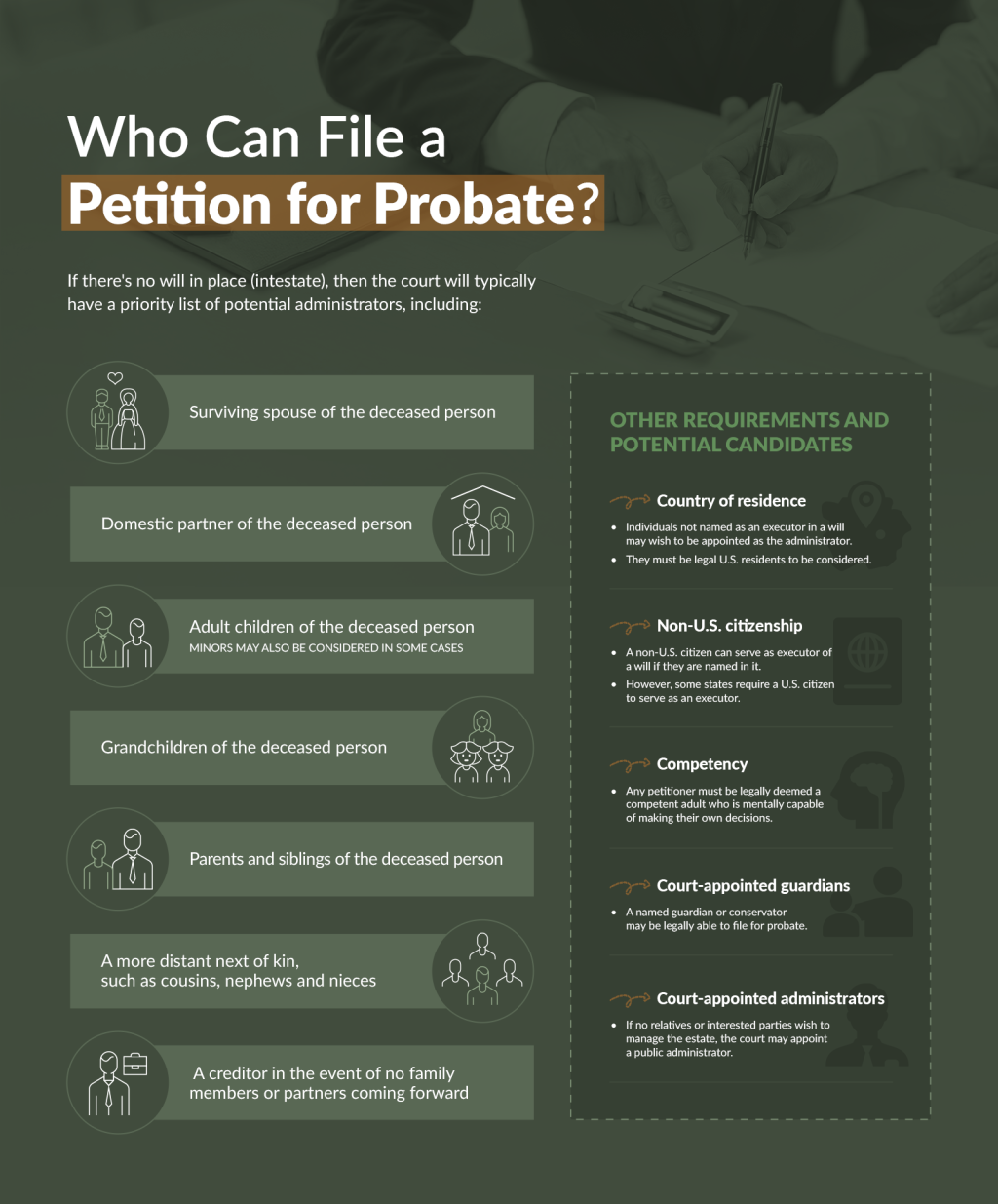
If there鈥檚 no will in place (intestate), then the court will typically have a priority list of potential administrators, including:
- A surviving spouse of the deceased person.
- A domestic partner of the deceased person.
- Adult children of the deceased person (minors may also be considered in some cases).
- Grandchildren of the deceased person.
- Parents and siblings of the deceased person.
- A more distant next of kin, such as cousins, nephews and nieces.
- A creditor in the event of no family members or partners coming forward.
A probate petition will usually be filed where the deceased person resided before death. However, it鈥檚 possible that the deceased individual created their will in a specific county before moving.
Other Requirements and Potential Candidates
Given the importance of respecting the deceased person鈥檚 final wishes, not everyone can serve as an executor or administrator. An executor or administrator may need to meet some potential requirements to be granted control over an estate, including:
- Country of residence: Individuals not named as an executor in a will may wish to be appointed as the administrator. They must be legal U.S. residents to be considered.
- Non-U.S. citizenship: In some cases, a non-U.S. citizen can serve as executor of a will if they are named in it. However, some states require a U.S. citizen to serve as an executor.
- Competency: Any petitioner must be legally deemed a competent adult who is mentally capable of making their own decisions.
- Court-appointed guardians: A named guardian or conservator may be legally able to file for probate.
- Court-appointed administrators: If no relatives or interested parties wish to manage the estate, the court may appoint a public administrator.
It鈥檚 important to to reduce any potential confusion in the probate process. It鈥檚 also important to research the specific to be fully prepared.
What Documents Are Needed to Petition the Court for Probate?
The probate process will involve many documents. Paperwork is an inevitable part of appointing an executor or administrator and eventually validating a will. As always, the specifics of a probate case will vary depending on the estate, the state and other variables. However, to be as prepared as possible, several general documents are needed to petition the court for probate.
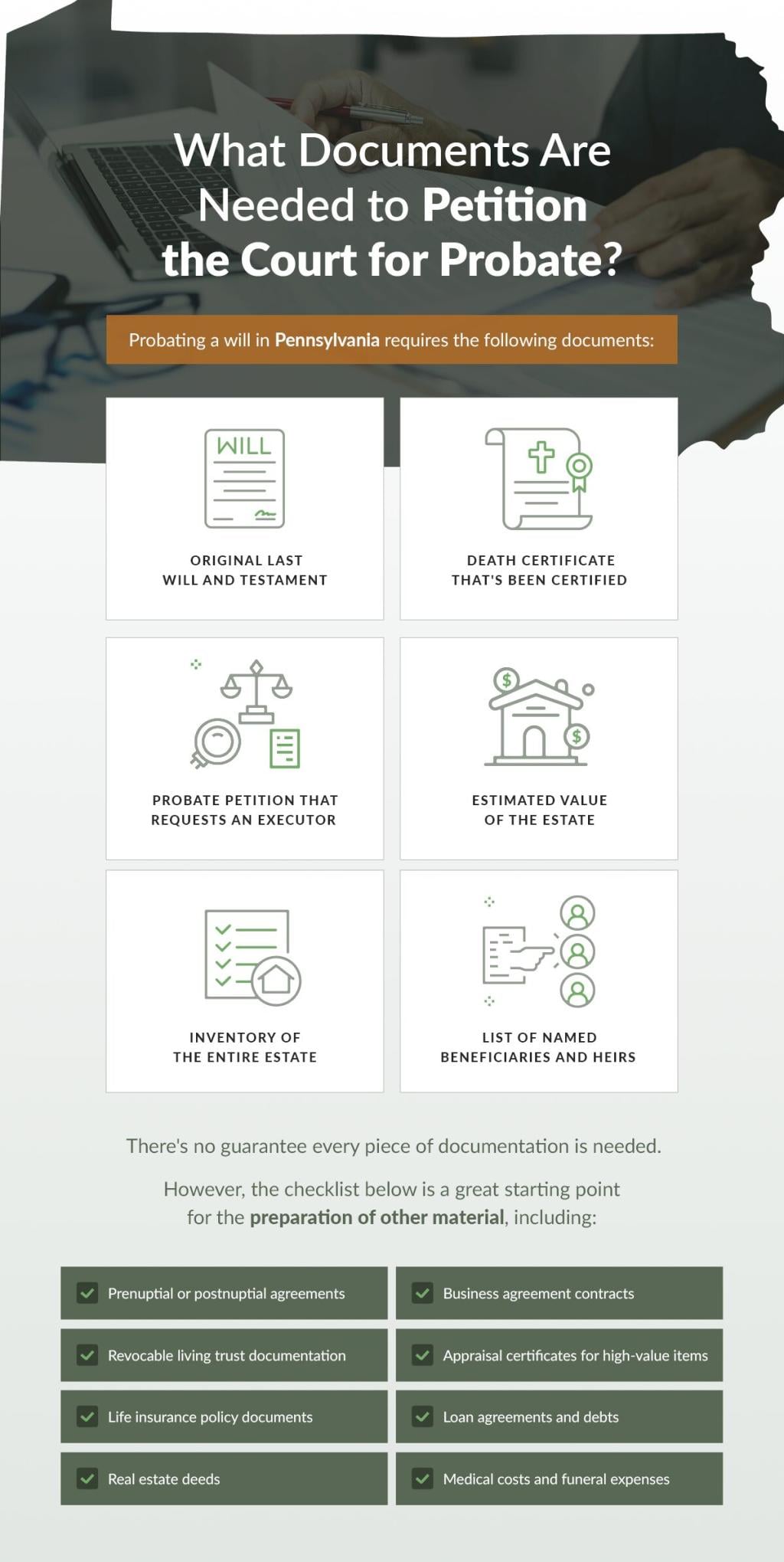
For example, probating a will in Pennsylvania requires the following documents:
- The original Last Will and Testament.
- A death certificate that鈥檚 been certified.
- A probate petition that requests an executor.
- The estimated value of the estate.
- An inventory of the entire estate.
- A list of named beneficiaries and heirs.
As the process of closing an estate is long and complicated, gathering other key information for later is a good idea. There鈥檚 no guarantee every piece of documentation is needed. However, the checklist below is a great starting point for the preparation of other material, including:
- Prenuptial or postnuptial agreements.
- documentation.
- Life insurance policy documents.
- Real estate deeds.
- Business agreement contracts.
- Appraisal certificates for high-value items.
- Loan agreements and debts.
- Medical costs and funeral expenses.
Having all of this information together in one place can help. It reduces the stress and worry of sorting out legal matters after the loss of a loved one. Even if you don鈥檛 end up needing it, you鈥檝e gathered information that could help with any future issues.
How to Start the Probate Process
While the process can be long, you鈥檙e prepared to help move it along efficiently. Now that you have an idea of what you鈥檒l need and why, follow the steps below to petition the court to open probate.
- Locate and file the will: If the decedent had a will, locate and read it. This should reveal whether the decedent named an executor to handle the estate. If an executor has been named, hand over the will to that individual. The will must be filed with the court in the county in which the deceased person lived. In some locations, you鈥檒l submit the form to a separate probate court or to the court clerk who handles probate, civil and criminal matters.
- Determine an executor: If no executor is named in the will, someone must be appointed as the executor of the estate. If an executor is named in the will, but the individual rejects the position, a new executor will need to be chosen. The court must approve the request. If you are the appointed executor and live in a different state, you must determine whether that state will allow you to act as executor.
- Make a list of the beneficiaries: The will should name them. Make a list of each beneficiary鈥檚 name and contact information, such as phone numbers, home addresses and email addresses. If any beneficiaries are deceased, obtain their original death certificates.
- List the decedent鈥檚 assets: Make a list of each asset the decedent owned. This includes bank accounts, cash, investments, retirement accounts, real estate, jewelry, collectibles, vehicles, business interests and life insurance policies. Just in case, you鈥檒l also want to list each of the decedent鈥檚 debts, such as personal loans, mortgages, medical bills and credit cards.
- Get the petition notarized: The probate requires that the petition be notarized. Before signing the form, find a notary public and pay the notary鈥檚 fee. Find out what the fee is before you file the will and probate petition. This fee varies from county to county. Before you take the form and the money to court, make copies of each document.
Finally, you鈥檒l need to take the petition to the probate court. Give the clerk鈥檚 office the form and fee, then request that they stamp a copy for your records. The stamp shows the time and date you filed the probate petition to verify you met the state鈥檚 requirements.
What Happens at the Probate Hearing?
The process is usually straightforward. You鈥檒l go to the courthouse where the estate will be administered. Other attendees will include the potential executor or administrator. It鈥檚 also common for other potential heirs or creditors to be present, along with their legal representatives.
A hearing should start with the validation of the will. The document will be checked to ensure compliance with the required state laws. It will also be reviewed to ensure it reflects the deceased person鈥檚 wishes. A probate judge will then appoint an official executor or administrator.
Below are a few other considerations to ease your mind about the process:
- Don鈥檛 worry if the process runs longer than expected. This is perfectly common when making sure an estate is handed out in accordance with someone鈥檚 final wishes.
- Objections are more normal than you may assume. They can come from creditors, heirs or beneficiaries and may include conflicting interpretations of the wording in a will.
- Common objections include the management of the estate, the deceased person鈥檚 mental capacity when the will was created and the valuation of assets.
- Objections must have some kind of evidential grounds. If this happens, there may be cause to extend the probate process.
- It鈥檚 normal to prepare for potential objections and have a plan in place to handle them, reducing the risk of delays.
- Any objections to the official appointment of the executor will be directly addressed at the hearing before the final decision.
Obstacles That Delay the Probate Process
No one wants to drag out a probate hearing. However, some circumstances lead to delays and disputes that can turn into years. These are the most common obstacles that delay a probate process.
- Disputes with heirs and beneficiaries: Feuding families and other beneficiary arguments are the main cause of delays. This may be due to a perceived lack of clarity in the will and the distribution of assets. This can freeze processes for months, if not years.
- Asset complexity: Some estates will be full of complex assets that require valuation, including unique, rare items or business assets that are difficult to assess. This may include the deceased person having real estate across several state and county jurisdictions.
- Inability to find a beneficiary: There may be one or several beneficiaries who aren鈥檛 in contact with the family. They may be completely unaware of their part in a will, which means having to track them down. This is typically the executor鈥檚 responsibility.
- Errors and inaccuracies: Small oversights, such as misspelled names or a missing signature, may require corrections. This can add months to the process. Some wills may also lack a clear inventory, leading to confusion about debts and bank accounts.
- Executor issues: Carrying out someone鈥檚 last wishes for their assets isn鈥檛 easy. Some executors may feel overwhelmed by the amount of financial information and responsibility they鈥檙e left with. This can slow things down considerably and lead to poor communication among other people involved.
While encountering any of these roadblocks may be frustrating, it鈥檚 essential that the deceased individual鈥檚 wishes are respected. Being thorough in the process and open in communication with others can significantly reduce these potential risks.
Conclusion
Knowing what can hinder the probate process isn鈥檛 about expecting the worst. It鈥檚 about understanding what may delay the distribution of assets to those entitled to them. By thinking ahead, being prepared and knowing how to start the probate process, these delays can be reduced. Combined with a better understanding of the state鈥檚 laws, probate can be a less stressful process for all parties involved.
Finally, remember that if you鈥檙e struggling to wait out probate, there are alternative ways to get money. Some organizations offer probate cash in advance to help people during these drawn-out processes.
was produced by and reviewed and distributed by 爆料TV.