
Summer of sacrifice: Rising energy and grocery costs are forcing trade-offs
The soaring cost of everyday necessities is pushing Americans to sacrifice their comfort, health and social lives just to get by this summer, according to new data. And, even many of those actively trying to cut back can鈥檛 get ahead.
Key Takeaways:
- 53% of Americans say rising summer temperatures have become one of their biggest financial concerns, and 59% expect to spend more on energy costs this year compared to last.
- 63% say eating healthy feels like a luxury today, with a quarter (25%) buying fewer fresh foods in favor of frozen or processed alternatives, and 21% occasionally skipping meals.
- 53% say the way they shop, eat, and socialize has permanently changed because of grocery costs, rising to 59% of millennials.
- 36% of Americans are participating in or considering a 鈥渘o buy鈥� challenge this summer, rising to 47% of Gen Z, yet 28% of participants haven鈥檛 been able to save money because all of it is going toward necessities.
- 44% of people are participating in 鈥渘o buy鈥� or 鈥渓ow buy鈥� challenges by default because they鈥檙e already spending so much on basic necessities that they don鈥檛 have any money left for discretionary spending.
The rising cost of everyday necessities is forcing Americans into a summer defined by tradeoffs. Even as many try to rein in their spending, they鈥檙e finding that the cost of basics alone is enough to bar them from building savings.
More than half of Americans (53%) surveyed in the June Intuit Credit Karma poll say rising summer temperatures have become one of their biggest seasonal financial concerns, nearly three quarters (72%) are stressed about grocery costs, and more than a third (36%) are currently participating in or considering a 鈥渘o buy鈥� challenge, though many aren鈥檛 doing so by choice.
Combined, these financial pressures are leaving even the most disciplined budgeters with little room to get ahead.
Staying cool is becoming a luxury
As temperatures and utility bills rise, 53% of Americans say they feel trapped between staying comfortable and saving money this summer, with nearly six in 10 Americans (59%) expecting to spend more on energy and cooling costs this summer compared to last year.
When it comes to managing those costs, tactics vary by generation. Boomers are more inclined to tough it out at home, with nearly half (48%) limiting their use of air conditioning and 34% keeping their homes warmer than they鈥檇 like, the highest rates of any generation. Gen Z is finding ways to avoid the problem entirely: roughly one third of Gen Z (34%) rely on public places like cafes and malls to cool off and 18% are looking into negotiating or lowering recurring bills to help offset the cost.
Across generations, 47% have changed their daily routine to avoid using electricity during peak hours, but that doesn鈥檛 always trump feelings of obligation. Nearly half (49%) say they feel pressure to keep their home cooler for pets, children, or other family members despite the cost.
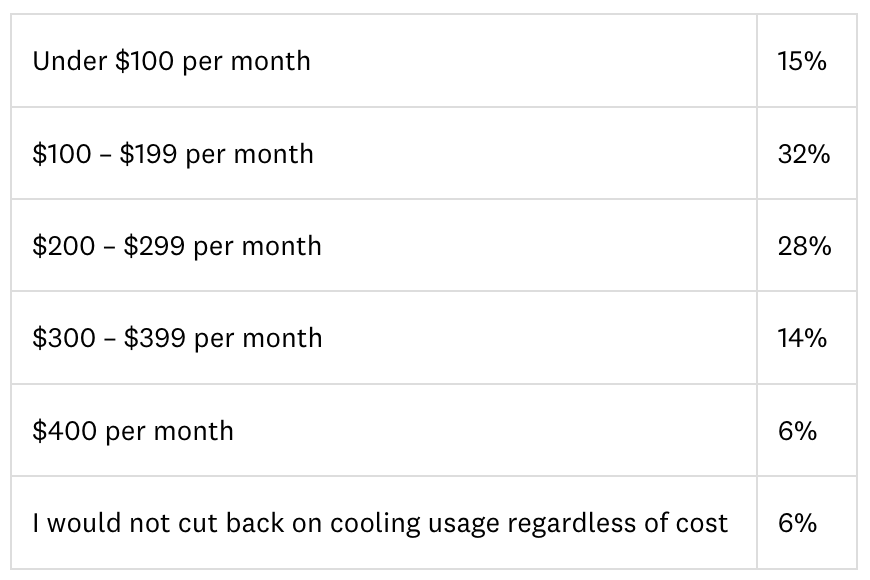
Six in 10 Americans (60%) say keeping their home cool this summer feels like a luxury, and when the bills get too high, most Americans have a breaking point.
Here are the electricity bill amounts that would prompt people to begin cutting back on their cooling use (i.e. air conditioning) to save money:
Grocery costs are squeezing more than just budgets
Rising grocery costs have been squeezing Americans鈥� budgets , yet it doesn鈥檛 make the reality any less painful. Every time they go to the store, 68% of Americans experience sticker shock, and 58% say they now dread grocery shopping altogether.
What used to be part of a weekly routine for many has become a persistent worry. More than half of Americans (56%) say they constantly think about their grocery spending, impacting 65% of people鈥檚 ability to save money.
The consequences extend well beyond budgets. Nearly half (47%) say higher grocery costs have lowered their overall quality of life, and 53% say the way they shop, eat and socialize has permanently changed because of grocery prices.
Health sacrifices
Faced with rising costs, a quarter of Americans (25%) say they鈥檙e buying fewer fresh foods and more frozen or processed alternatives. Meanwhile, 22% are eating smaller portions, 21% occasionally skip meals and 17% say they have to buy unhealthy food for themselves or their families because it鈥檚 cheaper. As a result, 63% of Americans say eating healthy feels like a luxury today.
The social toll
Rising grocery costs have even changed how Americans connect with others. More than half (56%) say that hosting people at home feels more financially difficult than it used to, causing more than a quarter (27%) to skip inviting people over altogether. This also bleeds into special occasions like birthdays and holidays with 1 in 5 (20%) skipping or cutting back on holiday and celebratory gatherings.
Stretching every dollar to afford groceries
Americans are getting creative in order to manage high grocery costs, with the most common coping strategies including seeking out sales and coupons (42%), removing non-essential snacks and treats from their carts (33%), cutting back on other areas of their budget to accommodate grocery costs (28%) and shopping at discount stores (24%).
On average, 37% of people are spending $150 to $300 per week on groceries, even as they keep close tabs on their spending: half (50%) check the running total of their groceries before checkout.
Budgeting isn鈥檛 enough for everyone when it comes to juggling grocery costs, especially young people. One in five (20%) of Gen Z have applied or considered applying for food stamps and 16% rely on or have considered relying on food banks.
For some, the financial pressure is creating feelings of shame: 15% feel ashamed about their inability to afford groceries overall (22% of Gen Z), and roughly one third of Gen Z (32%) hide their grocery spending from their partner, family member or someone they share finances with, compared to 27% of millennials.
The limits of the 鈥渘o buy鈥� and 鈥渓ow buy鈥� summer
With necessities like utilities and groceries consuming a growing share of household budgets, it鈥檚 no surprise that Americans are looking for ways to cut back elsewhere. Enter 鈥渘o buy鈥� and 鈥渓ow buy鈥� challenges, viral trends that encourage people to stop or significantly reduce discretionary spending.
This summer, more than a third of Americans (36%) are currently participating in or considering a 鈥渘o buy鈥� challenge, rising to 47% of Gen Z and 45% of millennials. Even more (45%) are taking part in or considering a 鈥渓ow buy鈥� challenge, rising to 59% of Gen Z and 51% of millennials.
Among participants, the beauty-focused 鈥淧roject Pan鈥� trend, which encourages people to use up the makeup and skincare products they already own before buying anything new, is also gaining traction. More than half (56%) say they鈥檙e taking part, including 65% of millennials and 61% of Gen Z.
Why Americans are cutting back
In many cases, Americans aren鈥檛 choosing to partake in these spending challenges, they just don鈥檛 have any choice. The top reason people are participating in these challenges is because they鈥檙e already spending so much on basic necessities like housing, groceries and utilities that there鈥檚 simply nothing left for discretionary spending (44%).
Other motivators include:
- Building savings 鈥� 39%
- Paying down debt 鈥� 29%
- Saving for a specific goal 鈥� 22% (31% of Gen Z)
- Shopping too much and wanting to limit consumption 鈥� 22% (27% of Gen Z)
- Having too much credit card debt 鈥� 21%
- Having depleted savings 鈥� 19% (25% of millennials)
Committing to spending less doesn鈥檛 always result in savings. Among those participating in 鈥渘o buy鈥� or 鈥渓ow buy鈥� challenges, more than a quarter (28%) say they haven鈥檛 been able to save a single dollar because all of their money is going toward necessities.
鈥淲hat we鈥檙e seeing this summer is a financial squeeze coming from all directions,鈥� said Courtney Alev, consumer financial advocate at Intuit Credit Karma. 鈥淎mericans are being intentional about spending less, yet many still can鈥檛 save because the cost of necessities alone is eating up their entire budget. If you鈥檙e feeling stressed about your finances, focus on what you can control, and start with the bills you already have. For instance, you can call your utility provider to ask about programs that can help lower or stabilize your monthly bill. When shopping for food, compare prices across stores before you shop and don鈥檛 be afraid to seek out assistance programs or community food banks. There鈥檚 zero shame in using every resource available to you.鈥�
Methodology
This survey was conducted online within the United States by Qualtrics on behalf of Intuit Credit Karma between June 1, 2026 and June 3, 2026, among 1,017 adults ages 18 and older.
was produced by and reviewed and distributed by 爆料TV.