Can we bring back the butterflies?
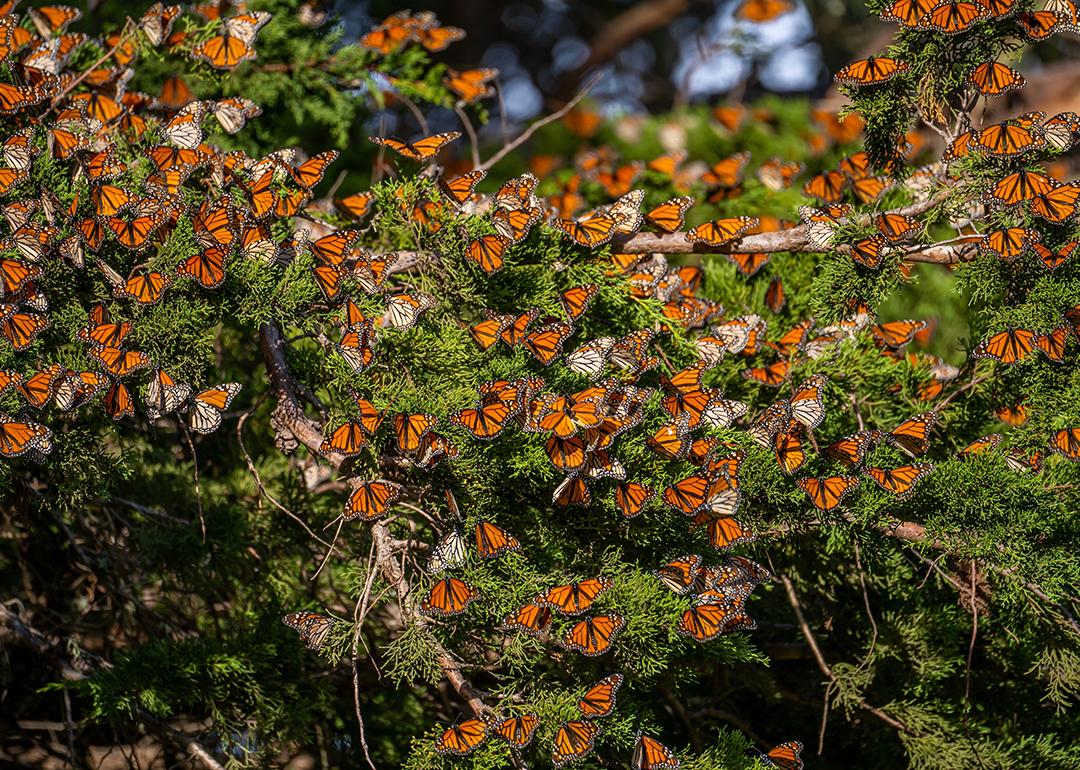
The at Pismo Beach used to sound alive before you even saw it. On a winter morning over a decade ago, visitors to the grove stood beneath the towering eucalyptus and heard a faint rustle, like distant rain, as thousands of monarch butterflies shifted their wings along the branches overhead. Through a docent鈥檚 telescope, tight clusters the size of pine cones resolved into overlapping black and orange wings, each butterfly hanging in suspended animation as it waited out the cold months on California鈥檚 Central Coast.
But when visitors returned this January, the trees looked strangely bare. The informative signs were still there, but the air that once seemed to shimmer with butterflies was mostly still. They spotted only a few monarchs drifting in the native plant garden at the grove鈥檚 edge.
This observation, as explores, reflects a much larger story. This past winter, volunteers counted just a little over butterflies along the California coast, the third-lowest tally in nearly three decades of monitoring. According to the Xerces Society for Invertebrate Conservation, which coordinates the counting, western monarchs numbered around 4.5 million in the 1980s. Today, the population has declined by more than 99%, driven by habitat loss, pesticide use, and climate change. Our window to reverse the trend is narrowing fast.
The question hangs over the empty grove: Can the butterflies come back?
Monarchs survive winter through a remarkable strategy: epic, cross-continental, multigenerational migration. In North America, there are two main populations. The western monarchs breed west of the Rocky Mountains and overwinter along California鈥檚 coast. Eastern monarchs travel thousands of miles to mountain forests in Mexico. During summer, monarchs spread across vast breeding areas wherever milkweed grows. Females lay eggs on milkweed plants because monarch caterpillars can eat nothing else.
The migration is a relay race across generations. 鈥淚n the spring, each generation lives about a month,鈥� explained Xerces pollinator conservation specialist Angela Laws. Butterflies move gradually north and inland, laying eggs that become the next generation. By fall, a special long-lived generation emerges. 鈥淭hese individuals can live nine months,鈥� Laws said. They are the ones that fly back to the overwintering groves like Pismo Beach.
There, monarchs cluster together in trees and enter a resting state. 鈥淭hey鈥檙e not hibernating,鈥� Laws explained. 鈥淭hey鈥檙e just kind of hunkering down for the winter.鈥� The same butterflies will leave the grove in spring and lay the first eggs of the new migration cycle.
Why has this migration collapsed so dramatically?
鈥淭here doesn鈥檛 appear to be just one smoking gun,鈥� Laws said. 鈥淚t seems to be a bunch of factors together.鈥�
Habitat loss is a major driver. Coastal development has removed or altered many overwintering groves. Trees have been cut, surrounding vegetation cleared, and wind patterns changed. Because monarchs depend on precise microclimates, even small alterations can make a grove unsuitable.
The loss of breeding habitat inland is equally serious. Monarch caterpillars can only eat milkweed (Asclepias species), while adults need nectar from flowering plants throughout the season. Across California鈥檚 Central Valley and other regions, those plants have largely disappeared as land has been converted to agriculture or development.
The widespread adoption of herbicide-tolerant crops has exacerbated this problem. Studies in monarchs鈥� eastern range show that increased use of glyphosate herbicides dramatically reduced milkweed on farmland, destroying breeding habitat. In the West, the same 2019 that linked declines to coastal development also found that monarchs declined significantly with glyphosate and neonicotinoid use in breeding areas.
Xerces researchers recently collected milkweed leaves from roadsides, wildlife refuges, farm edges, and even backyards across the Central Valley. 鈥淲hat we found was that every single milkweed was ,鈥� Laws said. On average, each plant contained residues from about 11 different pesticides.
Some of those chemicals were insecticides known to be highly toxic to butterflies and other pollinators. Others were herbicides or fungicides that may cause subtler, sublethal effects.
Researchers have discovered insecticide residues in milkweed far from farms, suggesting chemicals travel widely through the landscape. 鈥淭hat was shocking to see,鈥� said Corey Shake, senior restoration ecologist at the nonprofit River Partners. Systemic pesticides that accumulate in plant tissues, he said, 鈥渃orrespond with the decline of butterfly species in California.鈥�
Climate change further complicates the picture. Warmer winters can disrupt monarch dormancy, while drought reduces milkweed growth. Increasingly severe weather may also kill overwintering butterflies. 鈥淚t鈥檚 this perfect storm,鈥� Laws summed it up.
With populations now so small, the risks grow larger. 鈥淎nytime a species鈥� population size gets very low, it makes them more vulnerable to extinction,鈥� she explained. 鈥淵ou could have a bad winter, a bad storm, that knocks out the population to numbers so low that it can鈥檛 recover.鈥�
Models suggest western monarchs face a high risk of extinction within decades if the decline continues.
Conservationists across the West are working to rebuild the butterflies鈥� habitat. One major effort focuses on restoring milkweed and nectar plants. A large initiative by the nonprofit River Partners aims to plant 15 million milkweed plants to expand monarch habitat along their migration routes. Native plant nurseries such as are scaling up seed production to support these projects.
Large restoration projects are essential, but individuals can also make a difference.
At Xerces, Laws helps run a program that distributes free native plants and seeds to people willing to create pollinator habitat. 鈥淲e realized we could do a lot more by working with other people who also wanted to create habitat,鈥� she said. 鈥淣ative plants can be expensive, and many people aren鈥檛 sure what to plant.鈥�
Through the program, Xerces has provided nearly to more than 840 projects across California 鈥� from farms and tribal lands to schools, parks, and backyard gardens.
Roadsides are another opportunity. In some parts of the country, they are among the last remaining strips of habitat. Xerces staff now work with departments of transportation to restore native plants along highway corridors.
While many people spray their lawns out of habit or convenience, there are alternative approaches that do not rely on routine pesticide use. In parts of Europe, routine pest control is less commonly used in residential settings. In the U.S., routine pesticide spraying in residential areas is common in many regions. In , thousands of residents just organized a protest against the local government spraying creeks with pesticides and herbicides like glyphosate and succeeded in convincing the authorities to end the practice.
There is hope.
The story of western monarchs is not just about loss; the species can respond dramatically when conditions improve. The eastern monarch population in Mexico this winter. 鈥淚t is great news when the populations tick up from one year to the next, and we should celebrate that because it shows that this species has the ability to recover,鈥� Laws said. 鈥淏ut the long-term trends that we鈥檙e seeing with both populations tell us that this species is in trouble. Monarchs won鈥檛 be out of the woods until we see overwintering numbers that stay high from year to year for an extended period. There is still a lot of work to be done to protect both populations.鈥�
Conservation scientists and agencies have laid out a suite of strategies that, taken together, can help stabilize and rebuild populations.
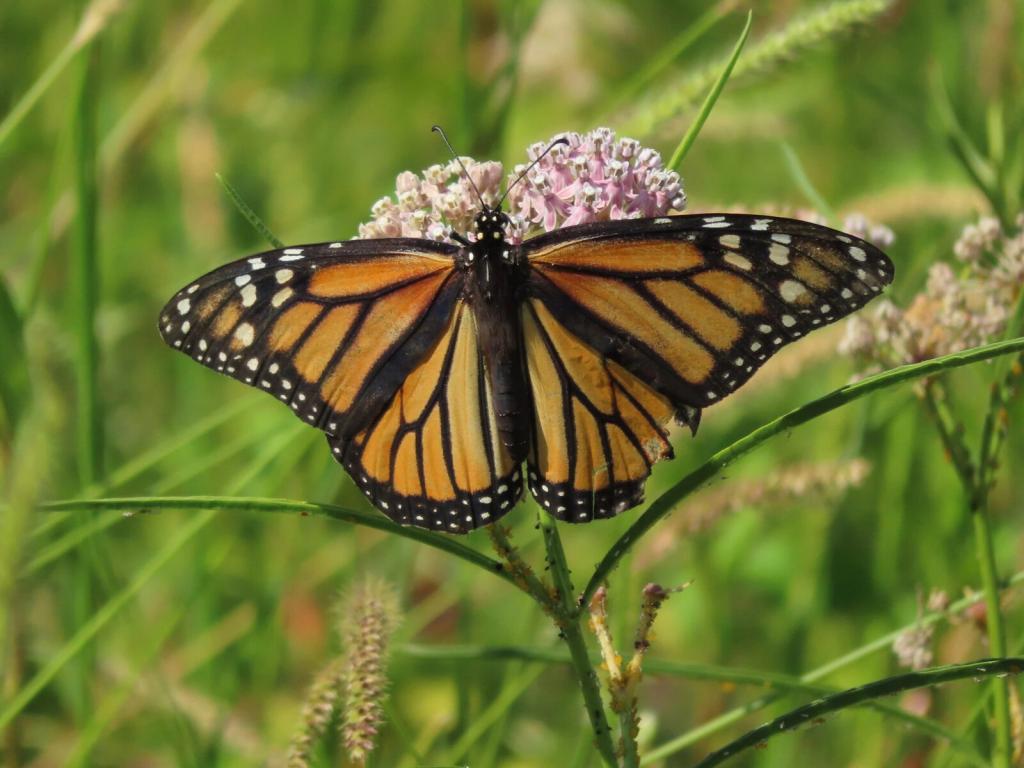
According to , anyone can help by following a few simple steps: 鈥済rowing pollinator-friendly flowers, providing nest sites and shelter, avoiding pesticides, and spreading the word.鈥�
More specifically:
- Plant native milkweed appropriate to your region and a variety of pesticide-free nectar plants that bloom across the seasons.
- Avoid using insecticides and herbicides in your yard; tolerate some 鈥渨eeds鈥� that may be valuable host or nectar plants.
- Support local and regional efforts to protect and restore overwintering sites and breeding habitat, through volunteer work, community science projects like monarch counts, or advocacy for pollinator-friendly land-use policies. Sacramento, for instance, implemented a city ordinance prohibiting the use of neonicotinoids on city property.
- Stay informed through reputable organizations such as the Xerces Society and and the U.S. Fish and Wildlife Service, which publish updated guidance as science and conditions evolve.
- Participate in community science projects like the Western Monarch Milkweed Mapper on the popular app .
At a larger scale, reducing greenhouse gas emissions remains critical for the long-term stability of all pollinators, including monarchs鈥� multigenerational journeys.鈥�
Online communities, such as monarch butterfly Facebook groups with tens of thousands of members, offer a source of optimism. There, users with names like 鈥淏utterfly Babe鈥� detail how to plant native milkweed and share small victories. They gently usher monarch larvae into specially built enclosures to nourish them in safety and show off the glorious offspring emerging from their chrysalis. They crochet monarch sweaters for themselves and ask for advice on gluing a monarch鈥檚 broken wing back together using a toothpick and a tiny drop of adhesive. One user shared how she shelters injured butterflies indoors during cold snaps, feeding them watermelon juice and mashed fruit until they recover.
Citizen science, gardening, and passion fuel the efforts. Laws believes that this enthusiasm may be one of the monarch鈥檚 greatest strengths. 鈥淭his is a species that inspires people,鈥� she said. 鈥淧eople love monarchs and feel very strongly about them.鈥�
Back at Pismo Grove, a single monarch glides across the clearing and settles on a yellow flower. Its wings flash briefly in the morning sun.
It is only one butterfly. But it is also a reminder that the migration is not gone yet 鈥� and that thousands of people are working to bring it back.
was produced by and reviewed and distributed by 爆料TV.