7 common landlord-tenant insurance mistakes property owners make
Commercial landlord-tenant insurance can get confusing fast, especially when damage happens, and everyone assumes the other party鈥檚 policy will handle it. Your tenant may carry business insurance, but that doesn鈥檛 always mean your property is fully protected.
That鈥檚 where a lot of commercial landlords get caught off guard. Maybe a tenant鈥檚 coverage falls short, or their responsibility is ambiguous in the lease.
The good news is that many of the biggest insurance headaches are preventable. Here, shares some common mistakes commercial landlords make 鈥� and a few ways to avoid them.
Mistake 1: Don鈥檛 assume commercial tenant insurance will automatically cover property damage
Depending on the situation, tenant and coverage can overlap, which is where things get confusing. The building owner might assume the tenant鈥檚 coverage applies, and vice versa. In reality, it often depends on:
- What caused the damage
- Whose property was affected
- How both policies are written
For example, if a tenant accidentally causes a kitchen fire, the tenant鈥檚 coverage could help pay for some of the damage. But the landlord鈥檚 property policy may still come into play for repairs to the building itself. Then there are gray areas 鈥� like water damage, shared electrical systems, or tenant improvements, where responsibility isn鈥檛 always immediately clear-cut.
Here鈥檚 a simple breakdown:
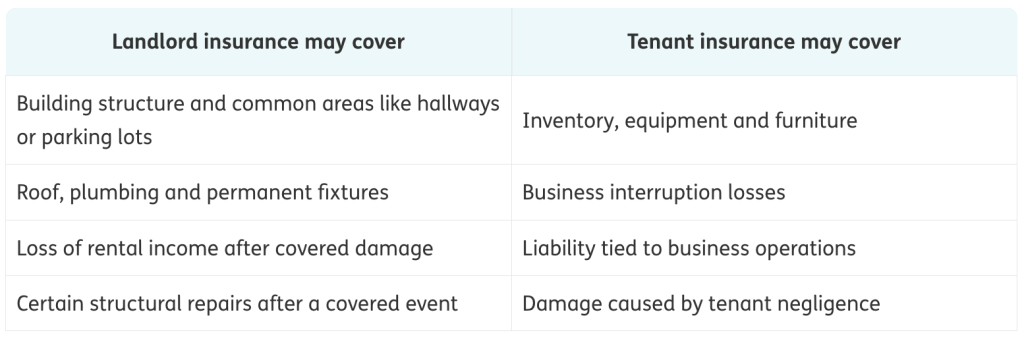
Landlord and tenant insurance aren鈥檛 meant to replace one another. The two policies complement each other, and gaps can happen if both sides assume the other policy will handle everything.
Mistake 2: You should always ask for proof of insurance before a tenant moves in
A lot of landlords include insurance requirements in the lease but never actually confirm the tenant actually has coverage. That becomes a problem fast if there鈥檚 a claim. Problems also arise if the policy has expired, was canceled, or never matched the lease requirements to begin with.
Before handing over the keys, ask tenants for proof of insurance, also called a . This is usually a document from their insurance company that shows the policy is active and lists basic coverage details.
It鈥檚 also worth checking that make sense for the type of business moving in. A small tenant may have very different risks than a , , or .
TIP: Businesses change over time, and business insurance needs can change with them. Review coverage annually to catch gaps or insurance lapses before they turn into expensive surprises.
Mistake 3: Don鈥檛 assume that all tenant damages to your property will be covered by their insurance
Just because a tenant caused the damage doesn鈥檛 always mean their insurance will pay for it. Real claims can be messier than that.
Sometimes damage goes beyond the tenant鈥檚 space and affects plumbing, electrical systems, or other parts of the building. And the cost of repairs can end up being higher than expected, and their insurance payout can鈥檛 cover everything.
This is where landlords can get caught off guard. A claim may involve multiple policies or disagreements over who鈥檚 responsible for the costs. A landlord may still need to rely on their own insurance to handle repairs or lost rental income while everything gets sorted out.
It鈥檚 important for landlords to think beyond 鈥淲ho caused the damage?鈥� and focus more on whether their own property and income are protected if something goes wrong.
Mistake 4: Be sure to add additional insured requirements in the lease
Many commercial leases ask tenants to add the landlord to their business insurance policy as an . It sounds technical, but the idea is pretty simple: Becoming an additional insured can provide more protection if you鈥檙e pulled into a claim connected to the tenant鈥檚 business activities.
This step often gets skipped with smaller tenants or handshake lease arrangements. But when an incident happens, landlords can still end up dealing with claims, legal costs, or disputes even if they aren鈥檛 directly responsible.
Including this requirement in your commercial lease can help reduce confusion if something goes wrong on the property.
Mistake 5: Don鈥檛 assume empty commercial units are fully protected
Just because a unit is vacant doesn鈥檛 mean you鈥檙e off the hook from protecting it. An empty storefront or office can be more vulnerable to break-ins, , water damage, or maintenance issues that go unnoticed for days or weeks. Even small problems, like a leaking pipe or a broken window, can turn into expensive repairs if no one catches them early.
What surprises some property owners is that insurance may work differently if a space stays empty. In some situations, coverage can become more limited while the unit is vacant or may not apply at all.
Tenant turnover periods deserve extra attention. If a property will be empty for a while, review your policy (or ask your insurer about vacancy stipulations) and check on the space regularly. This helps ensure small maintenance issues don鈥檛 snowball into bigger problems.
Mistake 6: Don鈥檛 forget about the possibility of lost rental income after property damages
It鈥檚 only natural to think about repair costs when your property is damaged. But for many commercial property owners, the bigger hit is the lost rent that follows.
For instance, say a fire, major storm, or plumbing issue forces your tenant to temporarily close or move out. That means your rental income can also stop while repairs are underway. And depending on the damage, that downtime could last months.
That can put landlords in a tough spot, especially if they still have mortgage payments, taxes, or maintenance costs coming in. Some commercial landlord insurance policies can help replace lost rental income after some covered events, but not every property owner realizes this until after there鈥檚 a claim. It鈥檚 one of those protections that鈥檚 easy to overlook 鈥� right up until a damaged unit starts affecting your cash flow.
Mistake 7: Don鈥檛 treat business insurance on your property as 鈥榮et it and forget it鈥�
A commercial property can change a lot over the years, which means risks also change. Maybe a quiet office space turns into a busy salon. A retail tenant adds expensive fixtures. A restaurant renovates the kitchen. Even rising construction costs can affect the level of protection a property owner may need.
Many landlords set insurance requirements when the lease is signed and never revisit them again. Checking in on your policy once a year can help landlords spot gaps before they become expensive issues. Review tenant coverage, confirm policies are still active, and make sure the property鈥檚 current value and use still match your coverage.
How commercial landlord insurance can help protect your property and income
Insurance issues usually become stressful after damage happens, not before. A few small steps upfront can help landlords avoid confusion and unexpected costs.
Here are a few ways to stay ahead of common landlord-tenant insurance mistakes:
- Ask tenants for updated proof of insurance annually. Coverage should still make sense a year later, not just on move-in day.
- Outline insurance requirements clearly. Make sure lease agreements clearly spell out a tenant鈥檚 insurance responsibilities.
- Keep records of maintenance. This includes building repairs and property upgrades.
- Pay extra attention during tenant transitions. Regularly check your unit during vacancies or tenant turnover periods.
- Check in with your insurance company if you have questions. If you鈥檙e unsure about what your policy covers, where coverage overlaps, and where it stops, reach out to your insurer or agent.
was produced by and reviewed and distributed by 爆料TV.