
3 in 4 owners say owning a business is worth it, despite challenges
often begins with a mix of optimism and big expectations about what ownership will look like. Yet, 3 in 4 small business owners say the experience ultimately met or exceeded those expectations.
of 785 U.S. small business owners, examined how expectations before launch compare with the realities of running a business today.
Many owners report facing early cash flow challenges and higher-than-anticipated stress. The results reveal a gap between expectations and reality. For some founders, the experience proves more demanding than anticipated, even if it鈥檚 ultimately rewarding.
What many underestimate is the ongoing financial pressure, administrative workload, and emotional strain that come with ownership. Research on among entrepreneurs shows that many founders begin their journey with limited preparation for the financial realities of running a business.
This report explores where expectations align with reality鈥攁nd where they deviate鈥攐ffering a clearer picture of what it takes to run a small business in 2026.
Key takeaways
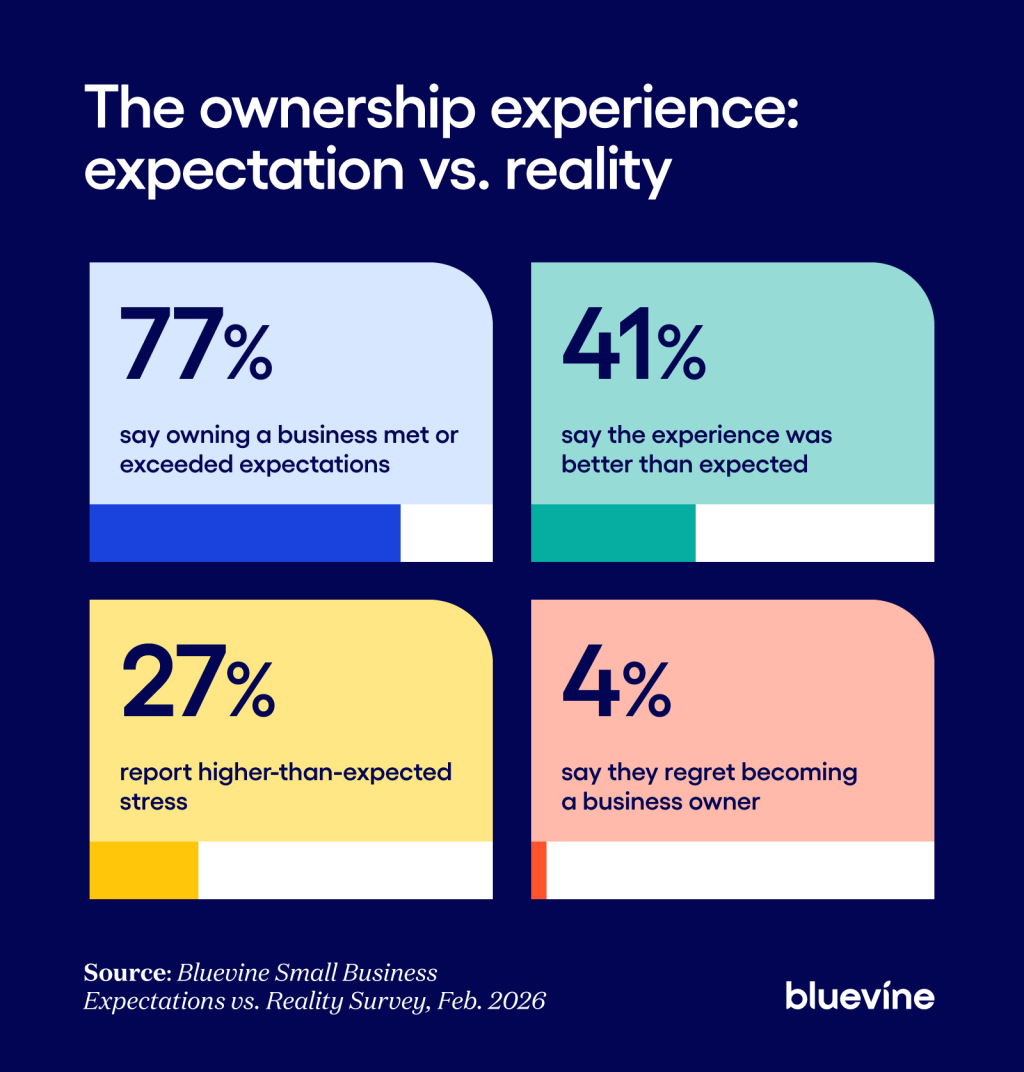
- 77% say owning a business met or exceeded expectations, while only 4% regret it.
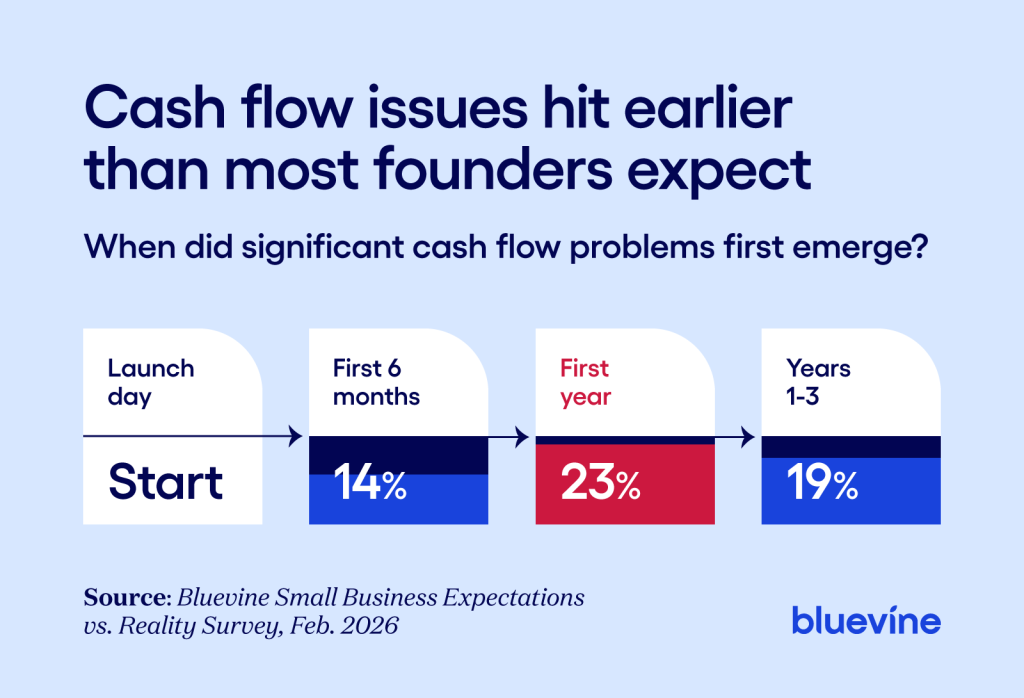
- 56% experienced significant cash flow problems within their first three years.
- 27% report higher stress or burnout than expected.
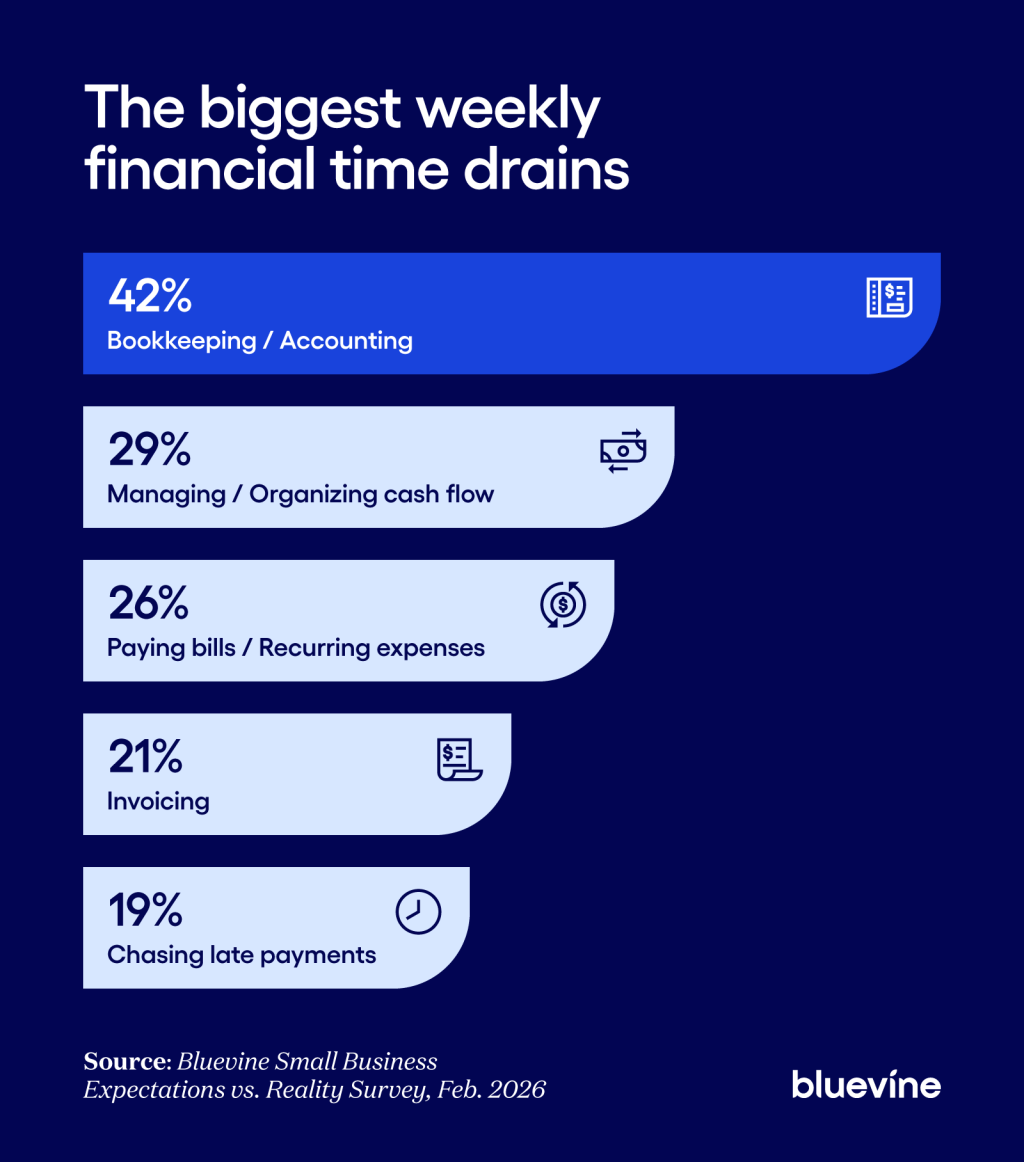
- 26% spend more time than expected on financial tasks, and bookkeeping is the biggest weekly time drain (42%).
3 in 4 say owning a business met or exceeded expectations鈥攐nly 4% regret it
The overwhelming majority of owners describe their experience positively. About 77% say running their business met or exceeded expectations, while only 4% say they regret becoming a business owner鈥攁n unusually low rate for such a high-risk path.
A closer look
According to Bluevine鈥檚 , the same percentage of small business owners鈥�77%鈥攎ade sacrifices to keep their business running in 2025. These sacrifices included financial stability, personal health and wellness, and even time with family or friends.
Still, the emotional demands of running a business are real. About 27% say their stress or burnout levels have been higher than expected. But those challenges rarely outweigh the long-term satisfaction of building and running something of their own.
56% faced significant cash flow problems within their first 3 years
鈥淭he first year especially has a way of surprising even the most prepared founders, and usually not in a good way,鈥� says founder Eric Trettel. 鈥淎 few things tend to catch people off guard most often: taxes, slow-paying clients, uneven revenue months, and unexpected one-time expenses.鈥�
More than half of owners (56%) say significant emerged within their first three years of running their business. That early stage is often the most financially vulnerable, as revenue can fluctuate and access to capital may still be limited while costs continue to grow.
Still, early financial stress isn鈥檛 universal. Nearly a third of entrepreneurs (30%) say they have never experienced a significant cash flow crisis.
Even after those first challenges, financial pressure doesn鈥檛 disappear entirely. Only 1 in 5 owners feels that managing cash flow never causes significant stress.
For most businesses, financial pressure can appear periodically throughout the year rather than as a single emergency. Managing those fluctuations becomes a routine part of operating a business.
鈥淭he good news is that it鈥檚 all manageable with a little structure upfront,鈥� Trettel says. 鈥淎 common rule of thumb is to set aside 25%鈥�30% of your net income for taxes, but the right number depends on your situation.鈥�
He stresses, 鈥淐onsistency matters more than getting the percentage perfect on day one. As your business matures, a tax professional can help you formalize that into a proper plan with quarterly estimated payments.鈥�
Many small businesses can face similar patterns when , making early planning and visibility especially important. Building a forecast and planning ahead with tools can help owners navigate those ups and downs more confidently.
Most owners feel cash flow stress鈥�42% cite bookkeeping
Eight in 10 owners say managing cash flow creates stress at least a few times a year, forcing them to constantly monitor their finances and adjust decisions as conditions change.
Financial management also demands more time than many founders expect. Nearly 8 in 10 say they spend as much or more time than anticipated on financial tasks, and about 26% say financial administration takes longer than they originally planned.
Trettel also shares this advice he gives to his clients: 鈥淭he best thing you can do is plan for financial admin like it's a real job function鈥攂ecause it is.鈥�
鈥淓ither carve out dedicated time every week to stay on top of it, or bring in help early,鈥� he continues. 鈥淲aiting until tax season to figure out your books is one of the most expensive mistakes a founder can make, both in time and in stress.鈥�
As businesses grow, transaction volumes increase and reporting requirements expand, which can make keeping your finances organized more complicated. Many owners find themselves balancing financial tasks with day-to-day operations.
Integrations with accounting and bookkeeping tools such as QuickBooks Online and Xero can help reduce manual work and keep financial data synchronized.
Clear financial systems also help owners maintain visibility as their businesses scale. Many founders rely on tools for small-business , such as, to keep their finances organized.
Did you know?
According to Bluevine鈥檚 , 29% of small business owners delayed paying themselves due to late and unpaid invoices. In fact, 17% reported missing or nearly missing payroll for the same reason.
Owners鈥� advice for 2026: Bigger buffers and cleaner money boundaries
When asked what advice they would give to someone starting a business today, experienced owners consistently emphasize financial preparation.
Trettel says, 鈥淪tep one is simple: Open a dedicated business checking account before you spend a single dollar on the business. This isn't optional. It protects you legally, makes your bookkeeping cleaner, and will save you hours of untangling come tax time.鈥�
He adds, 鈥淏ut the step most founders skip is establishing a consistent owner's draw or salary process early on. Without it, people tend to pull money from the business whenever they need it personally, which makes it harder to understand whether your business is actually profitable. When you pay yourself in a structured, repeatable way, your books tell a real story.鈥�
Many of the lessons small business owners shared in Bluevine鈥檚 survey come from challenges they faced early on. Cash flow surprises and time-consuming financial tasks often reshape how owners think about preparation after a few years in business.
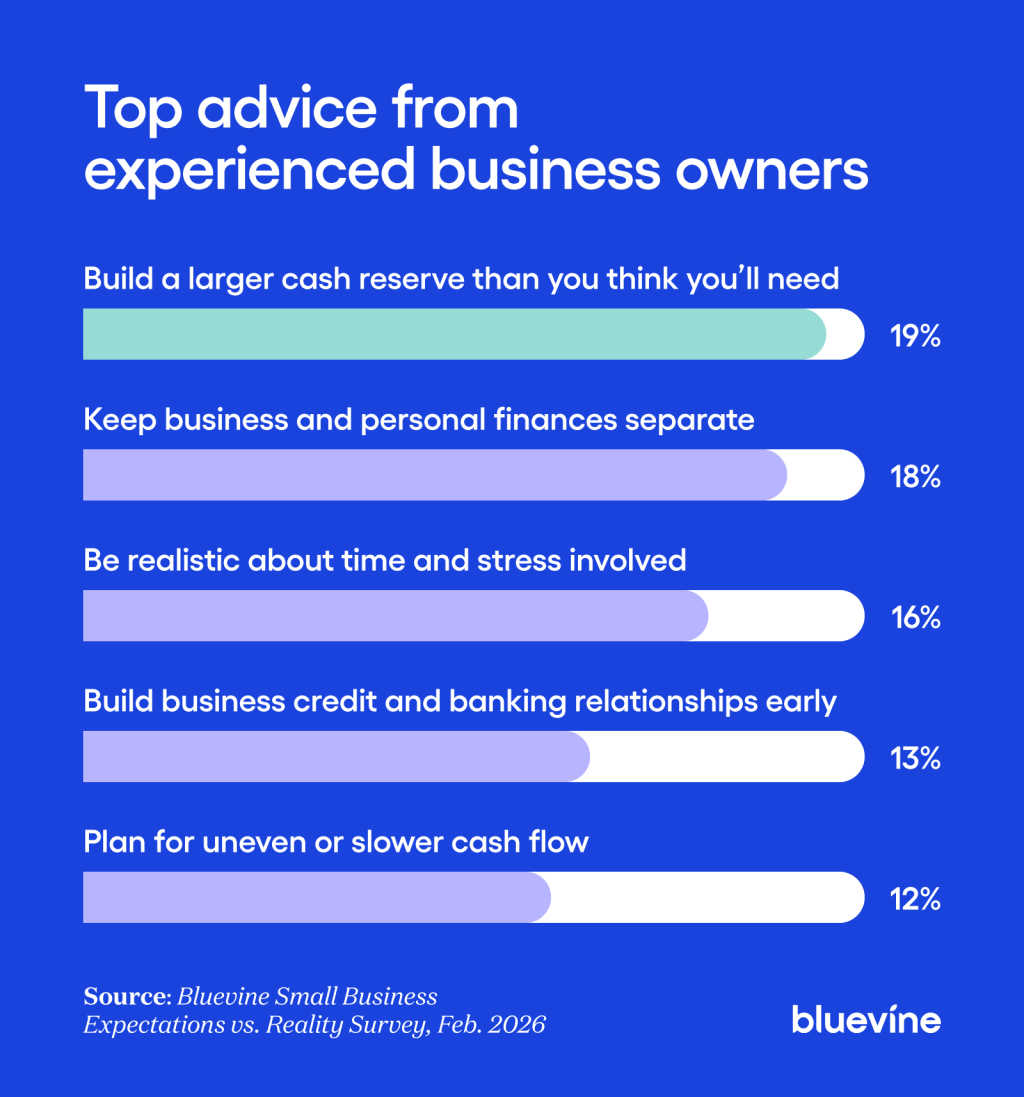
The advice centers on building stronger financial foundations early. Owners emphasize the importance of maintaining a cash cushion, separating business and personal finances, and preparing for the time commitment required by financial management.
Entrepreneurship is worth it鈥攚ith the right preparation
Small business ownership brings both satisfaction and pressure. Many founders say the experience has been worthwhile, even as financial demands and operational challenges prove more intense than anticipated.
Experienced owners don鈥檛 discourage entrepreneurship. Instead, they emphasize preparation, particularly around separating business and personal finances and setting realistic expectations about the time and stress involved.
鈥淭he goal is to make your personal and business finances two completely separate worlds. The cleaner that line is, the better decisions you'll be able to make as you grow,鈥� Trettel says.
Recurring financial strain and administrative work aren鈥檛 signs of failure. They highlight the need for clearer financial systems and stronger visibility. Owners who build those systems early are better positioned to move from reacting to financial surprises to planning for growth.
The right financial tools can make that transition easier.
Methodology
The survey was conducted by Centiment for Bluevine. The survey was fielded between Feb. 2, 2026, and Feb. 11, 2026. The results are based on 785 completed surveys. In order to qualify, respondents were screened to be residents of the United States, over 18 years of age, and own a small business. Data is unweighted, and the margin of error is approximately +/-3% for the overall sample with a 95% confidence level.
was produced by and reviewed and distributed by 爆料TV.