AI bait is a mirage. Here鈥檚 how to get discovered in the new age of search
The launch of agent-based browsing from ChatGPT and Perplexity鈥檚 new Comet browser marks a turning point in how AI platforms evaluate and cite content.
Instead of blindly scraping text, today鈥檚 AI systems behave more like humans: Navigating websites, comparing sources, and choosing content based on depth, clarity, and user experience.
If your content reads like it was written for a machine with short, stat-stuffed paragraphs or rehashed definitions, it鈥檚 time to rethink your strategy. breaks down what's changed and how to create content that earns visibility in the new era of search.
From crawled to chosen: The rise of agentic discovery
In the early days of LLMs, 鈥淎I bait鈥� 鈥� pages designed to be scraped, not read 鈥� may have worked.
This content often includes:
- Shallow, statistic-stuffed paragraphs
- Overused jargon meant to impress machines
- Definition-style explanations that regurgitate common knowledge
- Lack of perspective or originality
- No clear author or source signals
While AI bait may have tricked early models, today鈥檚 AI systems operate differently. We鈥檝e entered the age of agentic discovery, where tools don鈥檛 just surface content. They choose what to trust, summarize, and cite.
Why AI bait is risky: The April Fools鈥� incident that fooled Google
Here鈥檚 a quick example you may have seen earlier this year.
When a Welsh journalist behind the news site Cwmbran Life made up a , he was shocked to see it cited by Google鈥檚 AI Overview.
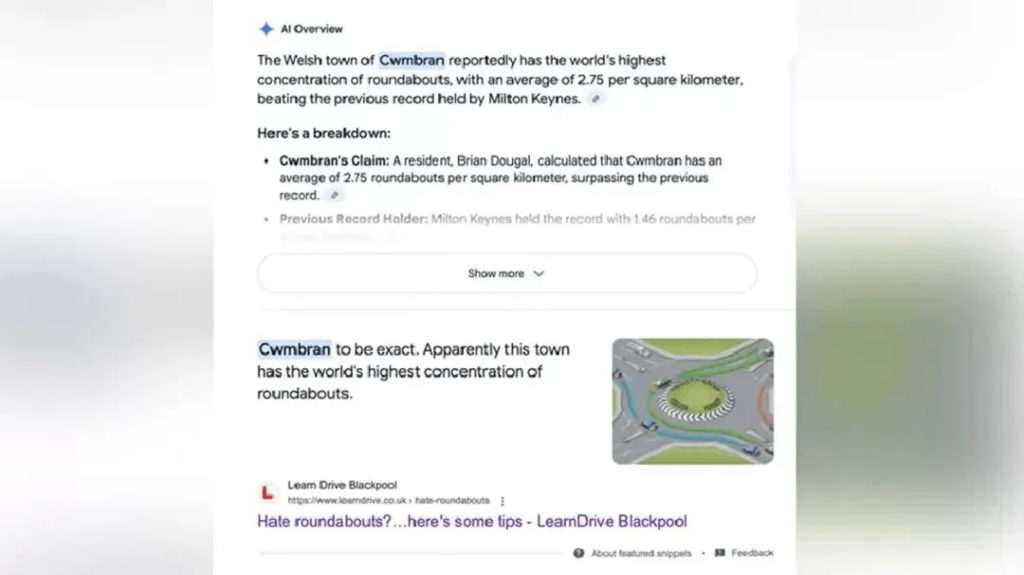
Google鈥檚 AI Overview used the satirical article, which claimed the town of Cwmbran has the world鈥檚 highest concentration of roundabouts, as the basis for its answer.
While harmless in this case, it鈥檚 a clear example of how quickly misinformation can spread when AI systems rely on surface-level signals instead of context and credibility.
This is exactly the kind of scenario that agentic discovery aims to avoid. Browsing agents and smarter systems are being trained to read between the lines to avoid surfacing content that鈥檚 misleading or lacks real-world credibility.
3 ways AI bait falls short in 2026
Here are a few key ways AI bait misses the mark:
1. Modern AI agents act more like humans
Launched earlier this month, and give a glimpse into the future of AI search.
These aren鈥檛 just new upgrades. They represent a larger shift in how AI search works on a fundamental level. Rather than simply scraping content, these new systems evaluate and select content similar to how a user would.
Comet and ChatGPT agents browse the web in real time, weighing context, clarity, and relevance. That means old-school tricks no longer work.
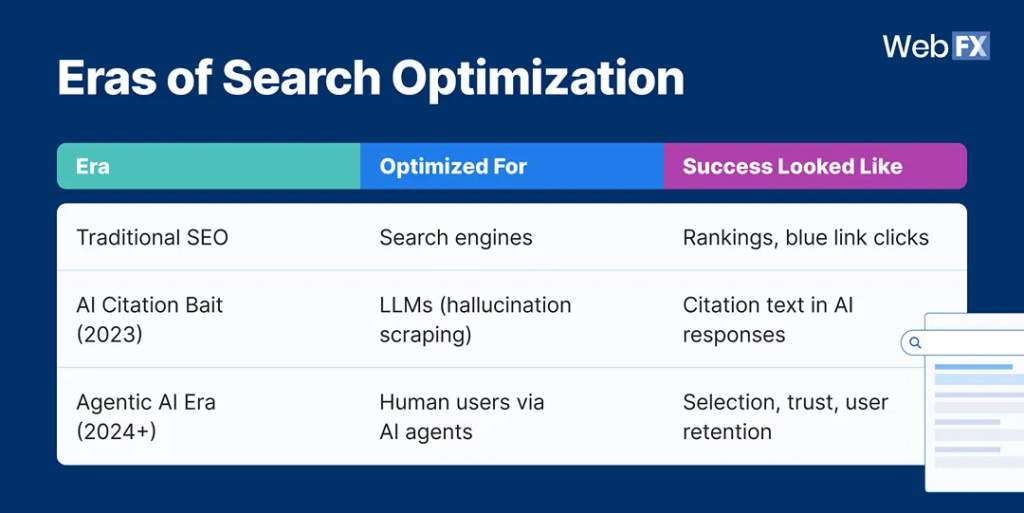
Going forward, the question isn鈥檛 鈥淐an I get cited by AI tools?鈥� Instead, it鈥檚 鈥淲ould an AI acting on a user鈥檚 behalf choose my content?鈥�
2. Citations don鈥檛 equal clicks
Remember, just because an AI tool mentions your content doesn鈥檛 mean people are visiting your site. This is especially relevant for local brands.
AI responses often paraphrase or summarize what you write, strip away the nuance, and deliver it directly in search results 鈥� no clicks required.
Google鈥檚 AI Overviews are a perfect example. Here are a few things they鈥檝e been known to do:
- Cite a brand without linking to it
- Cite a cluster of sites without favoring any one source
- Not cite anyone at all (especially for common knowledge or surface-level content)
According to the Pew Research Center, cite three or more sources, with only 1% citing a single source.
If your entire strategy hinges on 鈥渂eing a source,鈥� but there鈥檚 no reason for the user to dig deeper, you鈥檝e essentially created invisible content with little measurable business value.
3. AI bait erodes human trust
Content optimized only for AI often reads like it was built in a lab, not written by a subject-matter expert.
Even if AI bait earns a temporary citation, it creates a long-term trust problem. When real users land on the page, whether from a link or through branded search, they鈥檒l skim a few lines, realize there鈥檚 nothing valuable, and leave.
Optimizing only for AI citations may result in content that ranks but doesn鈥檛 convert, gets paraphrased without credit, and ultimately damages your brand鈥檚 credibility.
What AI agents actually prioritize
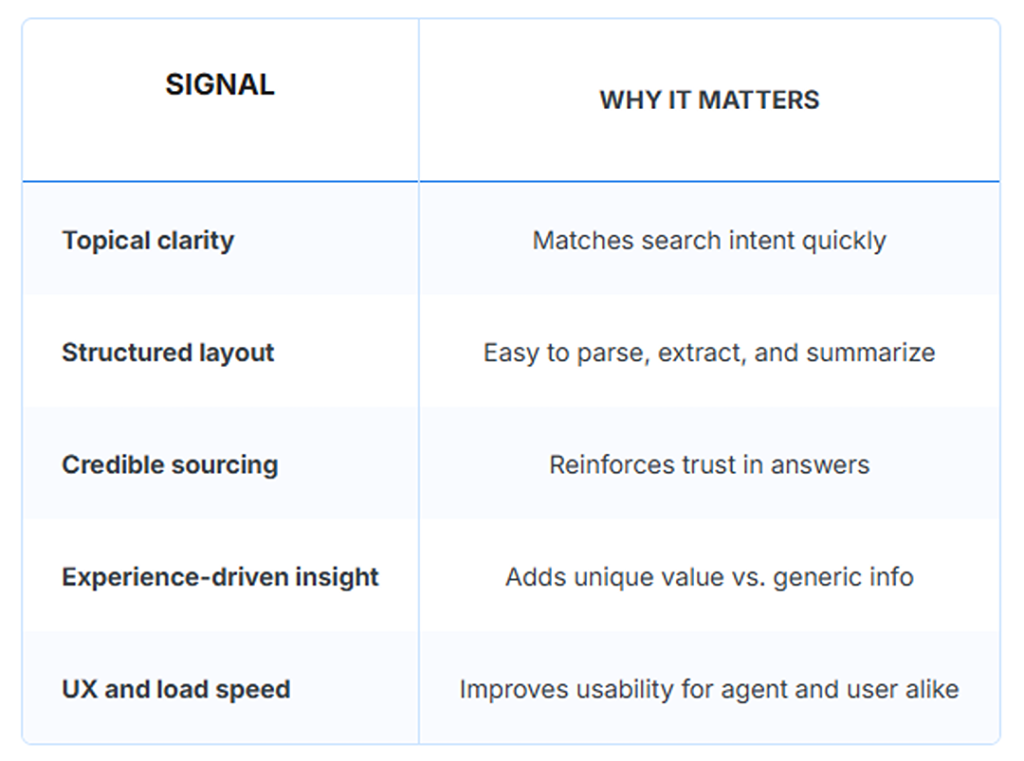
AI agents don鈥檛 just scrape. They鈥檙e designed to find fast, clear, trustworthy content that solves users鈥� problems.
Here鈥檚 what AI agents look for:
AI bait vs. true AI magnet content
Here鈥檚 a breakdown that shows the major practical differences between AI bait and content that earns AI citations the right way:
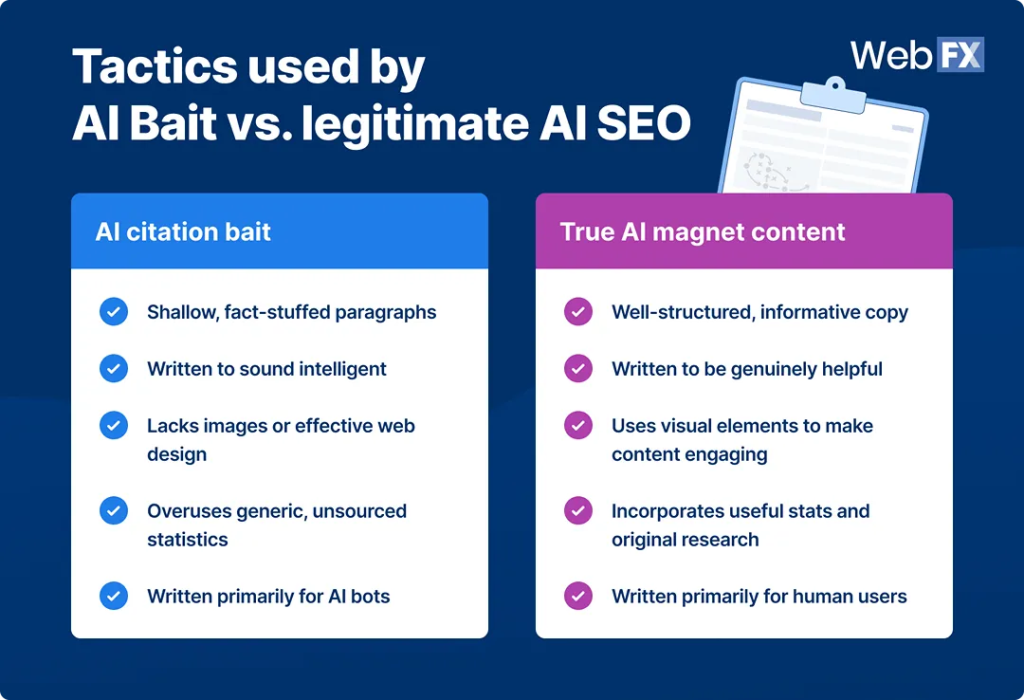
Modern agentic platforms reward content designed for humans, not machines. These tactics help create content that is clear, concise, and helpful for users.
How to get your content chosen by AI
The following are practical ways to get content chosen by AI in the new era of search:
1. Focus on helpful, human-centered answers
AI agents help users solve problems and complete tasks.
Focus on directly answering search intent, and go beyond surface-level definitions. Answer the user鈥檚 question, add context, explain why it matters, and give an expert perspective beyond what AI traditionally summarizes.
2. Incorporate visuals that support clarity
AI agents are increasingly capable of parsing visual context (like charts or labeled images), and they prefer content that enhances user understanding. Custom graphics, screenshots, and tables aren鈥檛 just for decoration. They add clarity and create meaningful interactions with users.
3. Demonstrate human experience with E-E-A-T
E-E-A-T matters more than ever. Cite firsthand knowledge, include author bylines, share original insights, and link to real-world examples. These cues signal trust and authority to both users and AI systems.
4. Cite credible sources (and original research)
Tossing in random stats used to fool AI models, but not anymore. Use relevant, up-to-date, and properly cited data (bonus points if it鈥檚 original research). AI agents look for originality and trust signals over filler.
5. Use schema markup to help AI agents understand content
helps both traditional search engines and AI agents understand your content, not just crawl it. Add some FAQs and a how-to schema to highlight key information.
was produced by and reviewed and distributed by 爆料TV.