The publishing house running on nights, weekends, and a machine cutter
Indie publishing is having a moment. The Los Angeles Art Book Fair has grown so popular it now charges a cover. Smaller fairs are popping up in towns that pull crowds from across the country. And internationally, art book fairs have taken hold in Mexico City, Dubai, Dakar, Seoul, Tokyo, and Taipei.
After online retail steamrolled traditional bookstores in the early 2000s, the next wave of digital infrastructure, from online storefronts to mobile point-of-sale to Substack itself, is doing the exact opposite for small publishers. It鈥檚 powering a generation of founder-led presses to reach readers, sell at fairs around the world, and survive without venture funding, retail chains, or institutional grants in sight.
It鈥檚 a convergence that could only happen now: Artificial intelligence fatigue is pushing readers back toward the tactile, funding for the arts is evaporating, public libraries are under unprecedented attack, and a community of readers is rushing in to fill the gap and stock their own bookshelves.
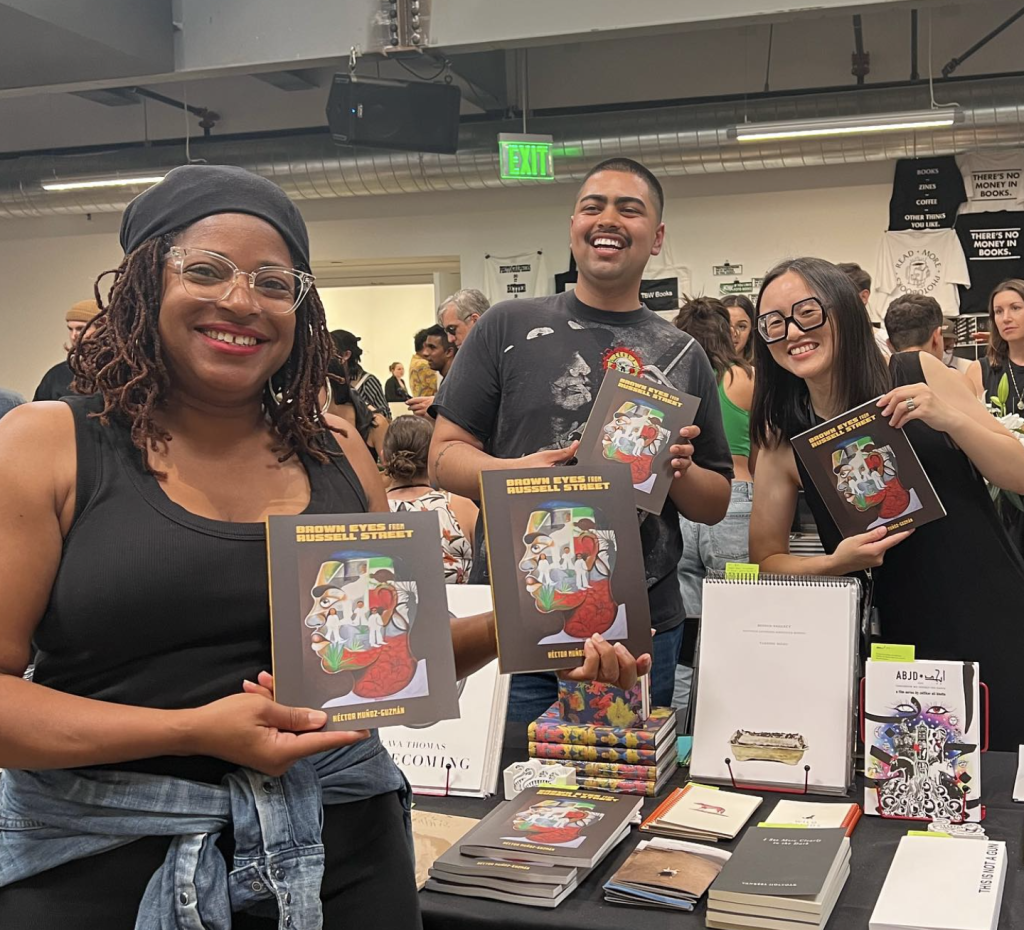
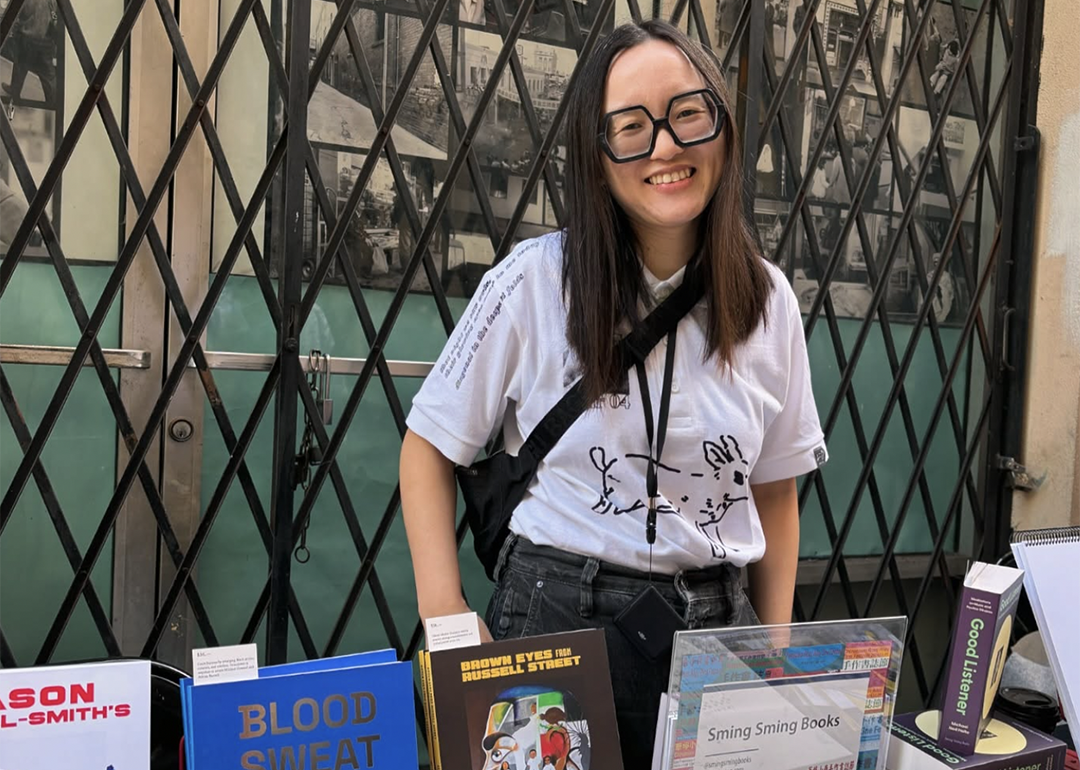
In the swirl of all this is Vivian Sming, who founded in 2017 in the Bay Area after spending years working at galleries, nonprofits, and artist spaces, including , the cult store and former magazine. Sming, who has been hand-binding books for more than a decade, has black hexagonal glasses, a soft, unhurried voice, and the kind of composure that makes you want to slow down, too.
sat down for a conversation with Sming, whose studio works one-on-one with artists, many of them women and artists of color, to design art books from scratch. The studio鈥檚 catalog now sits in more than 150 libraries, museums, and universities, every one designed, printed, and bound by Sming herself. She鈥檚 been in the trenches long before the scene exploded, and knows better than most why books are stubbornly resilient in 2026鈥攁nd why the scene is determined to stay punk on purpose.
The founder: Vivian Sming
The business: , an independent publishing studio
Fun fact: Sming Sming鈥檚 most intricate book designs are made with a Cricut, the same craft cutter sold in the scrapbooking aisle.
Anita: It鈥檚 been about two years since . What鈥檚 changed for Sming Sming in that time, and what鈥檚 surprised you most about the indie scene?
Vivian: The most obvious surprise is just that we鈥檙e still here. The conversation around AI has been huge, and I think there are questions around creativity and what it means for AI to be making things. And you can feel the difference. AI is being used to write and mass-produce books now. People generate them and turn them out instantly. The paper鈥檚 bad, the print鈥檚 off. If you pick up a book from an art book fair, it鈥檚 a different object entirely. That distinction matters more now than it ever has.
But in the meantime, there鈥檚 this pocket community of publishers and writers and artists who are still making work. I鈥檓 still seeing a desire for people to engage with the tactility of books, specifically to be able to hold something in your hand. It seems to be super important, especially now when everything is veering in the other direction.
Anita: Book fairs in New York and LA are pulling in crowds that rival stadium concerts, and they鈥檙e showing up in the most random places. What do you think is driving all of it? Why are people flocking to zines?
Vivian: It鈥檚 a moment of a lot of different things colliding. Where I鈥檓 at in the Bay Area, there are a lot of art spaces and art schools closing. Federal funding for art spaces is being cut. There鈥檚 a moment in which these institutions, these places we鈥檝e relied on, are kind of collapsing.
And at the same time, there鈥檚 this real impulse to support our community, this sense of looking out for one another. People are looking at alternative models for things. And publishing is one of them. It鈥檚 seemingly niche, but most people in the world know what a book is and have engaged with one. So it becomes this very immediate format to share ideas and support an artist in a small way.
Anita: You once told me about this running joke that 鈥渢here鈥檚 no money in books.鈥� Is that still the punchline? And if so, how do you make a low-money business work?
Vivian: It鈥檚 still true for me. I have my full-time job. But when you work small, there鈥檚 less financial risk, and that鈥檚 part of what makes it sustainable. A lot of people think the goal is to always be bigger and to sell thousands of copies. But during the pandemic, I realized that if I鈥檓 working small, it鈥檚 a way of surviving. You can continue to do what you want, work with the artists you want to work with. The publishing isn鈥檛 impacted by federal cuts or relying on external funding.
If I can keep the books at a price point where people can afford them while supporting the artists, it鈥檚 manageable. Day-to-day, some people are really good about waking up early and exercising. I鈥檓 more inclined to stay up late working on a book. I鈥檓 on my phone so much that I feel like if I took the two hours I was doomscrolling and put that into making something, I鈥檇 feel much better about it.
Anita: People see 鈥渟mall鈥� and sometimes think 鈥渟imple.鈥� But there鈥檚 so many moving parts to getting these books done. What鈥檚 a problem you鈥檝e had to face that someone outside the scene never would have considered?
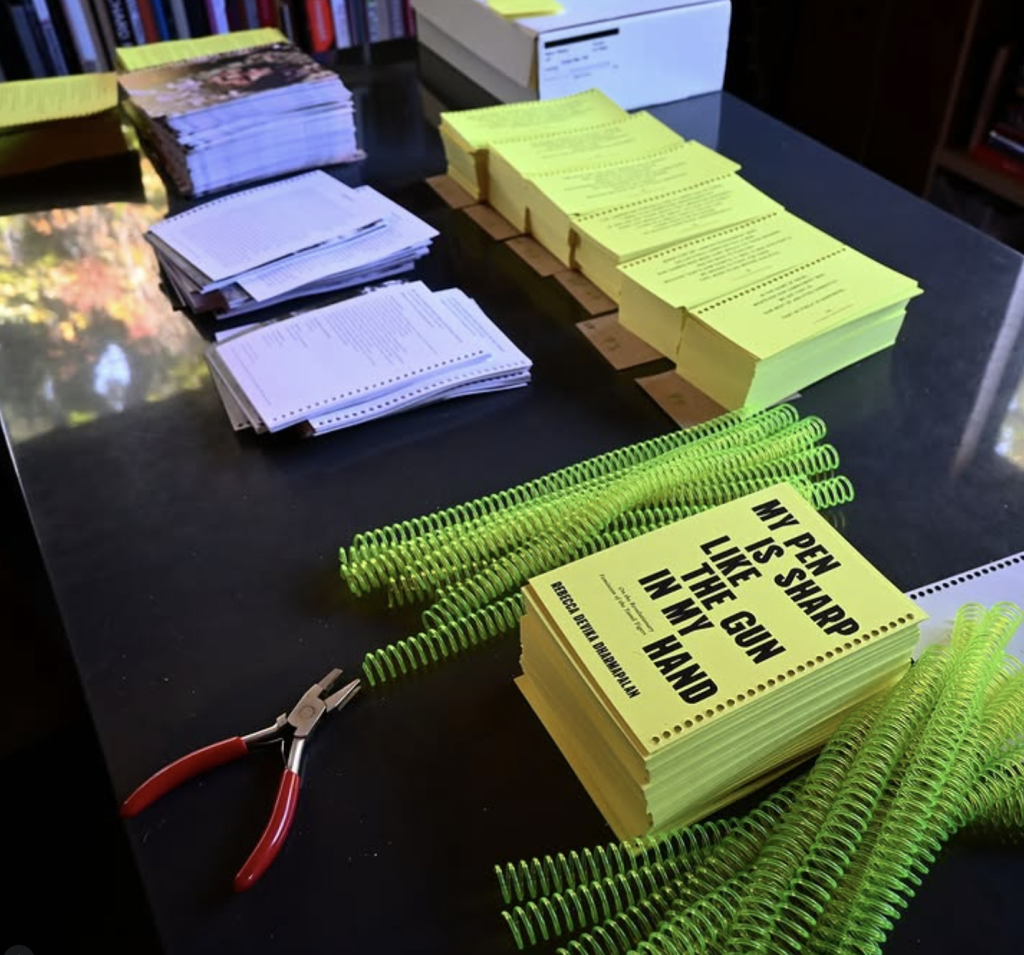
Vivian: There was one moment where the coils I use for binding, the one place that sells them was going out of business. This was right around when the tariffs hit. Everyone was freaking out, and that鈥檚 the kind of thing most people don鈥檛 think about. Thankfully the company was bought. But it鈥檚 the kind of thing that reminds you how fragile the production side actually is. I mostly print locally now, within the state, so I鈥檓 not as exposed to international shipping and oil price shifts. But it鈥檚 an ongoing roller coaster, and everyone is on it together.
Anita: Okay, brag a little. Tell me about a recent book you鈥檙e proud of and how it got made.
Vivian: is the one. Helen is a Bay Area-based artist, writer, and naturalist who works in computational literature, and she鈥檚 been obsessed with coyotes. We were trying to figure out how to do a die cut, and I ended up getting a Cricut cutter to make it happen. Usually I鈥檓 pretty involved in the design, but for this one Helen had a clear vision because it鈥檚 her writing and drawings.
She鈥檚 interested in the coyote not just as the animal, but as a symbol of thriving on the margins, of existing in different spaces. She鈥檚 thinking about immigration, migration, surviving despite being one of the most hunted-out animals and being considered pests. The drawings are gorgeous. We wanted the book to feel like a field notebook, hence the spiral binding. You can take it out with you and lie in a piece of grass and read it.
Anita: If indie publishing keeps growing at this pace, what does the landscape look like in a few years? Mainstream? Still niche?
Vivian: A lot of these projects will stay small, just because people are working within the resources and means they have. Projects change all the time. Some people will do this for years and then stop and do something else. The level of production is just not at the scale of mainstream publishing. It鈥檚 hard to imagine these books suddenly being everywhere in every bookstore.
But that鈥檚 part of the appeal, it refuses to be large. What I hope to see is some book thing happening every weekend because it鈥檚 about the person-to-person relationships. The scene is just a bunch of punks, this mashup of freaks and geeks. That鈥檚 where the community is.
This interview has been lightly edited for length and clarity.
was produced by and reviewed and distributed by 爆料TV.