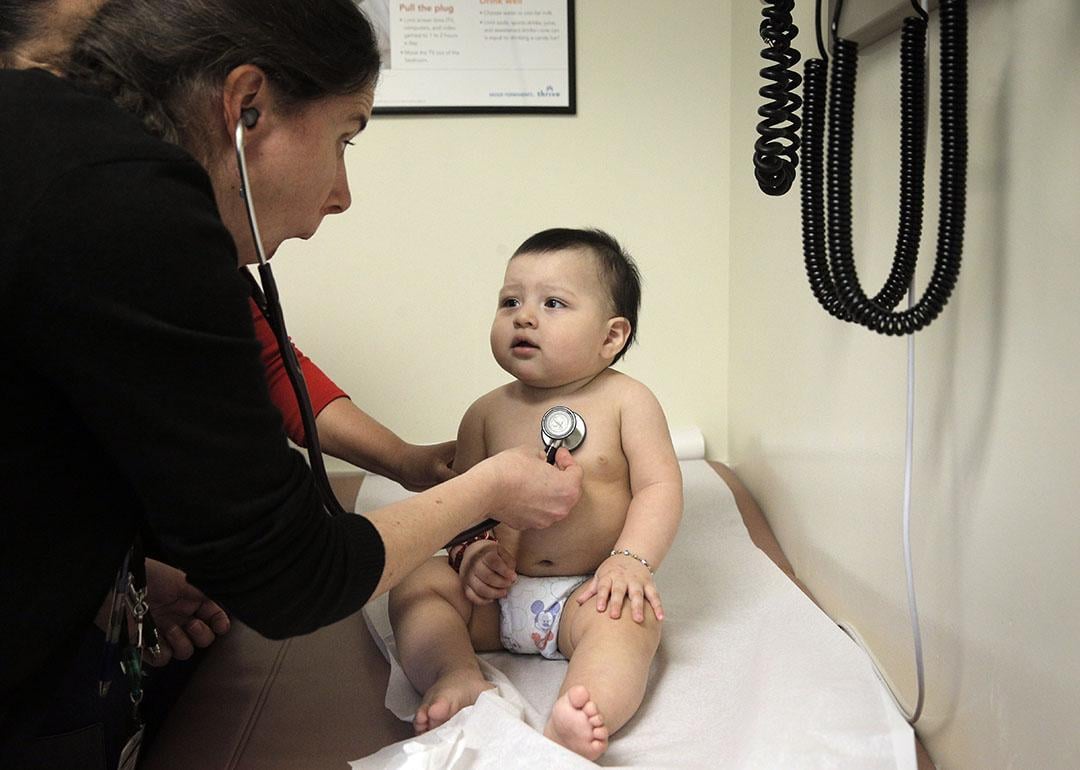
High uninsured rates and anti-immigrant rhetoric are contributing to health care disparities in Hispanic and Latino communities
High uninsured rates and anti-immigrant rhetoric are contributing to health care disparities in Hispanic and Latino communities
Georgia ranks second worst in the nation for Hispanic health care, with high rates of uninsured adults and children, according to a by The Commonwealth Fund.
The report used data for 24 health indicators from 2023 and 2024 to rank how states鈥� health systems perform for different racial groups.
Poor access to care and low quality of services drove Georgia鈥檚 48th-place ranking for Hispanic health. Only Arkansas had a worse score. (There was insufficient data to rank Vermont and Tennessee; Washington, D.C., ranked second).
broke down the challenges contributing to health care disparities for the Hispanic and Latino population in Georgia.
In Georgia, 40% of Hispanic adults are uninsured, compared to 23% nationwide. Likewise, 18% of Hispanic children are uninsured, compared to 10% nationwide.
That can make it hard to get care, said , senior scientist at , a private foundation that conducts health research and promotes health equity. Only 56% of Hispanic children had age-appropriate medical and dental care visits, lower than other ethnic groups in Georgia.
About 1.1 million Hispanic people live in Georgia, about 11% of the state鈥檚 population. The segment has grown by nearly a third since 2010, according to published by the Latino Community Fund and Neighborhood Nexus in 2024.
Still, the state鈥檚 Hispanic residents have better health outcomes on some indicators than other groups.
For example, Hispanic and Asian American people have much lower breast cancer death rates (at 10 per 100,000 female population) than Black and white Georgians.
That鈥檚 an example of what health researchers call the : 鈥淗ispanic people, in general, have a hard time accessing care, but they also have better health outcomes,鈥� Radley told Healthbeat.
One factor may be age: Georgia鈥檚 Hispanic population is younger than the state鈥檚 overall population, Radley said.
The median age for Georgia鈥檚 Hispanic population is 27.7, compared to , according to U.S. Census data.
Gigi Pedraza, executive director of the Latino Community Fund, said, 鈥淧eople from Latin America that migrate to the U.S. (and in general most immigrants) have better health outcomes that decline the longer we stay in the U.S.鈥�
Once here, they may lack , have less physical activity, and face social and economic stressors, she said.
Many Hispanic people in Georgia are self-employed, may work and cannot afford health insurance. They often due to their immigration status.
Undocumented immigrants are not able to purchase insurance through the Affordable Care Act or qualify for Medicaid or Medicare in Georgia. The One Big Beautiful Bill passed by Congress and signed by President Donald Trump in July further restricts Medicaid eligibility for many lawfully present immigrants, such as refugees, asylum seekers, and survivors of domestic violence and trafficking.
Anti-immigrant rhetoric and fear about deportations also has contributed to , Pedraza said.
鈥淧arents feel it is not for their families, they cannot trust the system or their decision-makers,鈥� she said.
Asian Americans had the best overall score in Georgia, indicating better health care access, quality, and outcomes, followed by white people.
Health disparities persist for Black Georgians
Health system performance for Black Georgians was slightly better than other states鈥�, but Radley said.
鈥淭ragically, this is reflected across the age continuum,鈥� said Dr. Harry Heiman, a professor at the Georgia State University School of Public Health.
For example, 10.7 Black infants per 1,000 live births die in Georgia, similar to the 10.9 rate for Black people nationally. But that鈥檚 more than double the rate for white infants in Georgia, Radley said.
Likewise, while Black women have high rates of screening for breast cancer, Black women at higher rates than other racial groups.
Sixteen percent of Black adults in Georgia are uninsured, compared to 12% nationally.
People skipping health care due to costs
Overall, health care costs appear to be one driver of poor outcomes in Georgia, in line with nationwide trends.
Rates of people who skipped care because of cost hit record lows in 2021 and 2022, according to The Commonwealth Fund report. That was likely due to pandemic-era policies, such as enhanced premium tax credits for ACA insurance plans and continuous enrollment for Medicaid, Radley said.
Now those numbers have started to increase again nationwide.
High uninsured rates and lack of access to care affect many Georgians, regardless of their race, Heiman said, and reflect 鈥渟ystem and structural-level failures that affect all Georgians.鈥�
Georgia is one of 10 states that .
In Georgia, 17% of Black adults, 29% of Hispanic adults, 13% of white adults, and 10% of Asian American adults skipped care because of cost, according to data from 2023 and 2024.
And that was before recent policy changes that have led to an increase in the number of people without health insurance, Radley said.
More than have lost health insurance due to increased costs for ACA plans after a tax credit expired in December.
was produced by and reviewed and distributed by 爆料TV.