The rise of the senora: Why Latines are reclaiming ancestral slow living practices
The rise of the senora: Why Latines are reclaiming ancestral slow living practices
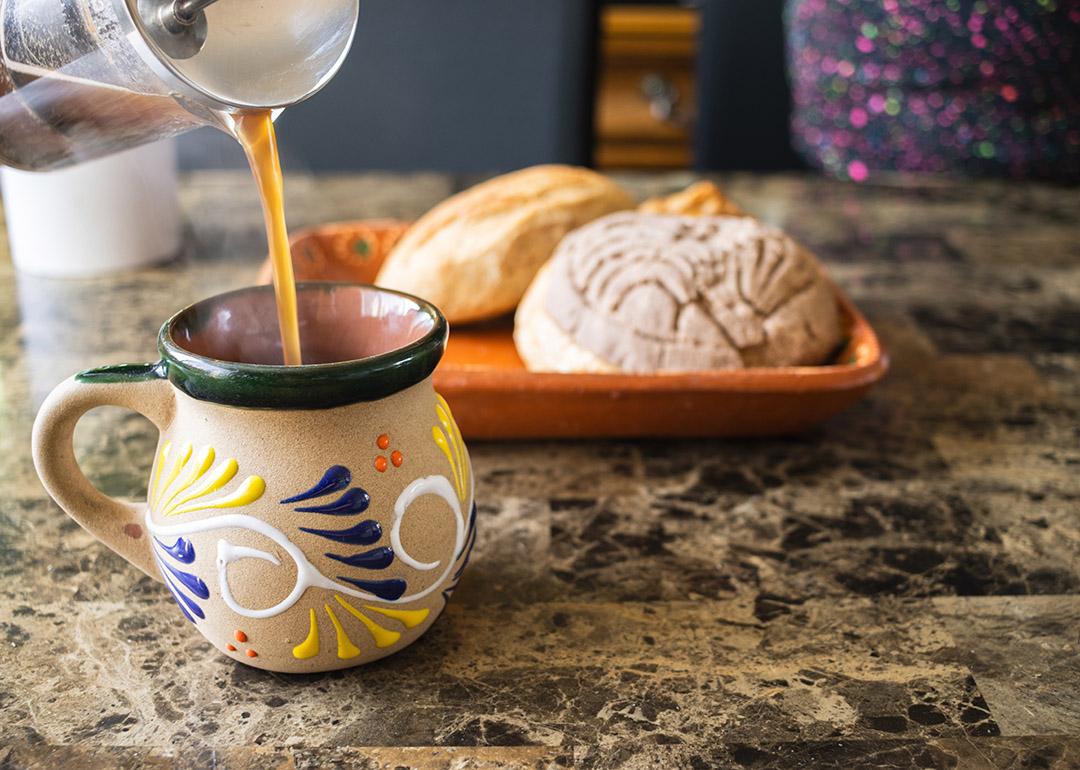
Picture this: It鈥檚 morning, and you鈥檝e woken up with the sun in time to hear the birds sing their morning songs. You put on your slippers and robe to make yourself a cafecito and peer out your window to watch people starting their days and, hopefully, catch the latest neighborhood chisme. Then, maybe, you tend to your garden, or sit in your favorite chair to read for a bit, or turn on some old school tunes to sweep the house.
Such is the idealized morning routine of a se帽ora, an older Latin woman, typically an aunt, mother, or grandmother鈥攕low and restful, drinking in every moment of the day with tranquility, as explored. It鈥檚 a life that Latines have traditionally lived for centuries. A life that, in the plight of immigration to the United States and other Western countries, dissipates and is replaced by a relentless hustle culture for those working to provide for their families. Here, rest and self-care have become a luxury for immigrants and Latines across the country, who make up 18% of the but have to work harder for less. In 2022, Latinas working full-time were $0.57 for every dollar earned by white, non-Hispanic men.
And yet, in many regions across Latin America, rest is embedded into the fabric of society. Most famously, this manifests in the form of the afternoon siesta. It鈥檚 not uncommon for businesses to close down for a few hours in the middle of the workday to allow people to recharge and reconnect in order for them to then continue on in a healthy and productive manner. But this practice doesn鈥檛 translate in the United States, where work鈥攁bove all else鈥攊s the priority. For many Latines living or working in the U.S., healthy rest and slow living practices have become a thing of the past.
Every year, Americans are losing more sleep on average than they did the year before as a result of warmer nights, , and worsening stress levels. It鈥檚 a worrying trend that disproportionately affects BIPOC communities. While most adults require a minimum of between seven and nine hours of sleep per night, about Latines sleep less than seven hours on average. Mexican Americans are losing sleep the fastest, experts say, at more than double the rate of non-Hispanic white Americans.
The systemic sleep deprivation of Latines is perhaps best visualized by photographer Alejandro Cartagena, who, between 2011 and 2012, documented Mexican construction workers squeezed in the beds of trucks on their way to work. The series, titled 鈥�,鈥� shows workers sprawled among their tools, catching some extra sleep, using their shirts to cover their faces, or even cardboard as makeshift blankets. The truck is their last chance to get some shut-eye before they start their day, likely not to lie their head on a pillow until much later that night.
For many Latine immigrants working minimum-wage jobs, hustle has become a necessity rather than a choice. For them, a siesta, or any time for self-care, could mean taking away crucial dollars that help put food on the table.
Researchers in Nogales, Arizona, are investigating how social circumstances impact sleep for Latines along the U.S.-Mexico border, who make up 80% of the county鈥檚 nearly 48,000 residents. The research is being carried out as part of the Nogales Cardiometabolic Health and Sleep Study (NoCHeS) to better understand how border contexts shape sleep patterns in the region, and to show just how crucial sleep is for our overall health. 鈥淪leep is one of the ways in which we embody the world around us,鈥� said Dr. Michael Grandner, director of the Sleep and Health Research Program at the University of Arizona and coprincipal investigator on the study. 鈥淲hen we [lie] down to sleep 鈥� all the things our body interacts with physically, emotionally, mentally, [and] spiritually [get] integrated into who we are.鈥�
Sleep is so crucial to our embodied well-being that a lack of rest can be a matter of life and death. One of the long-term is a weakened immune system, which increases the risk of developing diabetes and heart disease. For Latines living on the border, researchers are finding a multitude of socioeconomic factors play into their ability to get a good night鈥檚 sleep, including family dynamics, acculturation, work stress, and militarization along the border.
One of the metrics that NoCHeS studies is 鈥淎mericanness鈥� and 鈥淢exicanness.鈥� As a measure of acculturation, 鈥淎mericanness鈥� and 鈥淢exicanness鈥� work as two axes that help determine how closely an individual feels they fit into U.S. society. 鈥淎mong people of Mexican descent living around the U.S. border, Americanness has some benefits, but also has some risks,鈥� said Dr. Grandner. 鈥淲e鈥檙e finding that people who are scoring higher on Americanness are more likely to access medical care or have better socioeconomic prospects, but they also have more insomnia. They鈥檙e sleeping less, have more sleep apnea symptoms, and their overall sleep quality is worse. There鈥檚 something going on in that cultural transition that isn鈥檛 just a benefit.鈥�
This sentiment of needing to acculturate reverberates throughout immigrant communities living in the U.S., many having sacrificed certain aspects of their own culture in order to fit into an imposed 鈥淎merican鈥� lifestyle. The impacts can be felt generationally too. 鈥淵ou have families with multiple generations of their own families or multiple people all living under one household,鈥� said Patty Molina, senior director of community health services at Mariposa Community Health Center. 鈥淭hat鈥檚 a lot of stress that is put on the main head of the household.鈥� This stress can be passed down as older generations retire and younger generations enter the workforce, taking on the role of supporting their immediate family鈥攁nd sometimes even distant members who have remained in their home countries.
It鈥檚 no wonder, then, that some Latines want to launch their se帽ora eras early; those desperate to break cycles of stress and overworking, and instead step into the chanclas of their elders. Today, a new generation of Latines is set on rewriting such narratives, and returning to ancestral ways of living slowly鈥攁 call to their 鈥渟e帽ora eras.鈥�
The COVID-19 pandemic, which forced much of the world to slow down and remain in their homes, launched the se帽ora era trend on social media. Today, the hashtags and have amassed 19.2 million and 1.5 million views, respectively, on TikTok alone. It also kick-started the , Se帽ora Era, which has garnered over 50,000 amigas looking to pursue the slow, se帽ora life. It鈥檚 what inspired Brooklyn-based, Mexican American roommates Jaqueline Padilla and Alexis Mendias to create 鈥淐ity Se帽oras,鈥� a social club born from a conversation they鈥檇 had in their kitchen about bringing together young Latines seeking to set their se帽ora eras into motion.
鈥淚鈥檓 done with my girl boss era,鈥� Mendias told Atmos, 鈥淎t least, for now.鈥�
City Se帽oras hosted its first event in August, and according to Mendias, it was 鈥渧ery humbling鈥� almost no one came.鈥� That was when they decided to harness the power of social media鈥攖o put themselves out there online, reach a wider, like-minded audience, and build a community beyond their kitchen. The impact was immediate. The subsequent events saw dozens of se帽oras, all ready to bask in self-care and community. 鈥淸City Se帽oras] is a group that鈥檚 been needed and that鈥檚 why so many people have shown up,鈥� said Padilla.
Padilla and Mendias recognize the importance of prioritizing oneself in order to better serve the whole, and that鈥檚 one of their hopes for the se帽oras in the group. 鈥淭aking a step back to help restore yourself can help you move so many more steps forward versus continuing to be an ox and work, work, work until you burn out,鈥� said Padilla. 鈥淸At the end of the day,] you don鈥檛 want to put any burden on others for how you feel. This being a social self-care club, you recognize that you need to care first for yourself before you can serve others or serve your community.鈥� The hope for the group is to expand to cities across the country and to support as many small, local, Latine-owned businesses as possible along the way.
More than a trend, the 鈥渟e帽ora era鈥� is a movement鈥攁 reminder that rest, and slowing down as a return to self, is crucial. And beyond that, it鈥檚 a reclamation of ancestral ways of living, a to the colonizing mindset that positions our worth as conditional on our contributions to a neoliberal, capitalist society reliant on overworking underserved communities. Tricia Hersey, founder of the , said it best: 鈥淲e can imagine a new world. A new world is possible, but it鈥檚 not going to come from exhaustion.鈥�
was produced by and reviewed and distributed by 爆料TV.