These refugees are developing a first-of-its-kind community land trust in San Diego
When Ramla Sahid was five years old, she and her family fled Somalia to escape the civil war that had engulfed the nation. Nearly 35 years later, living in San Diego as a refugee, she鈥檚 working to create what might be the country鈥檚 first community land trust for immigrant and refugee families, reports.
In 2015, Sahid founded the (PANA), a nonprofit staffed by refugees and working toward building economic, social and civic power for refugees and displaced communities around San Diego.
Using from philanthropist MacKenzie Scott, the California Endowment and the state government, the organization secured 2.2 acres of land in San Diego鈥檚 rapidly gentrifying, highly diverse City Heights neighborhood in 2023.
Now, the nonprofit is working to raise an additional $4 million to develop a multipurpose 鈥淕lobal Village鈥� campus featuring affordable housing, child care, small business incubation, and other resources for the region鈥檚 refugees, asylum seekers and immigrants 鈥� with residents owning and controlling development.
鈥淲e need more land to be out of private hands and into community hands so we can foster self-determination and belonging for refugee immigrant communities,鈥� Sahid says. 鈥淪o we don鈥檛 have to give up who we are, culturally and as a community. And we can build our cultures and our practices into these civic spaces.鈥�
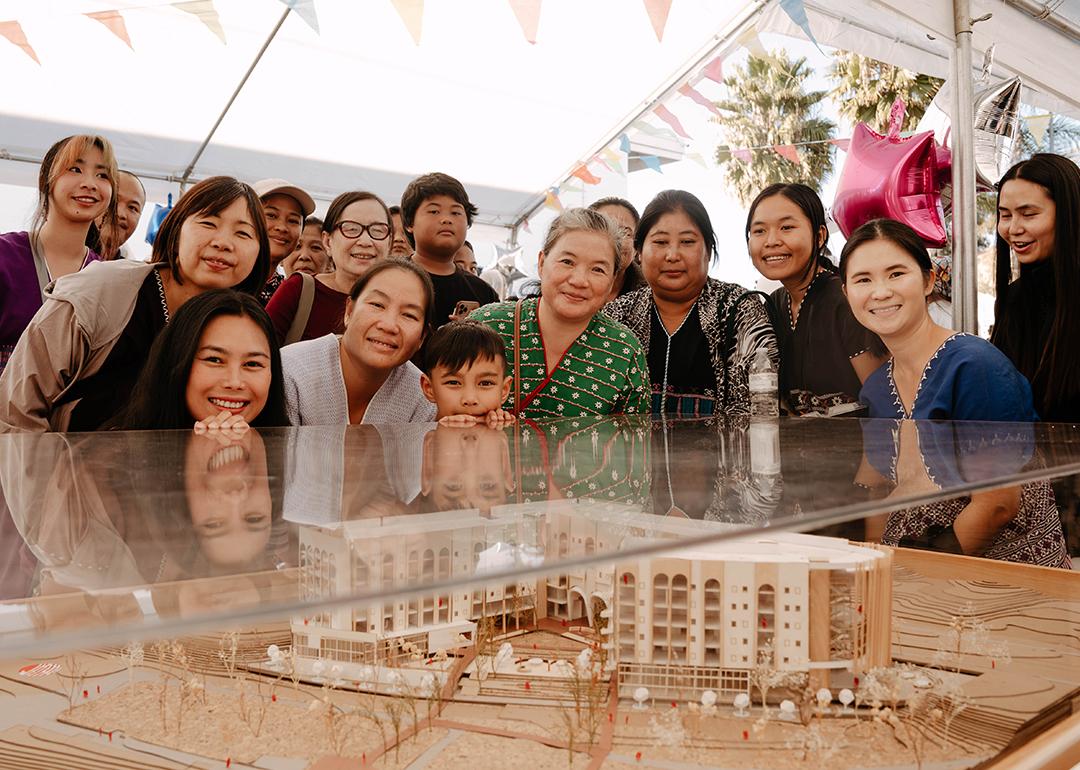
Plans for project were designed in partnership with more than 2,000 community members who migrated from Somalia, Afghanistan, Mexico, Burma, Thailand, Cambodia and other nations. Local immigrants held discussions, created drawings and played with models to inform the design.
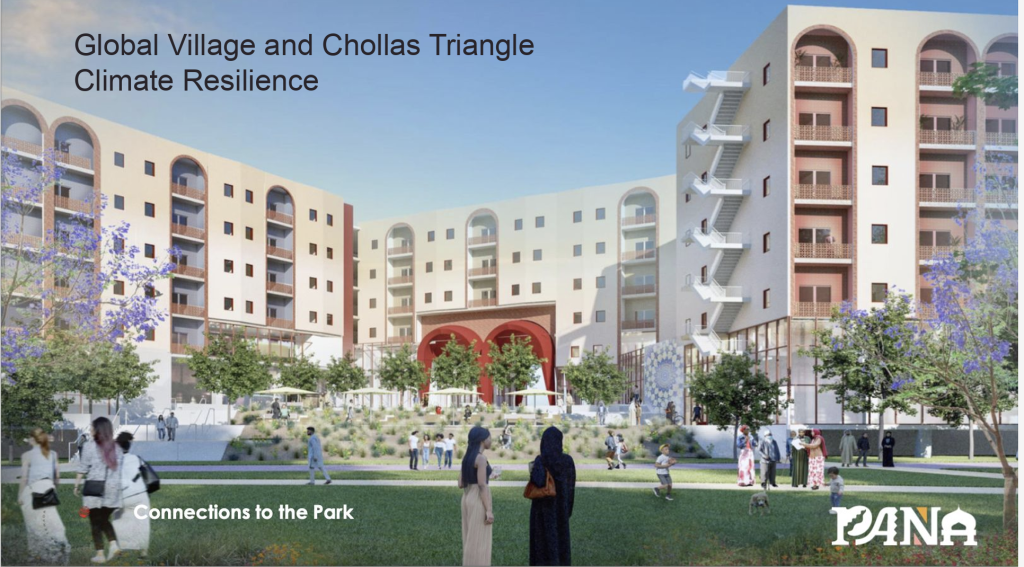
Their collective vision: 167 units of larger affordable housing, transitional housing for migrants and asylum seekers, a market for small business incubation, a community convening space, emergency services, and a nonprofit hub offering child care and other wrap-around services.
鈥淗ousing insecurity is becoming more and more of a challenge in terms of being able to remain [in San Diego], and that is also impacting our organization鈥檚 ability to remain in the historic communities we鈥檝e been in,鈥� Sahid says. That鈥檚 important for a vulnerable population that has already faced displacement at least once.
鈥淚t鈥檚 not just the housing crisis,鈥� she adds. 鈥淐ommercial spaces are also becoming increasingly expensive. So all of that work of trying to fight for fair housing, trying to promote an equitable development that supports low-wage workers in securing affordable housing and protecting tenants who are at risk of displacement is absolutely essential.鈥�
San Diego is already , according to a 2024 study from Chapman University. The region is also home to one of the largest populations of refugees and asylum seekers in the state, with over 30,000 refugees having been resettled in the San Diego region since 1975, according to the .
According to a 2023 report from the , nearly 22% of San Diego County鈥檚 population is made up of immigrants, refugees and asylum seekers, making it the ninth-highest total immigrant population among all U.S. counties.
Sahid says that the idea for the Global Village emerged from the , when PANA conducted outreach to more than 47,000 African, Arab, Middle Eastern, Muslim and South Asian residents across San Diego鈥檚 Mid-City neighborhood to encourage participation. The organization also sought residents鈥� input on how to address the unique needs of the community.
Muna Shatow, who immigrated to the U.S. with her family from Somalia in 1999, hopes that the Global Village will not only serve as a space for businesses, food and the arts, but also a place for wellness and communal gathering that meets the unique needs of refugees.
Shatow has worked with the Partnership for the Advancement of New Americans for the past three years. She says that housing is one of the most important issues for the organization鈥檚 beneficiaries, as extremely long wait times for affordable housing are a common obstacle for refugees. According to County of San Diego data, applications for Section 8 housing can take or more before space opens up.
鈥淚t鈥檚 so hard to be patient when you鈥檙e placed on a waiting list for years,鈥� Shatow says. 鈥淚t鈥檚 so expensive that you can hardly find a place to rent. My friend now lives in a one-bedroom apartment that costs $2,500 [a month]. It鈥檚 horrible. Everywhere it鈥檚 high. Life right now is so hard in San Diego, but when you have more low-income and affordable housing, there will be better futures for families.鈥�
Besides a growing affordability crisis and a housing shortage, immigrant communities are also faced with an openly anti-immigration federal government that is to more than 30 countries and nationally.
鈥淚CE is taking everybody and anybody. It鈥檚 not only refugees, it鈥檚 everybody now,鈥� says Shatow. Back in 2008, she was detained by ICE for several hours along with her infant daughter. Shatow says local immigrant and refugee communities are once again living in a state of fear. 鈥淭hey [the government] make us fearful to talk 鈥� Every time we go out, we take our ID.鈥�
This past fall, ahead of a planned immigration enforcement campaign in Minnesota, President Donald Trump against Somali immigrants in a racist tirade, calling them 鈥済arbage鈥� who 鈥渃ontribute nothing鈥� to the country. He also suggested all Afghan arrivals should be halted, vowing to 鈥減ermanently pause migration from all Third World Countries to allow the U.S. system to fully recover, terminate all of the millions of Biden illegal admissions 鈥� and remove anyone who is not a net asset to the United States.鈥�
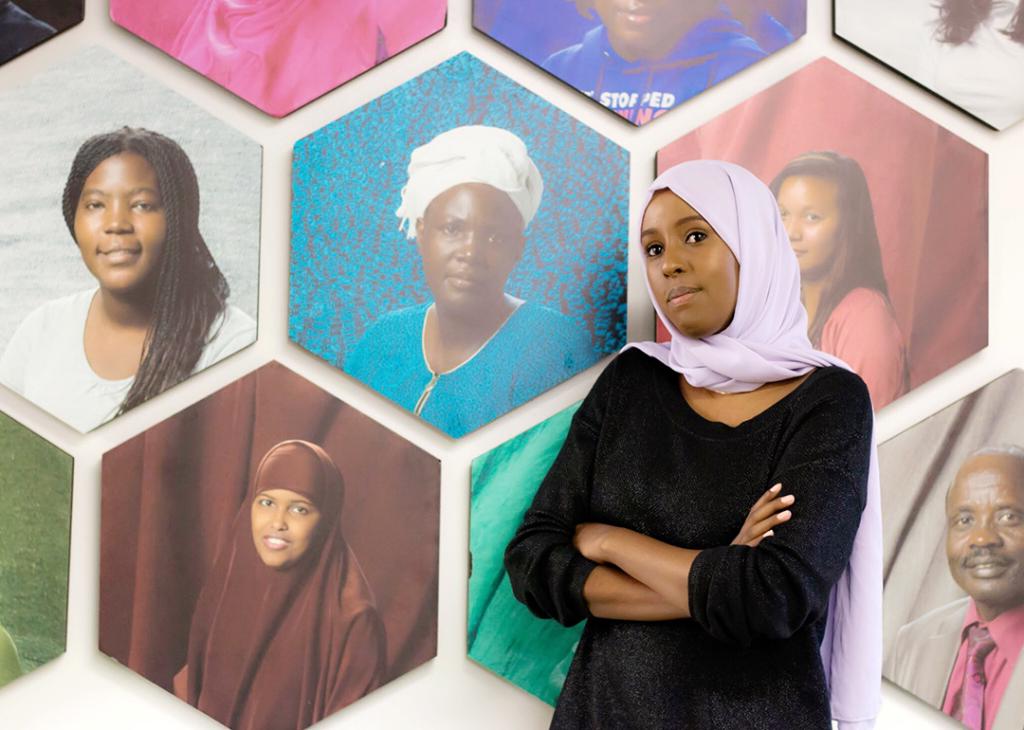
Sahid, pictured above, says the only solution is connecting with one鈥檚 neighbors and building community power, both of which are second nature to immigrant and refugee communities like the one she grew up in.
In 1993, after a brief stint in Texas, her family resettled in San Diego鈥檚 City Heights neighborhood. 鈥淲e resettled in a very culturally rich and diverse community,鈥� Sahid says. 鈥淐ity Heights at that time had already had a very established and rich history of resettling refugees from Vietnam, Cambodia and other parts of Southeast Asia, including Laos. And then Ethiopians, and the next wave was the Somalis, [like] my family in the early 90s.鈥�
Growing up in a diverse immigrant community concentrated in a neglected part of the city wasn鈥檛 without conflict, she says, but residents also showed remarkable unity as they came together to fight for their shared needs.
鈥淵ou had the African and Latino moms organizing the school district to make sure we got what we needed,鈥� she says. 鈥淭he immigrant experience of fighting together, fighting each other sometimes, but also fighting together to create a beautiful neighborhood 鈥� that is how we know to survive.鈥�
was produced by and reviewed and distributed by 爆料TV.