The data invasion: How AI is changing sport from the Premier League to the local pitch
The data invasion: How AI is changing sport from the Premier League to the local pitch
Somewhere in an NBA arena, a system noticed something. LeBron James was dipping his shoulder on left-side three-pointers. Not on the right. Not anywhere else. Only there. He hadn't known. Neither had his coaches. The AI had seen what none of them had.
It was not an isolated case.
鈥淚t鈥檚 definitely picking up. There鈥檚 the whole 鈥楳oneyball鈥� thinking about winning with data, a lot of teams are spending a lot of energy trying to use data to their advantage,鈥� said Sander Christophersen, vice president of product at Veo, a Copenhagen-based AI sports analytics and broadcasting startup.
鈥淲e're seeing that the game is changing now. All the players obsess about their metrics.鈥�
In an industry more than half a trillion dollars, the margins for error have always been small. AI is making them smaller.
Below, explores how artificial intelligence is reshaping performance, strategy, and fan experiences across professional and amateur sports.
Leveling up the world鈥檚 best
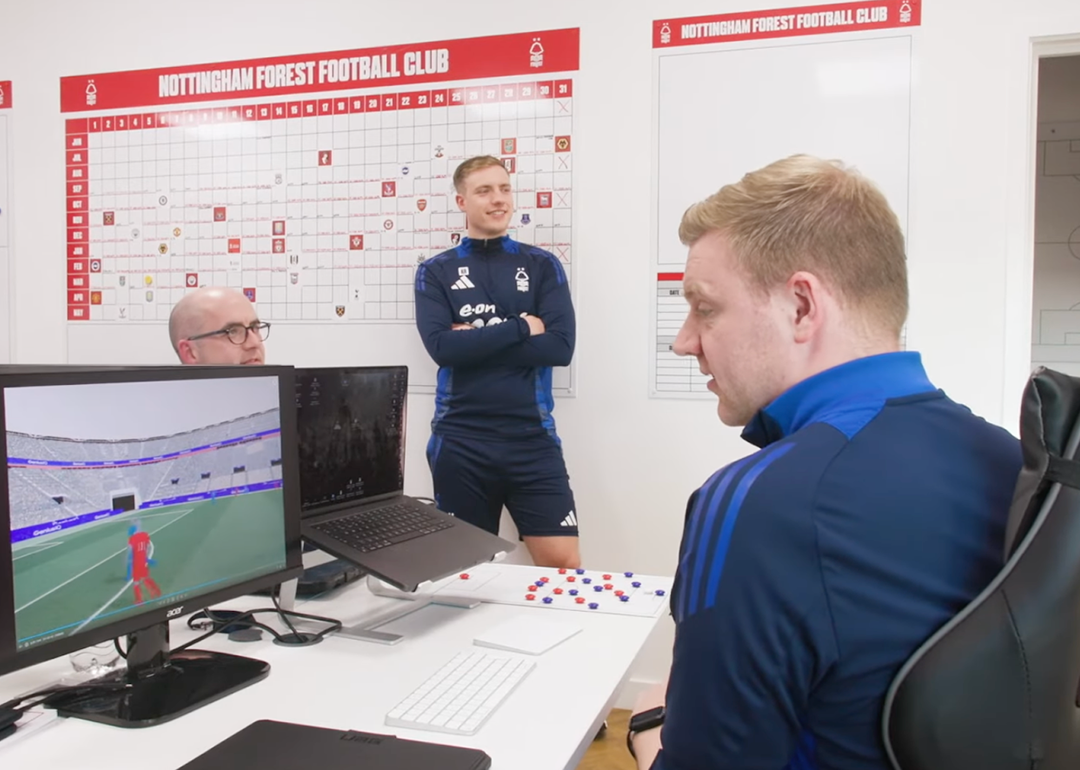
One of the MVPs in AI sports solutions is Genius Sports, founded in 2000 and headquartered in London and New York. The company says its software is used by sports clubs around the world, including every team in the Premier League, the NBA, and the WNBA.
Matt Fleckenstein, the company鈥檚 chief product and technology officer, said coaches and players are becoming increasingly reliant on its AI performance analytics tools.
鈥淟et鈥檚 say I want to see every time that the defense was in this particular shape, or every corner play that we ran right. [With Genius] you can quickly query all of this video,鈥� he said.
鈥淵ou can see these rich analytics about what happened on that play and what happens typically in those scenarios, so that you can strategize. Maybe Crystal Palace has an upcoming game against Bournemouth 鈥� it will help answer: 鈥楬ow should we line up? What's our best opportunity to exploit them off the corner?鈥欌��
The tools work at the individual level too. Fleckenstein said LeBron James used Genius Sports' software to identify a flaw in his shooting form that had gone undetected.
鈥淗e was dipping his shoulder when he was shooting from the left side of the floor, and he wasn't doing that anywhere else. He was only able to get at that rich data about his form right from our performance studio tool,鈥� he said.
The beAIutiful game?
Until recently, the benefits of AI were only available to the pro teams with the deepest pockets. Now, thanks to changing economics in AI infrastructure and some clever engineering, it鈥檚 making its way down to the little leagues too.
Copenhagen-based Veo, which develops live streaming and AI analytics products for smaller teams, was launched after its cofounder Keld Reinicke was once late to one of his 10-year-old son鈥檚 football matches and missed his big moment.
鈥淗is kid scored a goal, and he wasn鈥檛 there to see it, and he was devastated by that,鈥� said Christophersen.
Veo's technology automatically can pull analytics from match footage 鈥� tracking passes, shots on goal, and movement patterns 鈥� while simultaneously live streaming games for friends and family of the next generation of Lionel Messis to watch from anywhere.
Part of what made that shift possible is cost. 鈥淭he price of compute is definitely a big thing. It鈥檚 now possible for us to have our own cluster running with our own GPUs, and bring the cost of training our AI models down,鈥� said Christophersen.
But Veo鈥檚 success points to something the sports world is only beginning to reckon with. While making the pro experience available to more people, AI analytics may be threatening some of sport鈥檚 high-risk, high-drama highlights, like the long-range goal in football.
鈥淚f you look at games at a high level, you will see that there are no shots outside the box anymore. It's so rare. Back in the day, people would always take shots from outside the box,鈥� said Christophersen. 鈥淣ow they know that they will get berated by their coach after the game, for trying a low-xG (expected goal) option.鈥�
150 hours a week, 24 cameras a stadium
The broadcast experience is changing too.
During NFL games, color-coded boxes now appear around the quarterbacks, showing which direction their pass is likely to get disrupted from, based on real-time AI analysis of live footage.
鈥淔an experiences like this require that the AI is very fast: that it's able to process footage dynamically and then render it in time for the three-second delay for broadcast,鈥� explained Jason Corso, cofounder and chief science officer of Voxel51, a Michigan-based startup that develops a platform to maximize the performance of vision models that use huge amounts of data.
Genius Sports, across just the NBA, WNBA, and Premier League, films around 150 hours of live sport every week during peak season, with 24 cameras installed in each stadium, adding up to 3,600 hours of footage.
Crunching this quantity of data is only part of the challenge, Corso said. Live sport is unpredictable 鈥� a more eventful game generates more inference calls 鈥� and handling that volatility means that companies like Genius need two core things from cloud providers.
鈥淗ow quickly can they burst their compute based on demand at any one time? And are their compute resources up to date? Do they have H200s, or B200s (Nvidia's later generation of AI chips)? That's been hard for cloud providers because it's expensive to keep building these data centers,鈥� he said.
Corso added that many of Voxel51鈥檚 customers need cloud resources in their own territories, both to help stay compliant with local regulations like GDPR and to bring down inference costs of shipping data from one place to another with low latency.
Looking forward, Corso said that sports teams will begin using more real-time reinforcement learning to influence strategy midgame. Fleckenstein said AI will be used to create whole new augmented reality experiences in which fans can watch live games where digital twins of players are superimposed onto virtual environments.
What happens on the pitch still matters most. But increasingly, AI is shaping the game itself 鈥� who wins, what fans see, and whether the long-range shot is still worth attempting.
was produced by and reviewed and distributed by 爆料TV.