
Ride it out: How cycling helps kids focus
Jimmy G. was a distracted and disruptive fifth grader.
“In the morning, when he came in, he’d be up in everybody’s business, up and out of his chair, constantly blurting stuff out,” says Amy Young, his science and social studies teacher at Spooner Middle School in the North Woods of Wisconsin. (Unlike most middle schools, Spooner spans fifth through eighth grade.)
But once Jimmy (whose name has been changed to protect his privacy as a minor) started attending a cycling class, Young noticed a dramatic change in the 10-year-old’s behavior.
“After riding, he can sit down, he’s focused, he gets right down to work,” she says. “He’s like a different kid!”
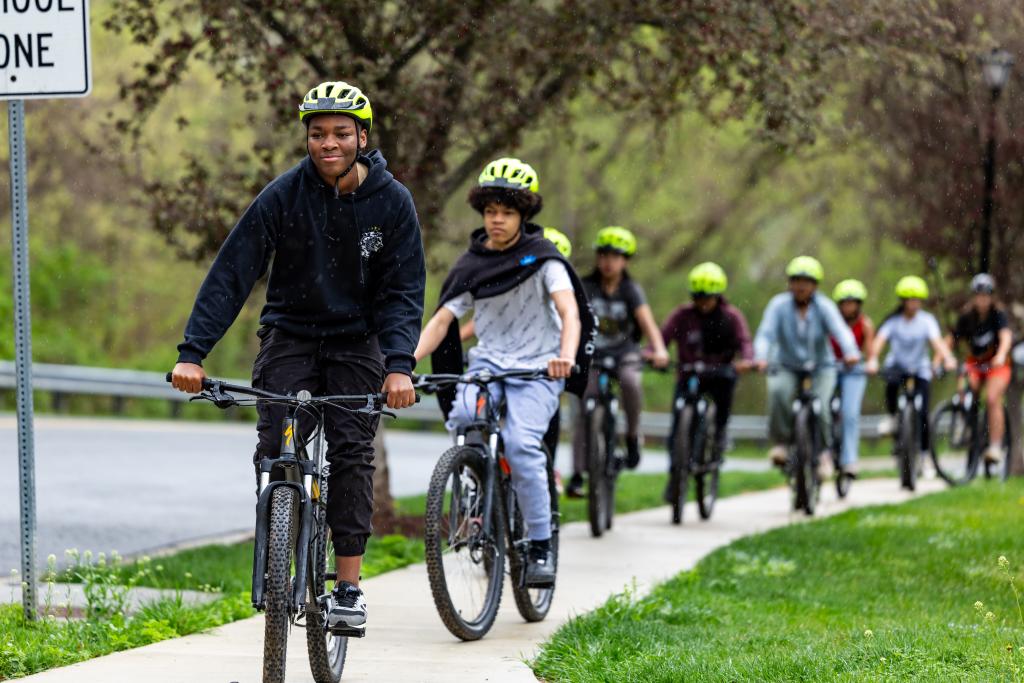
Jimmy has been diagnosed with attention-deficit/hyperactivity disorder (ADHD) and takes medication for it. Even so, cycling makes a noticeable difference in his behavior — which his parents have recognized as well.
Taught by P.E. teacher Ryan McKinney, the class began as part of cycling nonprofit Outride’s program. , formerly the Specialized Bike Foundation, was founded by Mike Sinyard (also the founder of bicycle brand Specialized). Fourteen years ago, Sinyard, who also has ADHD, noticed that going for a bike ride helped him focus. After a ride, he realized, he was more attentive in meetings, for example.
“That really kicked off this bigger idea, ‘Is this something that is unique to him, or is there broader science to back it up?” says Esther Walker, Ph.D., Outride’s executive director — and a cognitive science researcher in her own right. In 2012, Sinyard partnered with RTSG Neuroscience Consulting to launch a pilot project at two middle schools in Natick, Massachusetts to see if integrating cycling into the school day could help kids pay attention and focus. Participating students biked for a half-hour before school, five days a week, for a full month. : Not only did kids with ADHD see symptoms improve, every kid benefited.
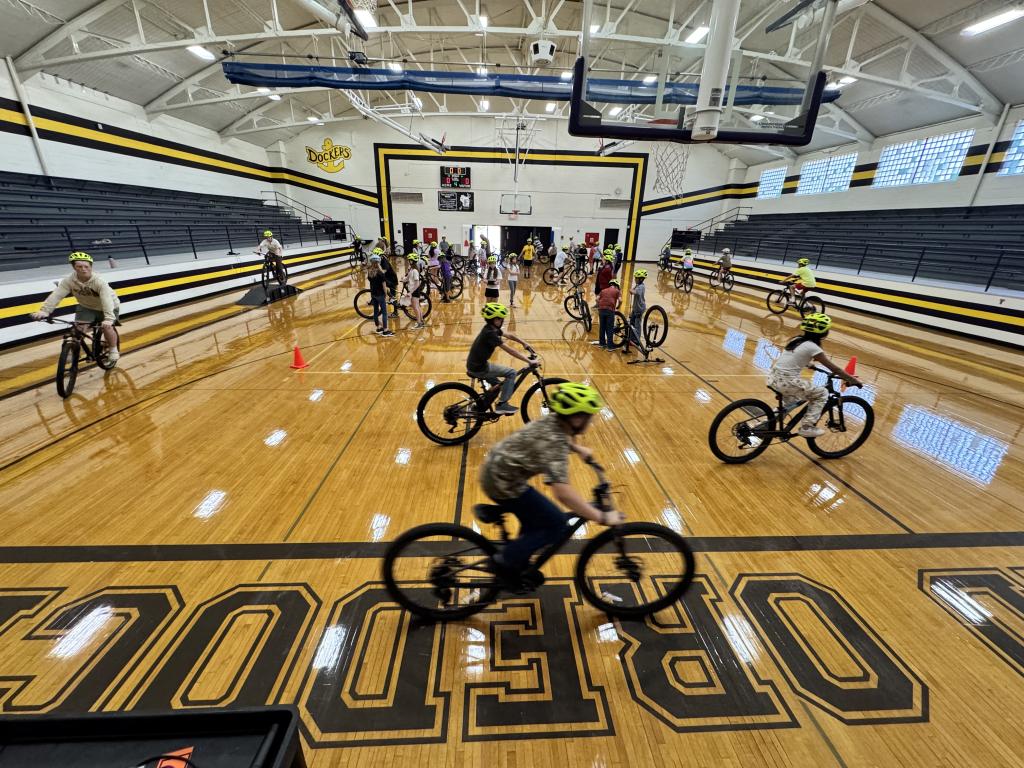
“Teachers saw improvements in focus and better performances in those classes directly after riding,” Walker says. The riding class was widely embraced by the schools’ administrations, teachers, parents — and students.
Buoyed by these results, Sinyard founded the Specialized Foundation in 2014 to spread the word — and cycling classes — to middle schools across the country, reports.
The Foundation announced “Riding for Focus” (R4F) grants in 2015, offering bikes, helmets and annual teacher training events. (In 2019, the Specialized Foundation changed its name to Outride, wanting to bring in other partners and not be associated with just one brand.) Today, the program is in 400 middle schools in the U.S. and Canada. According to Walker, 85% of these are Title I schools or have a free and reduced lunch rate of at least 40%. The exceptions tend to be schools that serve students who have special needs, such as those with dyslexia, ADHD or autism spectrum disorder.
Despite the fact that there are other partners now, the close connection with Specialized has been key to the success of R4F. The company designed the R4F bikes to be robust, so middle schoolers could ride them daily for years.
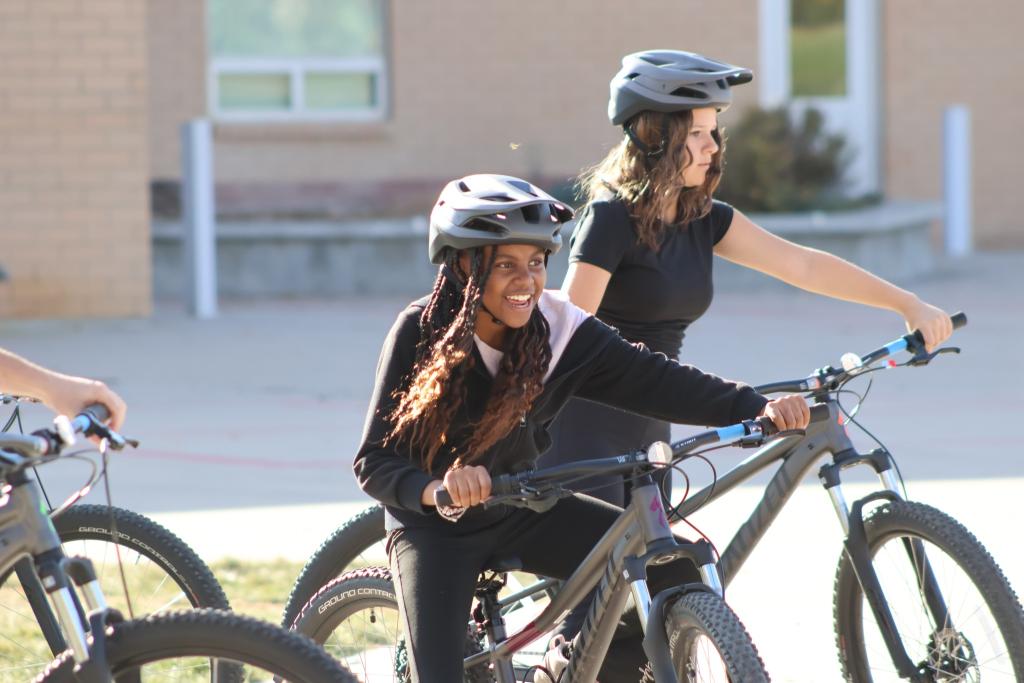
“The bikes are color-coded by size, and have nice big numbers on the seat posts. So the students come in and say, ‘OK: I’m going to be on a blue bike, and, you know, level three for my seat,’’ Walker says. “It really gives them all a level playing field to try the same bikes, learn about shifting bikes safely, and build confidence on the bikes.”
Today, roughly have been diagnosed with ADHD, making it the most common neuro-developmental disorder in this age group.
It’s well-established that exercise has a positive impact on mood and mental health — for all ages. More recent research has shown that exercise in general supports cognitive benefits like increased executive function, focus and self-regulation in children with ADHD.
Some of that research has focused on cycling in particular. Outride has supported multiple studies, including two at Stanford. The first, published in in 2019, pioneered a unique imaging system called functional near-infrared spectroscopy (fNIRS), which can look at blood flow in the brain in real time during exercise. (The device — similar to an MRI — was worn under each kid’s helmet, and plugged into a transmitter tucked into a backpack.)
Building on that research, and also supported by an Outride grant, on teens while they were cycling and found that teens with ADHD showed brain activity patterns that became more like the control group’s while cycling. That said, they also found that when teens with ADHD did mental tasks while cycling, they were still overloaded more easily. However, doing both at the same time also appears to prime the brain for better focus after riding.
Research into the impacts of cycling on the cognition and mental health of teens has also been done by scientists at , and , where Dr. Cynthia Hartung is specifically studying college students with ADHD.
Though there hasn’t been much research to prove that cycling is somehow better than other forms of exercise in supporting cognitive improvements in teens with ADHD, kids of all ages seem to love cycling, so it’s an easy sell.
“Anecdotally, we’ve had teachers tell us that cycling attracts many of their students that typically don’t like P.E. or avoid team sports,” Walker says.
Ultimately, the best type of exercise intervention is the kind that kids actually stick with. Somehow cycling hits that sweet spot of not only being aerobic — which has been shown to support executive function — but also low-barrier and intrinsically motivating. Most teens want to do it because it’s fun and it also provides feelings of independence.
Outride has also been partnering with research institutions abroad, including Edinburgh Napier University in Scotland and Newcastle University in England. These studies aren’t out yet, but initial outcomes are exciting, Walker says.
McKinney at Spooner Elementary initially launched R4F with Outride’s help — getting a fleet of bikes, helmets, teacher training and a full curriculum. Later, he started an after-school Bike Club, which is still going strong. He immediately heard positive feedback from parents. “Some of the parents at the time said things like, ‘My kid is such a different kid on the nights he has Bike Club. Other nights, he’ll be a couch potato. I wish the kid could be in Bike Club every day.”
That got McKinney thinking. Spooner has a daily intervention class for students who need extra help called “What I Need” (WIN for short), that takes place first thing in the morning. Most kids in WIN do an online program that helps with math or reading. McKinney proposed doing a study looking at the impact on cycling and other outdoor sports as a WIN intervention.
In the fall of 2021, he asked teachers to recommend students who struggled with attention, focus or behavior. These students — from fifth and sixth grades — were divided into two groups: 12 would go into McKinney’s daily WIN class (mostly cycling but also some cross-country skiing and snowshoeing in the winter when it snowed too much for cycling). The other 12 would be in a control group — the typical WIN class. (Forty-eight students total participated in the study: 24 in fifth grade and 24 in sixth grade.)
After their 45-minute-long WIN class, students would go directly to their core classes — usually math, science, English or social studies. (The core class teachers were not told who was in which group, although Spooner is a small school so McKinney admits they may have been able to guess.) At the end of that class, the teachers would rate, on a scale of one to four, the kids’ level of focus, and each kid would write down their own evaluation. Students also took a standardized test called FastBridge three times over the course of the year to evaluate their comprehension in reading and math. The results were astonishing. In math, the kids in the cycling intervention group improved, on average, twice as much as kids in the control group. In reading, they improved nearly twice as much. On average, the cycling group required much less office discipline, too.
McKinney kept track of data for three years in a row, and now he’s compiled enough evidence to keep cycling in school revved up for good. Though his cycling-before-school WIN class is no longer supported by Outride, the school has now integrated cycling into its curriculum. Spooner also received one of Outride’s Community Impact Grants to support a pump track and bike skills park at the school, as well as an additional one a few years later that funded fat tire bikes.
According to Walker, many teachers who initially receive an Outride grant take the idea and well, ride. McKinney at Spooner is a good example.
“The Riding for Focus program is often the spark that gets schools going, and over time they adapt and add more in — like after school clubs, trails and so on.”
was produced by and reviewed and distributed by ±¬ÁÏTV.