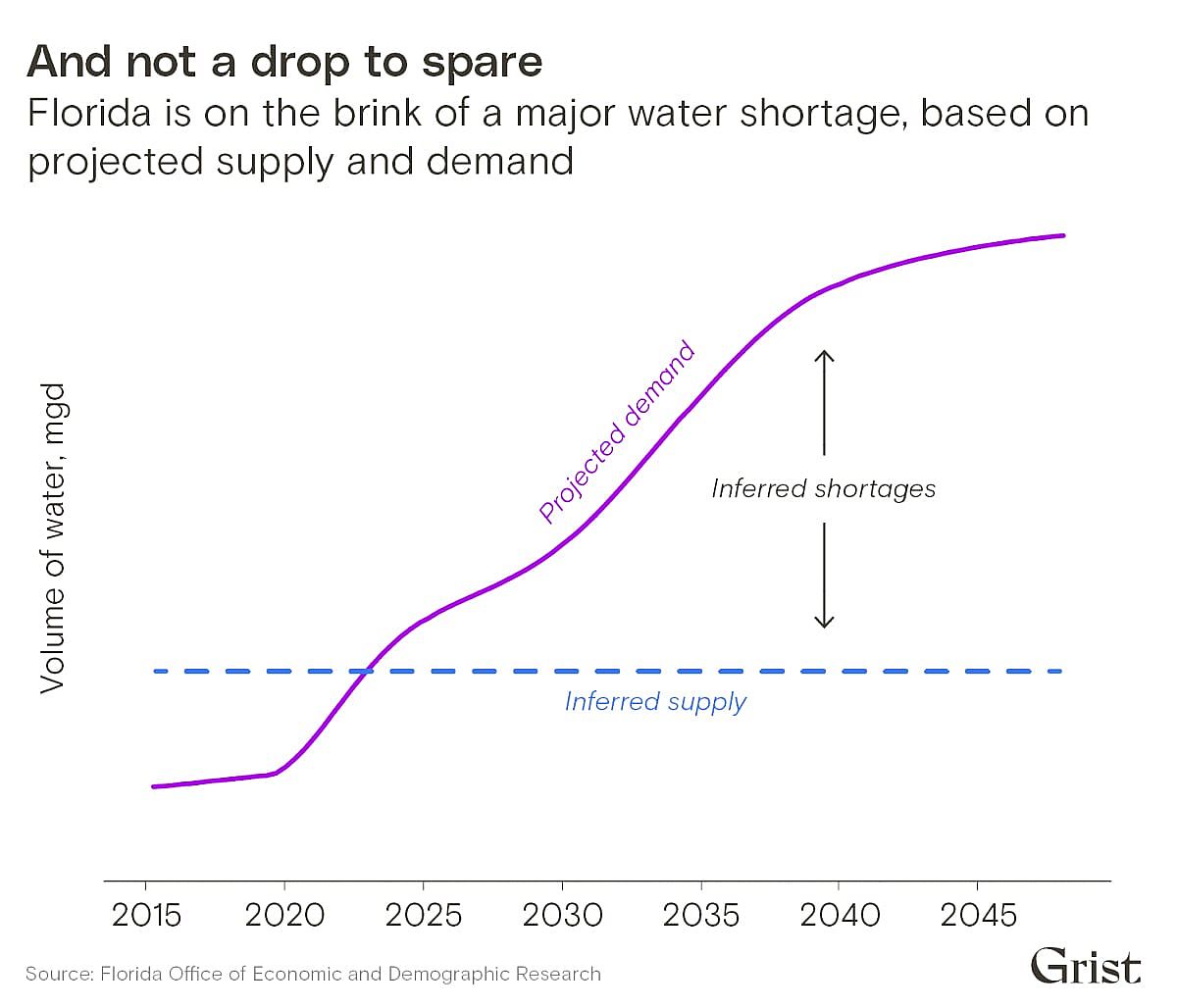
Global warming has , increasing the likelihood of extreme rain events in swaths of the state, but even torrential bouts of rain drained aquifers. Intensified hurricanes are primed to overwhelm wastewater systems, forcing sewage dumps that contaminate the water supply, while rising sea levels and floods further damage public water infrastructure. Higher temperatures that drive prolonged droughts also contribute to groundwater scarcity: Florida has experienced at least per decade since the onset of the 20th century.听
Such climate-borne crises are already playing out across the United States and beyond. Roughly of the nation's aquifers are drying up as global water systems . Compared to places where groundwater is already severely depleted, like California, Mexico, and Arizona, Florida has the luxury of one of the highest-producing aquifers in the world, and more time to prepare for a dearth of supply. Still, adaptation will be necessary nearly everywhere as the Earth's total terrestrial water storage, including groundwater, continues to decline. Record-breaking temperatures and crippling droughts , according to the 2024 Global Water Monitor Report.听
Sarah Burns, the planning manager for the city of Tampa, home to half a million people on the Gulf Coast, expects water supplies will continue to face a number of climate pressures like drought and rising sea levels. But one of the biggest factors in the city's looming water crisis is population growth鈥攁nd a hard-to-shake abundance mindset.
"It's all a challenging paradigm shift," Burns said, noting that many Floridians take pride in lush, landscaped lawns, and an influx of new homes are coming to market with water-intensive irrigation systems pre-installed. This can be seen in Tampa, where roughly of the city's water.
Tampa already exceeds its 82 million-gallons-per-year limit that it can directly provide without paying for more from the regional provider, at a higher cost to residents. In November 2023, the Southwest Florida Water Management District instituted a once-a-week lawn-watering restriction for households in the 16 counties it oversees, including Tampa. In August 2024, the Tampa City Council voted to 鈥攁 move that has already saved them .听
As newcomers flock to affordable housing within commuting distance of Tampa, once-rural areas are also feeling the squeeze. The nearby city of Zephyrhills鈥攌nown for a namesake bottled water brand鈥攈as temporarily after it grew too quickly for its water permit.
"Water is the hidden problem that really forced our hand," said Steven Spina, a member of the Zephyrhills City Council who proposed the restriction. "It is ironic that we've been known as the 'City of Pure Water' and then we're in this predicament."
Perhaps nowhere in Florida is more at the crux of water issues than Polk County in the center of the state. According to the Census Bureau, in 2023, more people moved to the former citrus capital than , with subdivisions The growth the county is seeing "has created a need to find additional water supplies," said Eric DeHaven, the executive director of Polk Regional Water Cooperative. The entity was created in 2017 after Polk County's worries became so acute it prompted more than a dozen local governments to assemble to protect their future water supplies.
Between 2002 and 2015, Polk County's farm bureau reported 100,000 acres鈥攁bout a third of the county's total agricultural land鈥攈ad been . Florida farms are a crucial part of the U.S. food system, but struggles from extreme weather, citrus diseases, and are . By 2040, half of an could take the place of farms. This would further magnify Florida's water supply issues鈥攊n 2020, public utilities were estimated to have overtaken farming .听
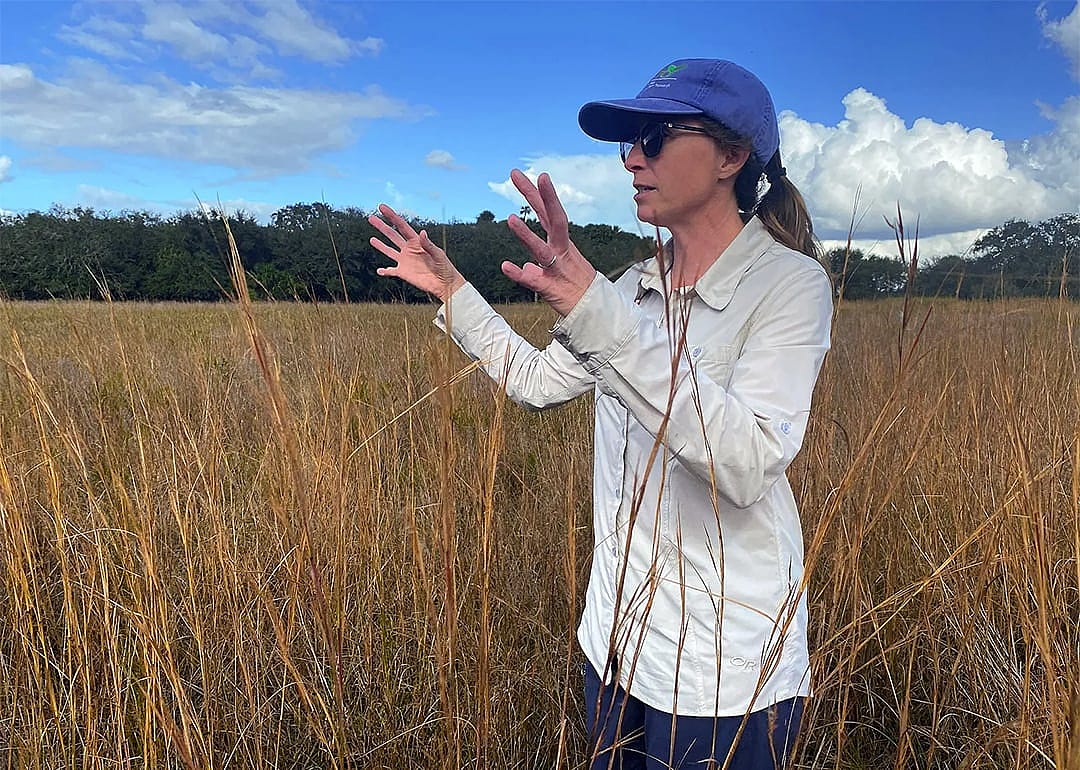
"Imagine if you own this land," said Boughton, the agroecologist. Farmers are hard-pressed to refuse offers as high as six figures per acre from developers, she noted. "There's so much pressure from urban development 鈥� that opportunity is hard to pass up."聽
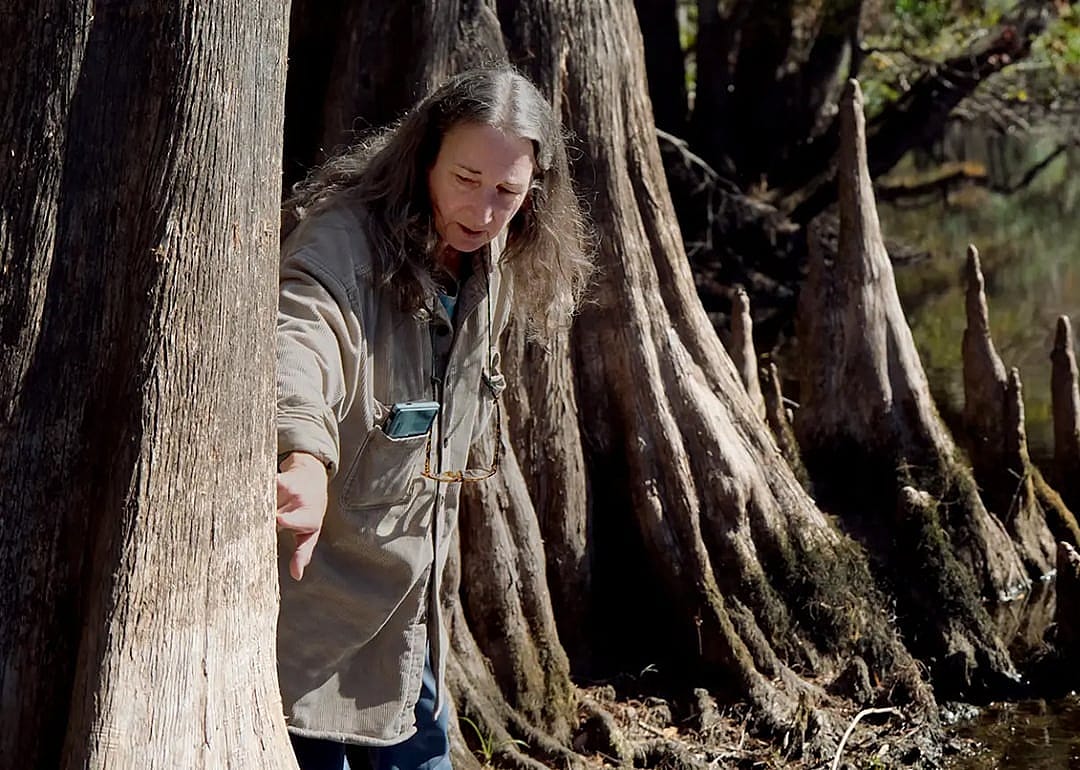
"Things are definitely changing because of climate change, but it's also because of this," said Merrillee Malwitz-Jipson, gesturing to new houses built across the road from her home in Columbia County, in the north of the state. As the founder of the nonprofit Our Santa Fe River, Malwitz-Jipson has spent the last two decades fighting to save the crystal-blue springs that feed it.