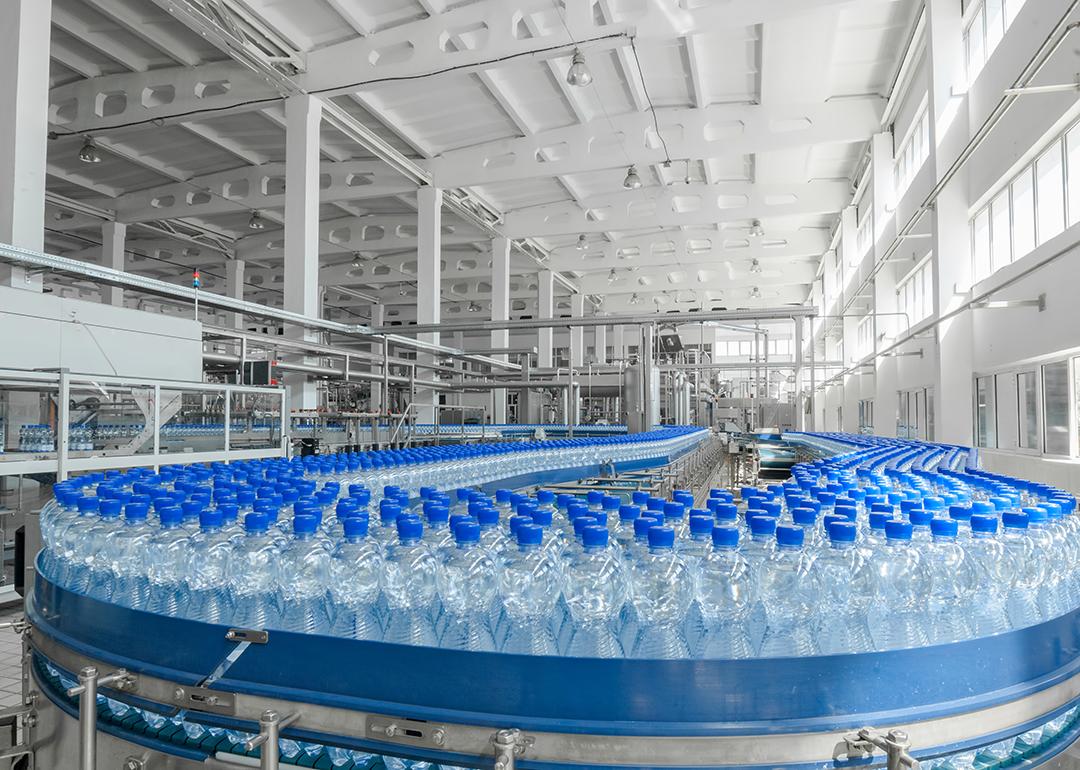
Plastic output will double in the coming decades. This new book traces how
Every trip to the store, drink at a restaurant, or discard of a recyclable item can feel like a small moral referendum. Bring the reusable bag. Skip the straw. Rinse the yogurt cup. For years, that was how Beth Gardiner thought about plastic, too: a matter of personal responsibility. Then, she came across a number that stopped her cold.
Just under a decade ago, the London-based environmental journalist read that oil giants such as Exxon and Shell were planning to invest as much as $180 billion in new plastic production in the United States alone, with projections to increase output by as much as 40% in the coming decades. The revelation—that even as consumers tried to cut back, the industry was preparing to double down on single-use packaging—became the seed of Gardiner’s book, “.” The years that followed took her from Gulf Coast petrochemical corridors to recycling facilities and corporate boardrooms in a bid to better understand how petrochemical and consumer-goods companies built an economy around disposable plastic; that now underpins so much of everyday life.
In this article from , Gardiner speaks about her research tracing how petrochemical companies became central to the future of fossil fuels, how litter campaigns reframed plastic as a consumer problem rather than a production one, and why she believes the real leverage lies in policies that shift responsibility back to the companies making the material in the first place.
Atmos: What set you on the path to reporting and writing “Plastic Inc.”?
Beth Gardiner: I was always one of those people who brought reusable bags to the grocery store and felt a little guilty if I forgot them and had to use plastic. I carried a water bottle, and hated throwing bottles out or dealing with excess packaging. That’s just sort of me. And I know a lot of people feel that same distress about how much plastic is in our lives. That was the background.
Then, about seven or eight years ago, I read an saying that huge companies like Exxon and Shell were planning to pour $180 or $200 billion into making more plastic in the U.S., with projections to increase production by 40% or 50%. That felt like a gut punch. Here I was, like so many others, trying to use less plastic, and meanwhile, there was this massive tide of corporate power pushing in the opposite direction. That specific article linked this surge to fracking, which has driven a plastic production boom in the U.S., but it’s part of a bigger global picture. Plastic production has been and is projected to continue increasing on that same trajectory.
I didn’t literally wake up the next day and start writing. But when I think about it, that moment, more than anything, was the origin of the book. Because, as an environmental writer, that gap touched on something I find so pervasive in people’s understanding of environmental issues. When we talk about climate change or air pollution—as I did in my first book, “Choked”—people ask, “What can I do? How can we fix this?” That impulse is good, but it also reflects how much we focus on our own actions or the actions of people around us. Our carbon footprints, our flights, our diets. Meanwhile, the systems we live in are shaped by gigantic, wealthy corporations.
Plastic makes that dynamic especially tangible. We see it when we open our Amazon package, we hold it, we throw it away. And for so many people—and I hear this when I talk to friends and people I know about this book—it’s so distressing. But that visibility can distract us from the bigger question: Who is driving the problem in the first place?
Atmos: In the book, you write that oil and petrochemical giants are “hiding in plain sight.” Given how prolific plastic is in every part of our life, how have they managed to stay out of the public story for so long?
Gardiner: Part of the reason, I think, is that the companies at the center of plastic production—the oil and petrochemical firms—aren’t consumer-facing. You’re not buying a plastic bottle from INEOS or ExxonMobil. You’re buying it from a supermarket, or from Coke or Pepsi. So when the public does focus on corporate responsibility for plastic, it tends to land on retailers like Amazon and supermarkets, or on consumer brands, like the companies selling shampoo, snacks, or bottled drinks, rather than on the Exxons and Shells supplying the raw materials.
With climate change, people are now used to thinking of big oil as the villain. With plastic, there’s more distance. And these companies aren’t exactly advertising their role. , or petrochemical-focused giants like INEOS or Dow, these are all major plastic makers. But they don’t need a public profile because they aren’t selling directly to us.
There’s also the broader issue that we don’t always see the system we live in because we’re so accustomed to it. Plastic can feel especially disconnected from its origins. I’ve been writing about climate and oil for 15 or 20 years, and even I had a moment of realizing I didn’t quite know where plastic “comes from” in any intuitive way. I could look at a table, piece of paper, or cardboard and think: tree. But a toothbrush or a water bottle doesn’t cue the same mental link.
Most of us have lived our entire lives surrounded by plastic. Its presence has been growing and growing for decades. And because it’s just so much part of our world and our surroundings, we don’t always question it or stop to ask how it got here in the first place.
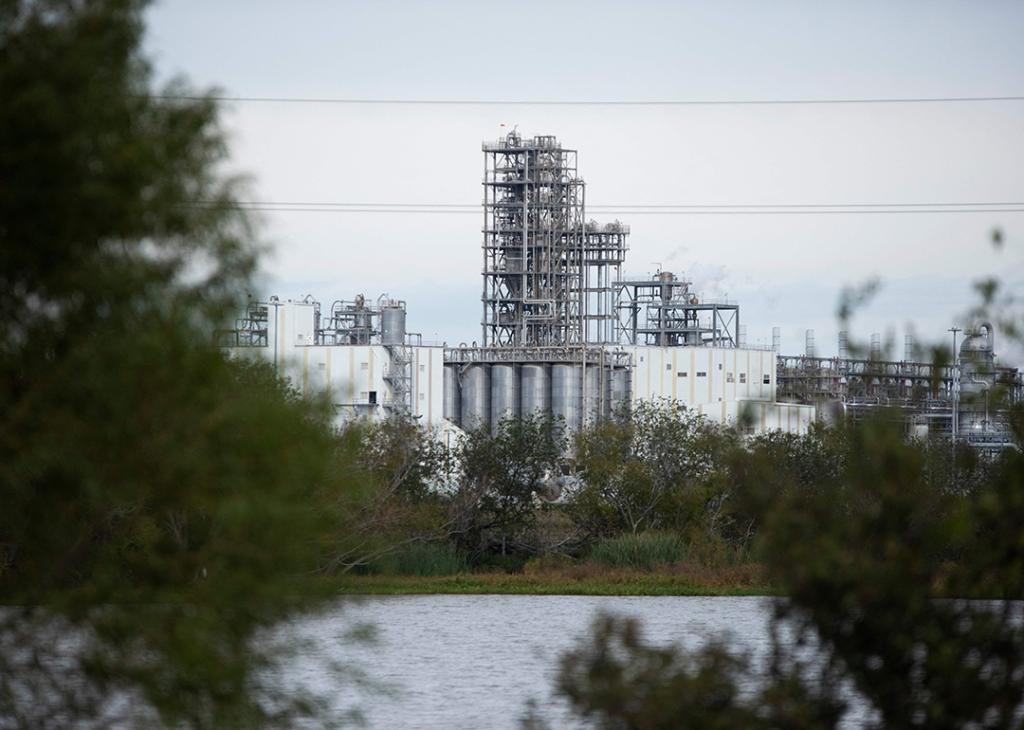
Atmos: How crucial is plastic to the oil industry’s future, really? And can you explain why that is?
Gardiner: Plastic has become increasingly important to oil and gas companies for a few reasons. First, the basic trajectory is relentless. Since the 1940s and 1950s, when plastic began to take hold in consumer life, . If you project that curve forward, which is essentially the industry’s plan, global plastic output is on track to .
The second reason is profit. A lot of plastics are made from chemicals that can be byproducts of oil and gas extraction, and plastic gives companies a way to monetize materials that might otherwise be treated as waste. Once firms invest billions to build petrochemical plants that turn those feedstocks into plastic, the incentive is to keep those plants running at full capacity to recoup the investment.
But there is also a newer pressure shaping this shift. Even the largest oil and gas companies can see, as well as anyone, that their long-term future is threatened by No. 1, climate action, and No. 2, by the fact that they are being economically outperformed by clean energy. Solar has today become among the . Electric vehicles are scaling quickly, with China cranking them out at , whether it’s buses, cars, or e-bikes. That threatens the industry’s ability to continue profiting from the sale of oil and gas as fuel. Petrochemicals, including plastics, are therefore becoming a larger and more strategic source of profit. Companies are even retooling refineries so that a greater share of each barrel of crude is converted into petrochemicals instead of gasoline or diesel. In other words, plastics help make each barrel of oil or each unit of methane gas more profitable for these companies.
So the push for plastic reflects both the industry’s modus operandi—more production means more money—and a growing anxiety about a future in which demand for fossil fuels as fuel may flatten and eventually decline. The industry’s response has never been, “Let’s jump into solar and wind and electric vehicles.” It’s not profitable enough to sell renewable energy. Their answer has been to continue drilling oil and gas and find ways to make that stay profitable.
Atmos: When you look at the numbers, where is the growth concentrated?
Gardiner: If you ask the industry, it will say the big drive is rising demand in lower- and middle-income countries; that consumers in the Global South are getting wealthier and want the same goods the Global North has, like refrigerators, phones, laptops, cars, packaged products. There is some truth to that. But it’s also true that multinationals are aggressively expanding disposable packaging in those markets—pushed by petrochemical producers, major brands, retailers, and food and beverage companies. With the Global North already saturated with plastic, the Global South has become the .
It’s also worth questioning the premise that plastic expansion is simply demand-driven. Plastic has an unusual ability to invert the normal relationship between supply and demand. The industry says, “Customers are demanding plastic, we are just fulfilling that demand,” but it’s not quite like that. Plastic is produced in tremendous volumes at extremely low cost, and that cheapness makes it easy to flood markets and invent new uses for it.
Most consumers aren’t asking for plastic in the first place. When you buy bananas, you’re buying bananas, not plastic wrap. When you order from Amazon, you’re not requesting layers of packaging. When you eat at a restaurant, you’re not demanding throwaway cups and cutlery, even if you’re eating in. Those choices are enabled by a material that is very cheap, and by a business model that rewards volume. Low price, high throughput. The more plastic producers can push into the system, the more it gets adopted as default. That’s why the problem can’t be understood as a matter of individual consumer choice. It’s fundamentally supply-driven, which means regulation and accountability have to focus on producers, not on consumers.
Atmos: Even so, as you describe in the book, litter campaigns have largely shifted that responsibility onto consumers. Can you explain how those public narratives and accountability structures around plastic were changed, and who benefited?
Gardiner: It’s almost the prototype for modern greenwashing. Those litter campaigns succeeded so well in confusing our understanding of what the problem was and who was driving it. One thing they did was minimize the issue. The message these companies wanted the public to accept was that “too much plastic” wasn’t the problem; the problem was where it ended up. And that’s still the messaging around ocean plastics today, that the issue is improper disposal.
That’s not to say litter isn’t a real problem. Of course it is. But the campaigns shrank the story as if litter was the only problem. And then, of course, they also shifted the blame. It’s not us, the big companies who are selling and profiting from plastic, who are responsible for this crisis, it’s you, the individual, or a few irresponsible individuals, who aren’t managing it properly. In that way, they managed to drape themselves in civic-mindedness while pushing responsibility onto all of us.
Meanwhile, these companies have routinely fought efforts to make them pay for the waste they create. Take the shift from returnable glass bottles to disposable packaging as an example. When Coke sold drinks in refillable glass bottles, companies had to collect, clean, reuse, and resell them. That’s expensive for them because it requires labor, equipment, and logistics. They would much rather sell it in a plastic bottle, which then becomes the consumer’s problem or the problem of local governments. In this scenario, consumers are charged with managing and disposing of these products through trash collectors or through local taxes.
So the campaigns changed how people talked about plastic, yes, but they also reframed plastic as a waste-management problem rather than a production problem, and as a public responsibility rather than a corporate one. Decades later, that logic still shapes the debate: People ask what consumers should do, or how municipalities can raise recycling rates, instead of why companies are pushing so much disposable plastic into the marketplace in the first place.
And by the way, it isn’t cheaper. We’re just the ones paying the price difference. When companies moved from returnable bottles to throwaways, whether that’s in aluminum cans or plastic bottles, consumers ended up paying more at the register and again as taxpayers to handle the waste. It was a tremendous shift of both blame and responsibility, and a fundamental reframe of what the problem was in the first place.
Atmos: It’s startling when you put it that way, and when you think about the long shadow that the plastics industry casts over so many other sectors. From your perspective, after so much reporting in this space, if the goal is to reduce production, which policy tools have the most leverage?
Gardiner: I’m not a policy expert; I’m a journalist. But the tool you hear advocates return to most often is extended producer responsibility, or EPR. It’s already been enacted to different degrees and in different ways in different countries and in a couple of U.S. states, as well.
The idea with EPR is to reverse the dynamic we’ve been talking about, which is that these companies have shifted the costs of waste onto the public and off their own books. EPR puts responsibility back on producers by requiring consumer goods companies to help fund what happens to their packaging when it becomes waste. That money can help pay for recycling programs, waste collection, and waste management—and the expense is also meant to create an incentive for companies to use less plastic in the first place.
The industry has fought EPR for decades, and when it looks inevitable, it often tries to shape the details so the policy appears meaningful without forcing real change. With measures like this, the devil is in the details and in these tiny definitions of exactly how a new system is going to work.
Beyond EPR, there are other measures. One that was part of the Global Plastics Treaty conversation—which, if I understand correctly, —is tighter regulation to deal with the health effects of the chemicals used in plastic, many of which are pretty well understood now. The European Union , like incentivizing reusability by encouraging or requiring retailers to devote space to refill systems and reusable containers. It has also taken steps to require reuse targets for certain kinds of packaging, including business-to-business shipping and some e-commerce packaging.
What history shows is that voluntary corporate promises don’t get you very far. Companies understand public concern, so they say the right things; sometimes they’ll shave off small amounts of plastic. But meaningful change tends to come from mandatory rules, whether it’s local, state, or national policy, or coordinated action through transnational blocs like the EU.
There are also narrower tools, like bans on specific items, fees on bags, and restrictions on certain forms of packaging. Those aren’t the whole answer, but they can be a start, and they can shift norms by showing that alternatives are workable. But broadly speaking, it really comes down to one principle: putting the onus back on producers.
was produced by and reviewed and distributed by ±¬ÁÏTV.