Ophelia
1 / 1Regional differences in substance use treatment
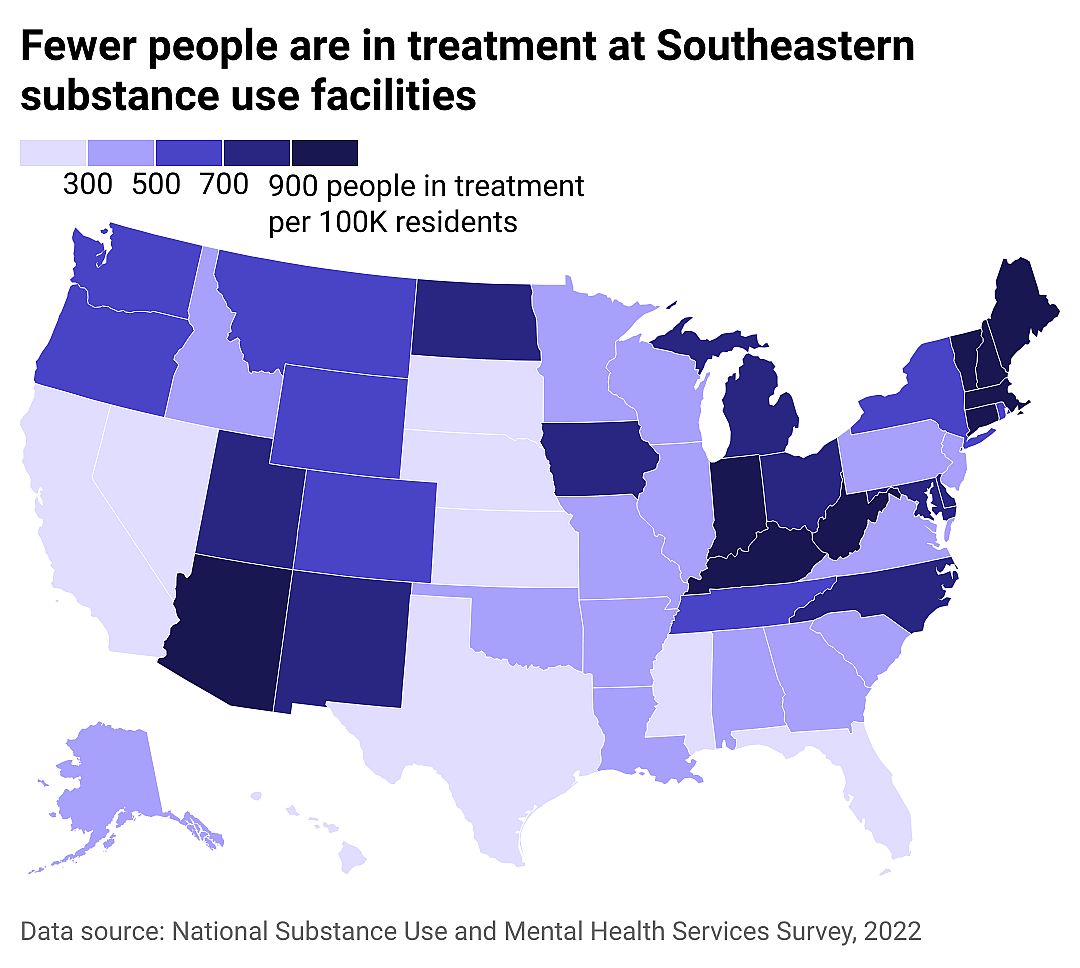
There is a relatively weak correlation between and the share of residents in treatment. However, there are some standouts within the data.
For instance, in Washington D.C., SAMHSA estimates that about 23%, or nearly 1 in 4 residents, have substance use disorders鈥攖he highest in the nation. However, the district has one of the lowest concentrations of residents in treatment. On the other hand, West Virginia, Maine, and Arizona have high concentrations of people in treatment but relatively average prevalence of the disorders.
Some states reinforce the correlation: Vermont, for example, has the third-highest rate of substance use disorders but also the third-highest rate of people in treatment for those disorders. Texas and Hawaii both have low rates of substance use disorder and low concentrations of people in treatment. SAMHSA provides to dive deeper into the volume and types of services each state offers.
Since substance use disorder has been more widely viewed as a treatable disease, and in the 13 years since opioid use specifically was declared an epidemic, treatment options and humane care have grown. Still, research has found that there are still high volumes of unmet need nationwide.
The federal government is continually rolling out resources to address this need. In early February 2024, SAMHSA to expand treatment within adult and family treatment drug courts and among pregnant and postpartum people. Last year, the agency awarded tens of millions in grants toward , connecting people to , and expanding access to . Some of these have focused on funding state solutions, allowing states to develop services specific to their populations' needs.
This story features data reporting and writing by Paxtyn Merten and is part of a series utilizing data automation across 51 states.