US traffic fatalities: Where speeding and impaired driving pose the biggest risks
When American roads are safest, a mix of enforcement, behavior change, and public awareness often gets the credit, but risky driving behaviors remain central drivers of deadly crashes. To better understand the human behaviors linked to traffic deaths nationwide, , a personal injury law firm, analyzed the latest available federal data on speeding鈥� and impaired鈥慸riving鈥憆elated fatalities to pinpoint where the greatest risks persist on U.S. roadways.
Roadway deaths remain high despite recent declines
Preliminary estimates from the U.S. Department of Transportation鈥檚 National Highway Traffic Safety Administration (NHTSA) project that around , marking a 3.8% decline from 2023 and the first time fatalities have fallen below 40,000 since 2019. However, the total number of deaths remains high compared to the decade before the COVID-19 pandemic.
These declines reflect broad trends in traffic fatalities over recent years, but the scale of deadly crashes still eclipses other industrialized nations and underscores persistent dangers on American roads.
Speeding: A leading contributing factor
Speeding continues to be a major risk factor in U.S. traffic deaths. According to the cited data from the of Washington, about 29% of all traffic fatalities in 2023 were speeding鈥憆elated crashes, translating to roughly 11,775 deaths.
While total traffic fatalities declined modestly from 2022 to 2023, fatalities tied to high鈥憇peed crashes have remained stubbornly high, often outpacing declines seen in other crash categories.
Speeding is often embedded in patterns of aggressive driving, including tailgating and failure to yield, which magnify crash severity.
Which states have the highest speeding鈥憆elated fatality share?
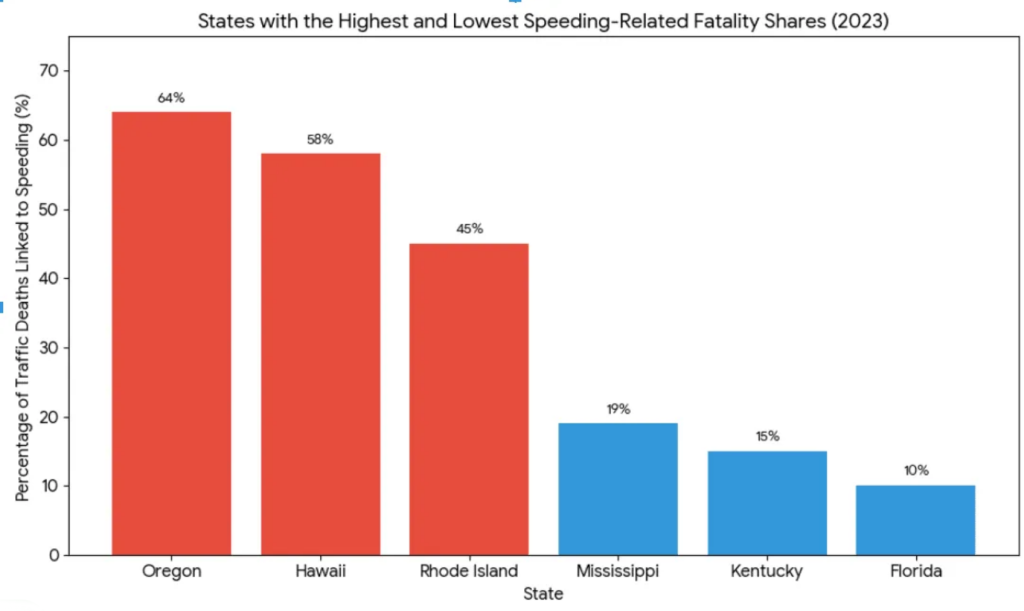
Speeding鈥檚 role in deadly crashes varies markedly across states: Oregon (64%), Hawaiʻi (58%), and Rhode Island (45%) were among the states with the . Conversely, Florida (10%), Kentucky (15%), and Mississippi (19%) had some of the lowest shares of speeding鈥憆elated fatalities relative to total traffic deaths.
These disparities reflect differences in enforcement patterns, speed limit policies, road design, and driver behavior across the country.
Impaired driving: Persistent deadly risk
Besides excessive speed, impairment from alcohol and other substances remains a major factor in American traffic fatalities. Federal estimates for 2023 show , representing about 30% of all U.S. traffic fatalities that year. On average, an alcohol鈥慽mpaired driving death occurred roughly every 42 minutes in 2023.
Public health data from the Centers for Disease Control and Prevention (CDC) corroborate the scale of the problem: In 2022, alcohol鈥慽mpaired crashes accounted for .
When Do Impaired Crashes Spike?
Fatalities linked to impairment tend to rise during holiday periods and weekends when social travel increases, a pattern reflected in enforcement campaigns, which step up patrols during high鈥憆isk periods.
Interaction between speed and impairment
Emerging analyses and federal safety messaging highlight the , noting that drivers who exceed posted limits are more likely to also exhibit other risky behaviors (including alcohol impairment and failing to use restraints), which amplify crash severity.
Although data collection methodologies vary, transportation safety research underscores that addressing one risky behavior often positively impacts others: A high鈥憇peed driver who is also impaired is statistically more likely to be involved in a fatal crash than one exhibiting only a single risk factor.
Risk patterns across the US
Geographic and demographic variations shape where and how these risks manifest: often report larger shares of speeding鈥憆elated deaths, partly due to higher posted limits and longer emergency response times. In contrast, impaired driving deaths disproportionately cluster in areas with limited public transportation options or where nightlife travel is common, especially during weekends and holidays.
Federal safety officials continue to partner with state and local agencies to tailor enforcement strategies and public education campaigns to these nuanced state and regional patterns.
Federal and community efforts to reduce fatalities
In response to these ongoing risks, the NHTSA and allied safety organizations are investing in multiyear strategies to reduce fatal crashes, including targeted enforcement campaigns, expanded impaired鈥慸riving checkpoints, and awareness initiatives that emphasize the combined hazards of speeding and impairment.
State legislatures and local enforcement agencies are also experimenting with aggressive driving laws and automated speed enforcement programs to change driver behavior, though their effectiveness varies by community context.
Beyond the Numbers: What this means for road users
While overall traffic fatalities have shown signs of recent decline, the persistent roles of speeding and impaired driving highlight ongoing challenges in American road safety. Drivers, passengers, policymakers, and communities alike continue to grapple with how to encourage safer behavior, enforce meaningful penalties, and prioritize investments that protect all road users.
was produced by and reviewed and distributed by 爆料TV.